Stanbic joins Kwa Nokeng and Continental Re in a pipeline that could deliver three IPO-driven listings within just one month
BONGANI MALUNGA
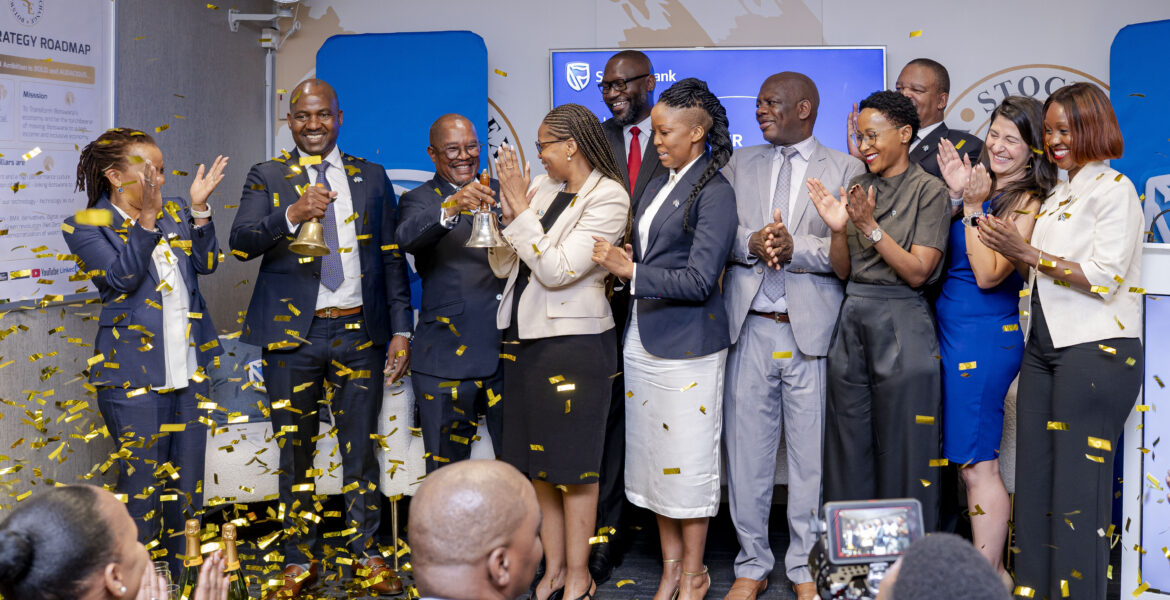
The Botswana Stock Exchange (BSE) is heading towards its busiest period for new equity listings in nearly a decade, with Stanbic Bank Botswana becoming the latest heavyweight to launch an Initial Public Offering (IPO) after years in which fresh listings were virtually absent from the local bourse.
Stanbic officially opened its offer on 30 October, putting 20 percent of the bank up for sale ahead of an anticipated Main Board listing on 7 December 2026. Up to 319.36 million shares are being offered at P4.30 each, valuing the transaction at approximately P1.37 billion as the offer is set to close at 16:30 on 27 November.
Stanbic is entering a BSE market that has suddenly gone from a prolonged listings drought to a crowded pipeline. The last completed BSE listing following a conventional IPO was CA Sales Holdings on 9 November 2017. CA Sales offered 136.1 million shares at P3.45 during its IPO and raised approximately P469.7 million. The offer was oversubscribed before the company joined the Foreign Main Board.
NINE YEAR DROUGHT
That means the local exchange has gone almost nine years without another company completing the same journey from IPO to listing.
That drought is now on the verge of being broken several times in quick succession. Kwa Nokeng Oil Holdings is scheduled to list on the BSE Main Board on 10 November after completing an IPO that attracted applications for more than 1.66 billion shares against the original 1.372 billion shares offered.
The fuel distributor’s offer was 21 percent oversubscribed, attracting 990 applicants. Existing shareholders subsequently made additional shares available to satisfy the excess demand, while the BSE granted final approval for the listing on 19 October. Kwa Nokeng is therefore presently on course to become the first company since CA Sales in 2017 to complete an IPO and subsequently list on the BSE.
LISTING SURGE
It will potentially be followed less than a month later by Stanbic. Continental Reinsurance Holdings is also in the queue. Its P2.13 billion public offer, launched in August, was described at the time as the BSE’s first IPO since 2017. However, repeated extensions have pushed the closing date to 20 November and its expected listing to 10 December.
If the current timetables hold, the BSE could therefore welcome three IPO-driven equity listings between 10 November and 10 December, Kwa Nokeng, Stanbic Bank Botswana and Continental Re, following nearly nine years without one.
SPRINGING TO LIFE
The IPO pipeline forms part of a broader surge in new investment products reaching the exchange.
In July, three Satrix exchange-traded funds, tracking the S&P 500, MSCI World and MSCI Emerging Markets, were secondarily listed on the BSE, widening local investors’ access to international equities without requiring offshore brokerage accounts.
October also brought another significant innovation as Access Bank Botswana published documents for the creation and proposed listing of unsponsored Botswana Depository Receipts linked to Dangote Petroleum Refinery shares, potentially giving Botswana investors local-market exposure to the Nigerian industrial giant.
Neither the Satrix products nor the Dangote receipts are conventional IPOs by Botswana companies. However, taken together with the Kwa Nokeng, Continental Re and Stanbic transactions, they demonstrate how rapidly the BSE’s menu of investable securities is expanding.
MAJOR BANKING PRESENCE
The Stanbic listing will also add another major banking counter to a market already containing Absa Bank Botswana, First National Bank Botswana and Access Bank Botswana. The bank has operated in Botswana for more than 34 years, with 14 branches, more than 80 ATMs and over 640 employees.
Unlike a conventional capital-raising IPO, Stanbic itself will not receive the proceeds, the shares are being sold by Stanbic Africa Holdings, the Standard Bank Group subsidiary that currently owns the Botswana operation. Following the offer, the parent company is expected to retain an 80 percent stake.