
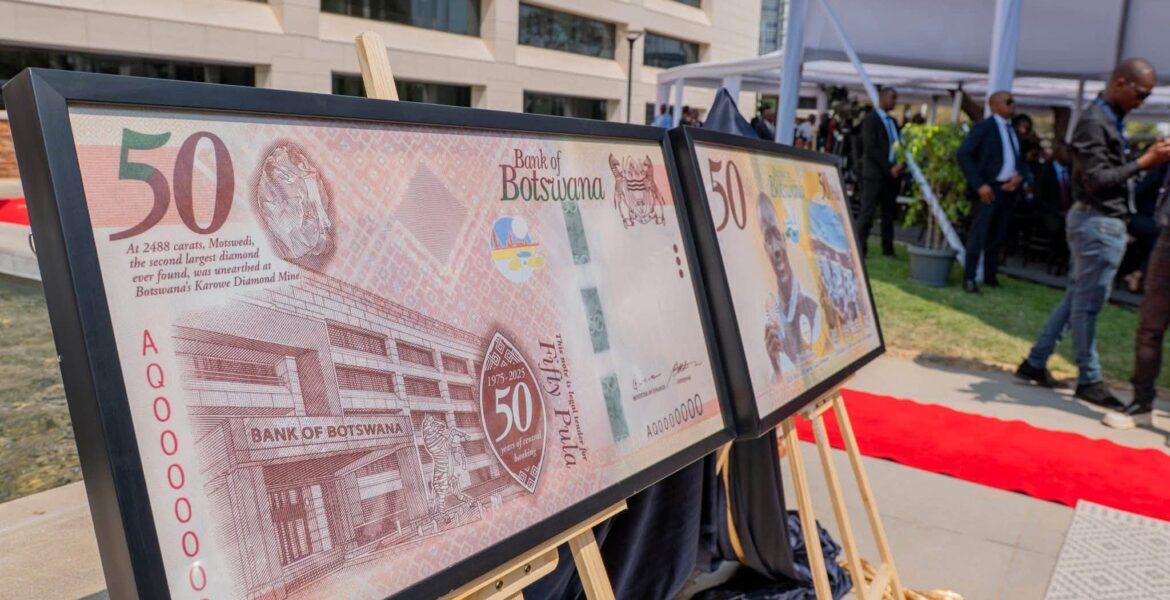
As Botswana marks 50 years of monetary sovereignty, Finance Minister Ndaba Gaolathe says the Pula’s future depends on building a broader, more productive and inclusive economy.
GAZETTE REPORTER
Fifty years after Botswana established its own central bank, withdrew from the Rand Monetary Area and introduced the Pula, the country is confronting a different test of monetary sovereignty: strengthening the economy that stands behind its currency. Vice President and Minister of Finance Ndaba Nkosinathi Gaolathe said the creation of the Pula and Thebe was more than a technical monetary decision, describing it as an act of confidence in Botswana’s ability to govern itself and determine its economic destiny.
Speaking at the Bank of Botswana’s 50th anniversary celebration for the Pula and Thebe in Kanye on Monday, Gaolathe said the currency had travelled with Botswana through an extraordinary period of national development. But he said its story was ultimately about institutions and public confidence, adding that a currency has value because people believe in what stands behind it and that such confidence must be earned repeatedly through national decisions.
Economic Pressure
That confidence is being tested as Botswana faces prolonged weakness in the global diamond market, pressure on government revenues, narrowing fiscal space and pressure on foreign exchange reserves. Gaolathe said the country remained highly dependent on imports while its export base was still too concentrated, arguing that these realities should not be disguised because they were precisely the circumstances in which strong institutions, credible policies and disciplined choices mattered most.
He said adjustments to the exchange-rate framework had required a balance between competitiveness, inflation, reserves and the wider interests of the economy, while fiscal consolidation demanded difficult choices on government expenditure, efficiency and priorities. The immediate monetary challenge, he suggested, could not be separated from the deeper structural weaknesses of the economy.
Beyond Pula
For Gaolathe, the deeper issue extends beyond monetary policy. “Ultimately, the strength of a currency reflects the strength of the economy beneath it,” he said. “We cannot permanently shield the Pula through monetary instruments alone. We must strengthen what stands behind the Pula.”
He said that meant building productive farms and factories, competitive businesses, mines that create greater value domestically, tourism enterprises, energy security, efficient infrastructure, modern financial services, technology companies and entrepreneurs capable of competing beyond Botswana’s borders. Gaolathe described economic diversification as “fundamental to our economic sovereignty,” warning that while diamonds had financed schools, hospitals, roads and institutions, appreciation for their contribution could not become dependence on what diamonds alone could provide in the future.
Inclusive Growth
Government’s economic transformation agenda under National Development Plan 12 and the Botswana Economic Transformation Programme aims to create a high-income Botswana that is digitally enabled, export-driven and economically diversified. Gaolathe said success would ultimately be measured through execution, including businesses established, investments realised, exports produced, jobs created and household incomes improved.
He also stressed that economic opportunity must reach villages and districts, young people, women and entrepreneurs who have ideas but lack capital. “A strong currency is not an end in itself,” he said, arguing that economic stability matters because of what it allows people to do with their lives.
As payments become increasingly digital and financial technology changes how people save, borrow, invest and transact, Gaolathe said Botswana must embrace innovation while maintaining trust, security and inclusion. He said the next 50 years should prove that Botswana can build a more diversified economy beneath the Pula, create prosperity on a greater scale and extend participation in that prosperity across the country.