
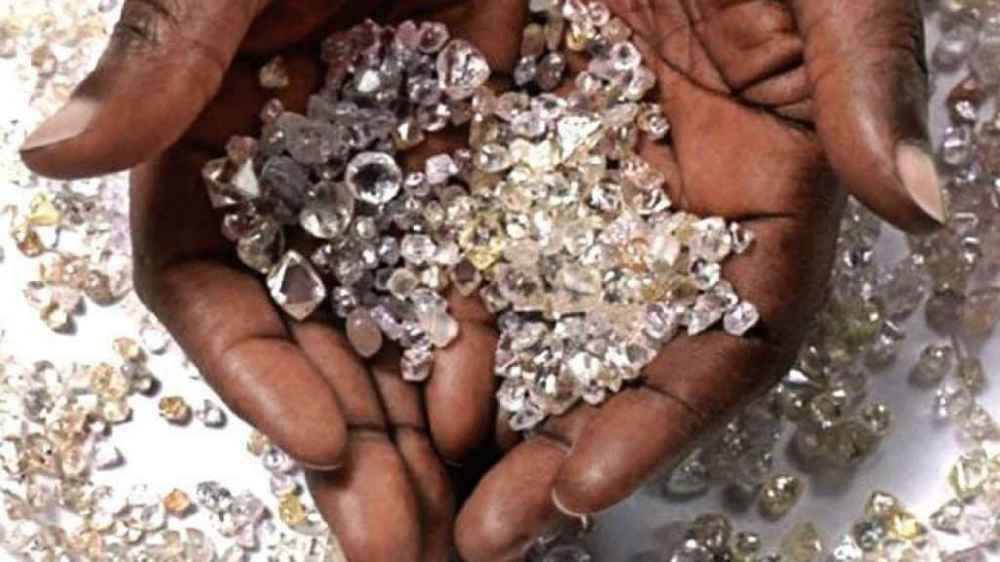
Recovering reserves and a smaller 2025 deficit have bought Botswana some breathing room, but weak diamond demand is still set to drive large deficits and rising government debt.
GAZETTE REPORTER
Botswana’s economic buffers have begun to recover, but weak global diamond demand continues to expose the country to large fiscal deficits and rising government debt, according to S&P Global Ratings.
The agency affirmed Botswana’s long-term sovereign ratings at BBB- and short-term ratings at A-3 on 11 September 2026, while maintaining a negative outlook. It said the outlook reflects the risk that weak diamond demand will continue to constrain economic growth, exports and fiscal receipts.
Buffers rebuild
S&P said foreign exchange reserves increased by almost $1.5 billion to $4.8 billion by July 2026 from historical lows in June 2025. The recovery was supported by Southern African Customs Union receipts, stronger diamond sales and revenue, portfolio market gains and government foreign borrowing.
The agency also credited adjustments to the Bank of Botswana’s exchange-rate policy parameters with encouraging market trading and helping stabilise official reserves.
Fiscal performance also improved in 2025. The general government deficit was 6.2 percent of GDP, significantly below the original budget target of 9.5 percent. S&P attributed the narrower deficit to higher-than-expected diamond revenue and a substantial reduction in development expenditure.
But the improvement has not removed the pressure on public finances.
Deficits widen
S&P forecasts a general government deficit of 8.9 percent of GDP in 2026 and 6.7 percent in 2027, before deficits narrow to an average of 4.3 percent in 2028 and 2029.
Net general government debt is projected to reach 34.2 percent of GDP by 2029, compared with a net asset position of 6.3 percent in 2023. The agency expects the government interest bill to rise to 10.7 percent of fiscal revenue by 2029, from 4.7 percent in 2024.
The underlying vulnerability remains Botswana’s dependence on diamonds. S&P said the sector has historically accounted for about 70 percent of exports, approximately one-third of government fiscal receipts and about one-quarter of GDP.
Since late 2023, global diamond prices and demand have fallen sharply, with S&P pointing to weaker Chinese demand, changing consumer preferences in the United States and competition from lab-grown diamonds.
Growth risks
S&P forecasts Botswana’s economy will grow by 3.0 percent in 2026 and average 3.4 percent from 2027 to 2029, following contractions of 2.8 percent in 2024 and 0.7 percent in 2025.
The first quarter of 2026 expanded by 3.5 percent year on year, supported by diamond mining and trading, copper exports and strong SACU receipts.
The agency believes the global diamond market “appears to have bottomed out”, while noting that demand remains stronger for high-value, large stones than for lower-value diamonds competing with lab-grown alternatives.
Debswana’s production target has been raised to 18 million carats in 2026 from 15 million, with production expected to reach about 20 million carats annually from 2027 to 2029.
Diversification bet
Botswana’s diversification efforts offer a longer-term counterweight. S&P expects the Botswana Economic Transformation Programme to support sectors including agribusiness, healthcare, renewable energy and technology, although its impact on growth and fiscal revenue is expected to be modest initially.
For the rating outlook to improve, S&P said Botswana would need stronger fiscal and external metrics, potentially through sustained fiscal consolidation or a rebound in diamond markets. A further deterioration could instead trigger a downgrade.