
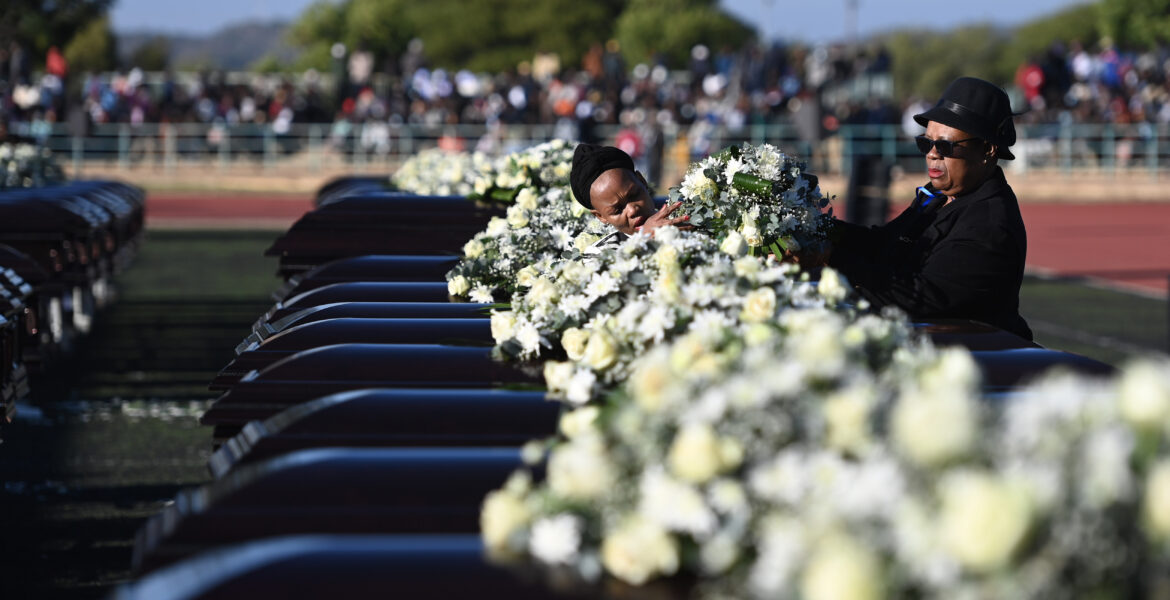
From Matsha to Kariba, repeated transport tragedies raise a harder question for Botswana: whether institutions expose failure, learn from it and prevent the next disaster.
DR DOUGLAS RASBASH
Ninety-four people are now confirmed dead after the Mbuya Nehanda ferry capsized on Lake Kariba earlier this month. Seventy-seven were rescued. The government-owned vessel was authorised for 90 passengers. Zimbabwe’s government later acknowledged that about 180 passengers, together with goods, had been aboard.
That is not simply an accident. It is a failure of a safety system. Accidents are unpredictable; systemic failures are not. The ferry encountered strong waves and capsized. That explains the final physical event. It does not explain how a passenger vessel came to be carrying roughly twice its authorised passenger capacity. One asks: What happened? The more important asks: How was it allowed to happen?
When accidents recur, systems are the cause. Botswana should understand that distinction because we have asked the same question after tragedy, again and again.
MATSHA LESSONS
In November 2015, students from Matsha College were being transported home after completing their examinations. Government policy was that students should be transported in buses. Yet 126 young people were placed aboard a government truck. It overturned near Dutlwe. The eventual death toll rose to nine.
Students had been killed in similar truck accidents in 1995, 2003 and 2005. Yet the practice continued.
A parliamentary attempt to establish an independent inquiry into why government had breached its own policy was defeated. The question is not whether accidents happen. They always will. The question is whether institutions learn from them.
PALLAROAD WARNING
On 10 December 2019, Botswana Railways passenger train 501 derailed near Pallaroad, killing two BR employees. Heavy rainfall and water were involved, but subsequent public hearings revealed deeper institutional questions. Evidence showed that the affected area had been inspected only hours earlier, yet the drainage structures were subsequently overwhelmed.
The inquiry findings reportedly went substantially beyond blaming the weather, identifying natural, technological, human and organisational factors and leadership failures. Rain caused the water. Rain did not design the drainage system, maintain the railway or determine inspection procedures. Those were institutional decisions.
MORE THAN CONDOLENCES
On 28 March 2024, a bus carrying Easter pilgrims from Botswana to Moria plunged from the Mmamatlakala Bridge in Limpopo. Forty-five people died. An eight-year-old girl was the sole survivor.
At the time, The Botswana Gazette resisted declaring a cause before investigators had done so. We asked wider questions about vehicle roadworthiness, driver hours, passenger-transport permits, road-safety regulation and institutional responsibility, and called for a national commission of inquiry extending beyond the driver to the way road safety itself was governed.
Blaming the last human being in the chain is easy. Examining the system that put him there is much harder.
Then, in July this year, another passenger bus travelling north from Gaborone struck a cow on the A1 near Lechana. The driver lost control and the bus overturned. Nine people died, including the driver and a six-month-old baby. Wandering livestock on Botswana’s highways is not an unforeseeable event. Botswana Police statistics recorded 14 fatal crashes involving domestic animals in 2024, resulting in 15 deaths.
Once a hazard is known and repeatedly kills people, it ceases to be merely bad luck. It becomes a management problem, and eventually an accountability problem.
THE REAL TEST
That is why the Kariba tragedy should resonate so strongly in Botswana. The vessel was overloaded. The passenger count appears initially to have been uncertain. Survivors said passengers had expressed concern about the conditions before the vessel capsized. The ferry was government-owned.
There will be investigations, condolences, funerals and promises that lessons will be learnt. We have heard all of these before. The real test comes six months later, when the television cameras have disappeared.
Who was responsible for enforcing the passenger limit? Who knew that overloading was occurring? What inspection regime applied to the vessel? Were recommendations implemented? And, critically, will the findings of the investigation be published?
Those are the questions that turn mourning into prevention.
TRANSPARENCY MATTERS
There is an uncomfortable tendency after transport disasters to concentrate responsibility at the bottom of the institutional hierarchy. Political responsibility for transport safety in Botswana rarely seems to travel upwards. Officials promise investigations. Committees of enquiry are established and reports are written. But where is the accountability?
Transparency is a safety device. This is not principally an argument for ministerial resignations every time somebody crashes a vehicle. It is an argument for a culture in which those exercising public authority know that serious failures will be exposed publicly and independently examined.
When accident reports are published, engineers can learn from them. Parliament can determine whether recommendations were implemented. Journalists can follow the institutional trail. Families can understand why their relatives died. Officials know failures cannot simply disappear into confidential files.
Above all, publication changes incentives. If a permanent secretary, chief executive, regulator or minister knows that after a major disaster an independent report will identify what their institution knew, what it failed to do and which previous recommendations it ignored, safety suddenly acquires institutional weight.
Botswana needs an independent accident investigation system.
INSTITUTIONAL MEMORY
Accidents happen. Repeated failures are different. Botswana does not need another road-safety slogan. It needs institutional memory. The Matsha students should have changed the way government transports children. Pallaroad should have changed the way railway infrastructure, drainage, inspection and operational risk are managed. Mmamatlakala should have produced an uncompromising examination of passenger-bus regulation and road safety. The deaths on the A1 should finally force serious action on wandering livestock.
The 94 people lost on Lake Kariba should remind the entire region of a brutal truth. The measure of a government is not whether accidents occur under its watch. They will. The measure is what happens afterwards. Does it expose failure or conceal it? Does it ask who was responsible or who can most easily be blamed? Does it publish the evidence or protect the institution?
Does somebody answer for failure? And, most importantly, does anything actually change before another family receives the telephone call that destroys their world?
Accidents happen. The scandal is when the same accidents are allowed to happen again.