
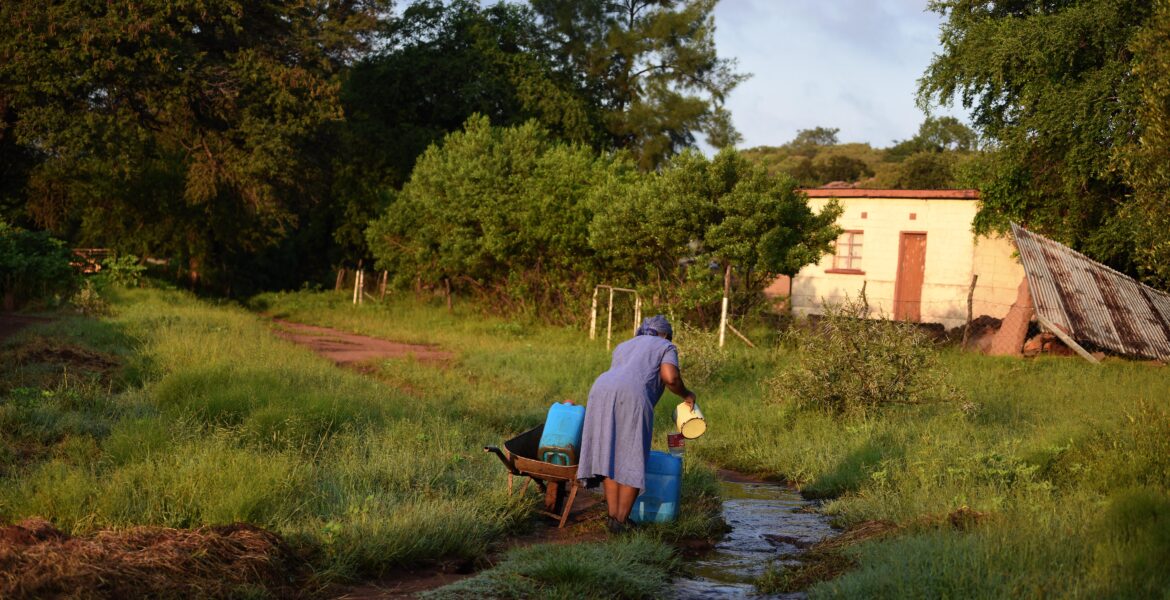
As Botswana’s land waiting lists grow and the costs of sprawling development rise, the country faces difficult questions about whether a nation-building policy designed for an earlier era can remain sustainable in its present form.
DR DOUGLAS RASBASH
Few public policies in Botswana carry the emotional, historical and political significance of free residential land allocation. For generations, access to land has been understood not merely as an administrative entitlement, but almost as a civil right, a tangible expression of citizenship, dignity, equality and belonging.
The policy helped build the modern nation. At independence, Botswana was poor, sparsely developed and socially fragile. The allocation of tribal land gave ordinary citizens a direct stake in the country. It reduced the risk of landlessness, promoted stability and helped avoid some of the extreme urban inequalities seen elsewhere. In many respects, it was one of Botswana’s great nation-building successes.
That history matters. Precisely because it matters, the conversation today requires sensitivity, balance and honesty rather than ideology or accusation. The question is not whether the policy was right. It clearly was. The more difficult question is whether the conditions that shaped the policy still exist in the same form today.
A CHANGED BOTSWANA
Botswana in 2026 is no longer Botswana in 1966. The country is more urbanised, more motorised, more infrastructure-intensive, more fiscally constrained and more environmentally stressed. Population growth, rising expectations, climate change, infrastructure costs and changing settlement patterns are creating pressures that earlier generations never had to confront.
One figure alone forces reflection: approximately 650,000 to 700,000 people are currently estimated to be on land waiting lists nationally. In a country of around 2.6 million people, that is extraordinary. In some areas, waiting lists exceed the resident population itself. Waiting periods stretch back decades.
At what point does a waiting list stop being a queue and start becoming evidence that demand and delivery are structurally out of balance? That is not criticism. It is simply a question worth asking.
THE COST QUESTION
Another difficult question concerns sustainability. The financial cost of servicing low-density residential plots is extremely high. Roads, water pipelines, sewerage, electricity, drainage, schools, clinics and transport networks must all stretch across increasingly dispersed settlements.
The further settlements spread outward, the more infrastructure is required per household. This creates a geometry problem as much as a planning problem.
Greater Gaborone’s population density remains extremely low by international urban standards. Sprawling settlement patterns increase infrastructure costs, transport distances, fuel use and long-term maintenance obligations.
The issue is not whether citizens deserve land. Of course they do. The issue is whether the current settlement model remains economically and environmentally sustainable at scale.
Perhaps the real need is not immediate answers, but better national questions. Should future allocations continue following the same low-density spatial model? Can Botswana continue servicing hundreds of thousands of plots affordably under tightening fiscal conditions? How should the country balance individual plot ownership with the rising need for efficient urban infrastructure and public transport?
What happens when climate change, water scarcity and infrastructure costs begin converging simultaneously? And perhaps most sensitively of all, can a policy remain socially equitable if delivery becomes increasingly delayed, uneven and financially strained?
None of these questions diminish the principle of fairness that originally underpinned the policy. In fact, they may arise precisely because citizens value fairness so deeply.
LAND AND IDENTITY
There is also an important cultural dimension. In Botswana, land has never been viewed purely as a market commodity. It carries identity, ancestry, security and social legitimacy. For many citizens, owning a plot is inseparable from the idea of full participation in society itself.
That reality cannot simply be brushed aside by technocratic arguments about density ratios and infrastructure efficiency. Yet neither can economic realities be ignored indefinitely.
Servicing land at ever-expanding urban edges carries very large costs that future generations may ultimately have to absorb through taxes, debt, fuel costs, transport inefficiencies and environmental degradation. Low-density development also consumes significantly more land and increases dependence on private vehicles, longer travel distances and expensive infrastructure networks.
These are no longer abstract planning concerns. They increasingly shape household costs, commuting times, government budgets and environmental resilience.
A DIFFERENT MODEL
Perhaps the deeper issue is not “free land” itself, but the model through which land is delivered and developed.
Could future policy gradually evolve towards more compact, serviced, mixed-use communities while still preserving fairness and citizen access? Could densification coexist with dignity? Could alternative tenure systems, affordable housing models or phased servicing approaches reduce waiting times while improving sustainability? Could urban policy shift from simply allocating land towards creating functioning communities?
These are delicate questions because they touch something foundational in Botswana’s social contract. But avoiding difficult conversations rarely removes difficult realities.
The challenge for Botswana now may be how to preserve the original spirit of the policy, dignity, inclusion, fairness and national belonging, while adapting its implementation to the realities of a hotter, more urbanised, infrastructure-constrained twenty-first century economy.
Even successful policies eventually encounter new conditions, new constraints and new evidence. No policy is eternally fixed. Other African countries with similar cultural roots in land may help to chart a path forward for Botswana.
That does not mean abandoning culture and values. It simply means asking whether the methods that solved yesterday’s problems are still best suited to solving tomorrow’s.