
The Banter Paradox: the brands that participate in the world’s conversations without permission always outperform the brands that wait to be invited. And the counter-argument that holds equally true: a brand that forces itself into every conversation eventually becomes the person at the party nobody wants to talk to.
By Manuel Veiruapi Ruhapo | The Brand Paradox | The Botswana Gazette
On July 9, 2026, Norwegian Air Shuttle posted a single Instagram message to British Airways.
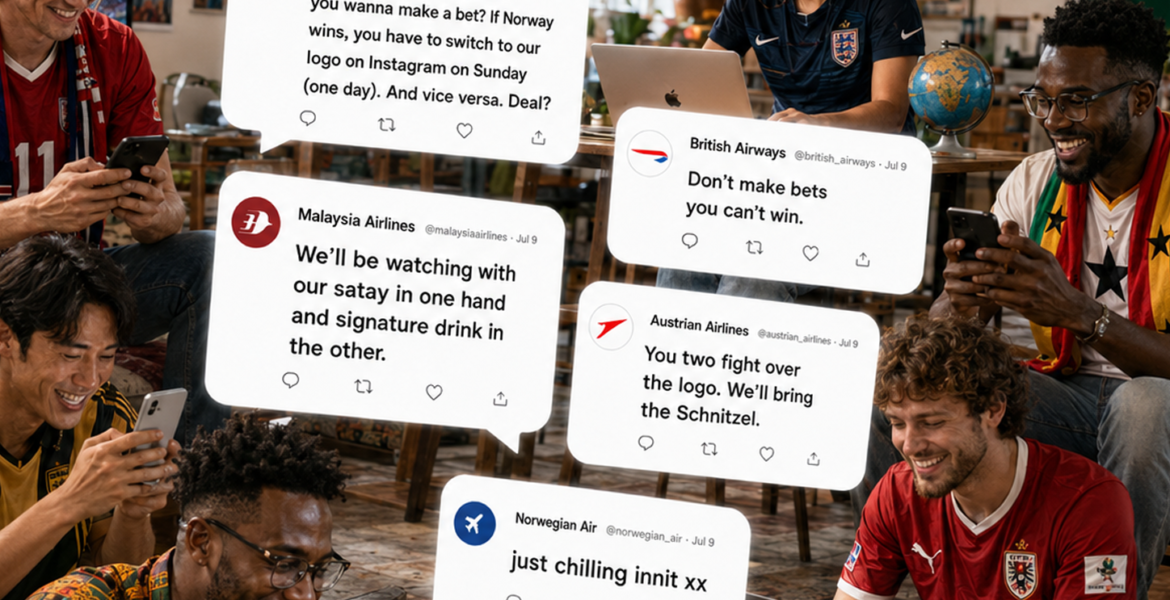
“Hey @british_airways, do you wanna make a bet? If Norway wins, you have to switch to our logo on Instagram on Sunday (one day). And vice versa. Deal?”
British Airways replied in four words: “Don’t make bets you can’t win.”
That was it. Two airlines. One exchange. No budget. No agency brief. No campaign approval process. No media buy.
What followed was one of the most watched brand moments of the World Cup. The post reached tens of millions of people. Every comment was positive. Malaysia Airlines joined the thread: “We’ll be watching with our satay in one hand and signature drink in the other.” Austrian Airlines wrote: “You two fight over the logo. We’ll bring the Schnitzel.” The two airlines filmed a joint video of an official handshake at British Airways’ headquarters. They traded playful jabs for days. Norwegian’s social media team replied to British Airways’ pre-match taunt with three words: “just chilling innit xx.”
On July 11, England beat Norway 2-1 in the World Cup quarter-final in Miami. Jude Bellingham scored twice. Erling Haaland, who had carried Norway to the quarter-finals almost single-handedly, left the pitch in tears.
The next morning, Norwegian Air changed its Instagram profile picture to the British Airways logo and posted a message beneath it: “While the tournament is over for us, this friendly bet will forever live in all our hearts. We wish England and British Airways all the best in the semi-final, and we sincerely hope you’ll get to bring football home.”
The internet loved it. Not because it was clever. Because it was real.
What Made It Work
Eivind Hammer Myhre, Norwegian’s spokesperson, told Business Insider that the social media team came up with the idea themselves. No external agency. No strategy document. “We would never in a million years have anticipated this kind of reception,” he said.
That is the first lesson. The moment was not manufactured. It was recognised. The Norwegian social media team saw a natural connection between their brand and the match, and they acted on it. The bet was low-stakes enough to be fun and high-visibility enough to matter. The logo, the most protected asset in any brand’s toolkit, became the chip on the table. That is what gave the moment its weight.
The second lesson is in the follow-through. Norwegian lost. And they paid up immediately, graciously, and publicly. The concession post was warmer than most brands’ victory posts. That is not just good sportsmanship. It is brand character. The brands that show who they are when they lose are more trusted than the brands that only show up when they are winning.
The third lesson is in the timing. This was not a campaign planned six months in advance. It was a response to a live event, executed within hours, with no production budget. The entire creative output was a text post and a handshake video. The reach was tens of millions. The cost was approximately zero.
The Paradox
Here is the counter-argument that also holds true.
For every Norwegian Air, there are a hundred brands that tried the same thing and failed. The brands that insert themselves into conversations they have no natural connection to. The brands that post “we stand with” statements about events that have nothing to do with them. The brands that try to be funny and are not. The brands that use a tragedy to sell a product. The brands that jump on a trending hashtag without reading what the hashtag is actually about.
The difference between Norwegian Air and those brands is not execution. It is permission. Norwegian Air had a genuine, logical connection to the match: a Norwegian airline and a British airline, with a Norway vs England game as the context. The bet made sense. It was not forced. The brand did not have to explain why it was relevant. The relevance was self-evident.
This is the test for any brand considering real-time participation: can you explain your connection to this moment in one sentence, without any stretch? If the answer is no, do not post.
What Botswana Brands Can Do
The World Cup is happening now. Botswana is watching. Every bar, every office, every household with a television is engaged with this tournament. The conversation is live, global, and open.
Botswana brands have a genuine connection to this moment. Debonairs Pizza, Nandos, Choppies, and every food and beverage brand in the country is feeding the people watching these games. Every mobile network is carrying the streams. Every bank is processing the transactions. Every retailer is selling the merchandise. The connection is real. The permission is there.
The question is not whether Botswana brands can participate in this conversation. The question is whether their social media teams have been given the autonomy to act on it in real time, without waiting for three rounds of approval that will arrive after the moment has passed.
Norwegian Air’s social media team did not wait for permission from the board. They had a clear enough understanding of their brand to know what it would and would not do, and they acted within that understanding. That is what brand clarity enables. Not just consistency in campaigns. Speed in moments.
What It Means to You
If you are a business owner or executive: The most expensive thing you can do on social media is nothing. The brands that show up in the world’s conversations, when they have a genuine reason to be there, build more equity in a single post than most campaigns build in a quarter.
If you are a marketing professional: Real-time brand participation is not about being funny. It is about being present and genuine. The brief is not “create a viral post.” The brief is “find the moments where our brand has a natural right to speak, and speak quickly.”
If you are a brand manager: Give your social media team a clear enough understanding of the brand that they can act without asking. The moment Norwegian Air’s team had to wait for approval, the moment would have been gone.
The World Cup ends in weeks. The moments are happening now. The brands that show up
will be remembered. The brands that waited for a strategy document will not.