
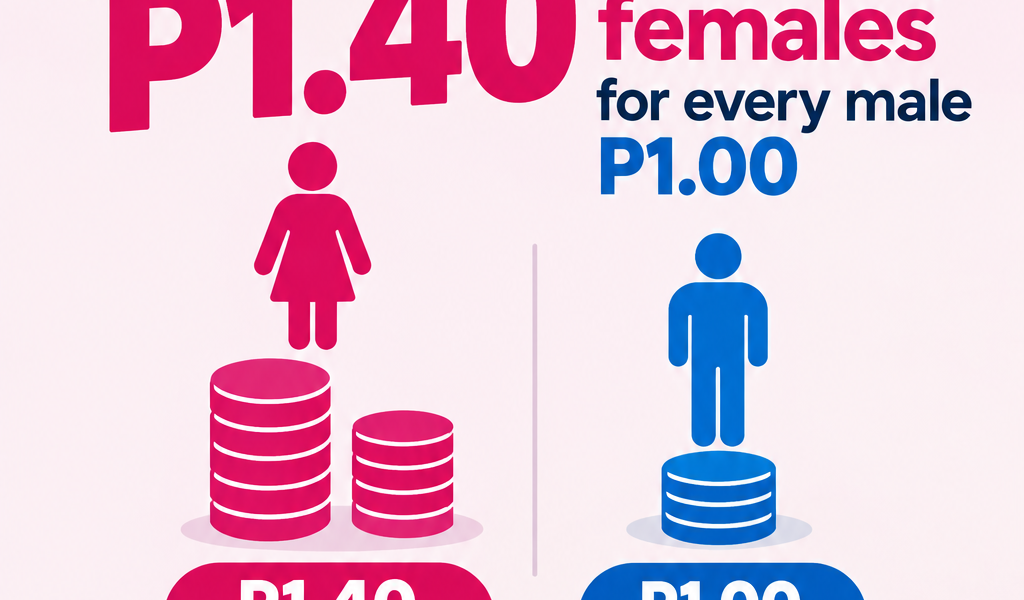
Gazette analysis of healthcare, tertiary education and social protection suggests females receive about P1.40 in selected public-service benefits for every P1.00 consumed by males, raising questions about male engagement with the state.
DR DOUGLAS RASBASH
New analysis carried out for The Botswana Gazette suggests females may be benefiting from selected public services about 40 percent more than males. That is an extraordinary number. But before anybody reaches for the politics of gender discrimination, it needs to be understood properly.
Government is not spending more on females. There is little evidence that the major services examined here have been deliberately designed to favour women and girls over men and boys. A hospital does not turn a man away because he is male. A university place is not inherently female. Most social protection programmes establish eligibility according to circumstances rather than sex.
The apparent gender bias occurs principally at the point of consumption. That distinction matters. Government provides a service; citizens decide, qualify or have occasion to consume it. When we examine some of the largest public services that can be directly attributed to individuals, females appear to be consuming considerably more of them.
 WHAT COUNTS
Most government expenditure cannot sensibly be divided between men and women. Who benefits more from a repaired road, a functioning court, national defence, a police station, Parliament or the Ministry of Finance? Trying to allocate such expenditure according to gender would rapidly become arbitrary. These are collective goods. Their benefits accrue to society.
The interesting question is narrower: what happens when government expenditure produces a service that can actually be consumed by individuals?
Three very large areas immediately emerge: healthcare, tertiary education and social protection. Botswana’s 2026/27 recurrent health budget is around P8.1 billion. Higher education receives more than P7 billion in recurrent funding. Social protection represents another substantial block of individually consumed public provision.
THE GAP
The gender differences are striking. Statistics Botswana reports that in 2024 there were 60,270 tertiary students, of whom 36,039 were female and 24,231 male. Females therefore constituted 59.8 percent of tertiary enrolment, giving a female-to-male ratio of 1.49.
Social protection shows a similar overall pattern. World Bank analysis of Botswana’s Multi-Topic Household Survey found females accounted for 56 percent of social-assistance beneficiaries against 44 percent males. Statistics Botswana subsequently reported almost the same split among beneficiary household heads: 55.9 percent female and 44.0 percent male.
Healthcare completes the picture, although the Botswana evidence here is less comprehensive and our estimate must therefore be treated more cautiously. Measured by visits to medical centres, 58 percent of visits are by females and 42 percent by males. This excludes maternal care.
Weight those three service areas by the recurrent public resources behind them and an intriguing result emerges. Our provisional model produces approximately 58 percent of directly attributable public-service consumption by females and 42 percent by males.
| Directly attributable service | Recurrent expenditure used | Female incidence | Male incidence | Female-attributed consumption | Male-attributed consumption | F:M |
| Higher education | P7.37bn | 60% | 40% | P4.42bn | P2.95bn | 1.5 |
| Health | P8.10bn | 58% | 42% | P4.70bn | P3.40bn | 1.38 |
| Social protection | P4.20bn | 56% | 44% | P2.35bn | P1.85bn | 1.27 |
| TOTAL / weighted result | P19.67bn | 58% | 42% | P11.47bn | P8.20bn | 1.4 |
P1.40 TO P1
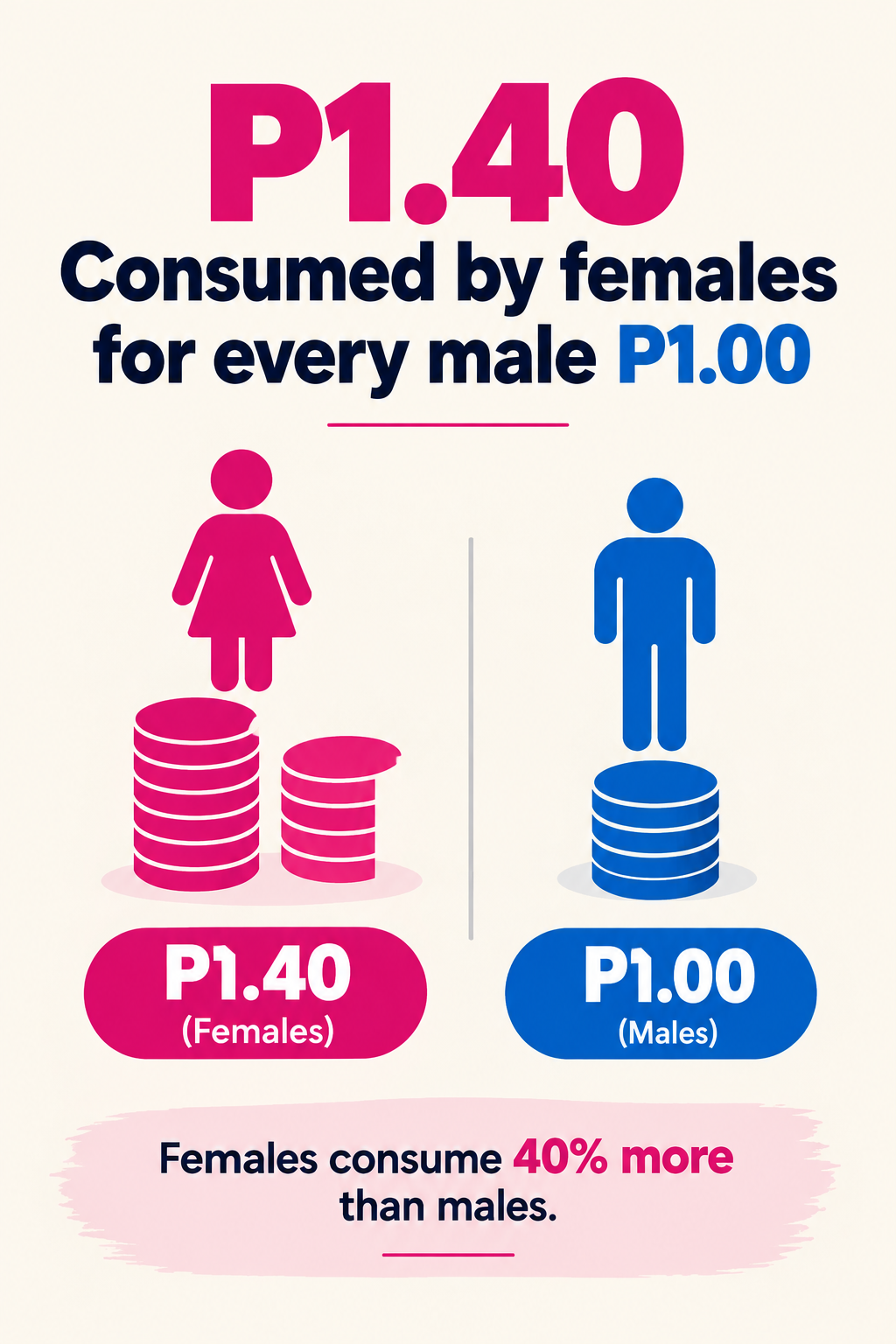
Put differently, for every P1.00 of these public services consumed by males, females consume approximately P1.40. On a per capita basis, adult females receive P3,200 per annum more in public-service benefit than males. This is not a budget allocation ratio, but a benefit ratio.
Schooling is compulsory, government provides it universally, and participation is broadly gender balanced. But when individual discretion over consuming the service is substantially removed, much of the gender difference becomes apparent. At tertiary level there are roughly three female students for every two males.
Perhaps the question we should be asking is therefore not why Botswana’s government favours females. It apparently does not. The more interesting question is why males consume fewer state services than females.
NOT ONE-DIMENSIONAL
Our findings turn conventional discussion of gender inequality on its head without contradicting the very real disadvantages women continue to experience elsewhere. Women can consume more public healthcare while simultaneously earning less or owning fewer productive assets. Female students can dominate universities while women remain underrepresented in senior corporate positions. Men can consume fewer social services while dominating other economic resources.
Gender inequality is not one-dimensional.
THE MALE QUESTION
Public policy usually concentrates on the supply side: build the clinic, fund the university, establish the social programme and allocate the budget. But equal availability does not guarantee equal consumption.
If males are substantially less likely to progress into tertiary education, less likely to engage with healthcare and less represented among users of social-support systems, then Botswana may have an overlooked male public-service engagement problem.
That matters far beyond accounting. A young man who leaves the education system earlier receives less publicly financed human-capital investment. A man who delays seeking healthcare may eventually present with a more serious and expensive condition. Someone who does not engage with social support when vulnerable may instead carry that vulnerability into unemployment, substance abuse, family breakdown, homelessness or the criminal justice system.
The fiscal system may therefore be telling us something about society that the budget itself cannot. Government may be offering services substantially without gender discrimination. But men and women are not consuming them equally.
Our findings tell us rather more about the condition of Botswana’s men than they do about the condition of its women. One conclusion is inescapable: the gender bias narrative is far more nuanced than many would like us to believe.