

Botswana’s 8.7% Q2 growth masks falling household consumption, weak non-mining activity and unresolved questions about whether diamond production is translating into cash, jobs and sustainable investment.
DR DOUGLAS RASBASH
Botswana’s economy grew by an impressive 8.7% in the second quarter of 2026. Yet household consumption fell by 7.3%, manufacturing contracted and the economy outside mining barely moved backwards. These apparently contradictory figures describe a country producing more wealth on paper while many families have less to spend. Economic success must ultimately reach households, strengthen public finances and generate income capable of sustaining investment.
DIAMOND REBOUND
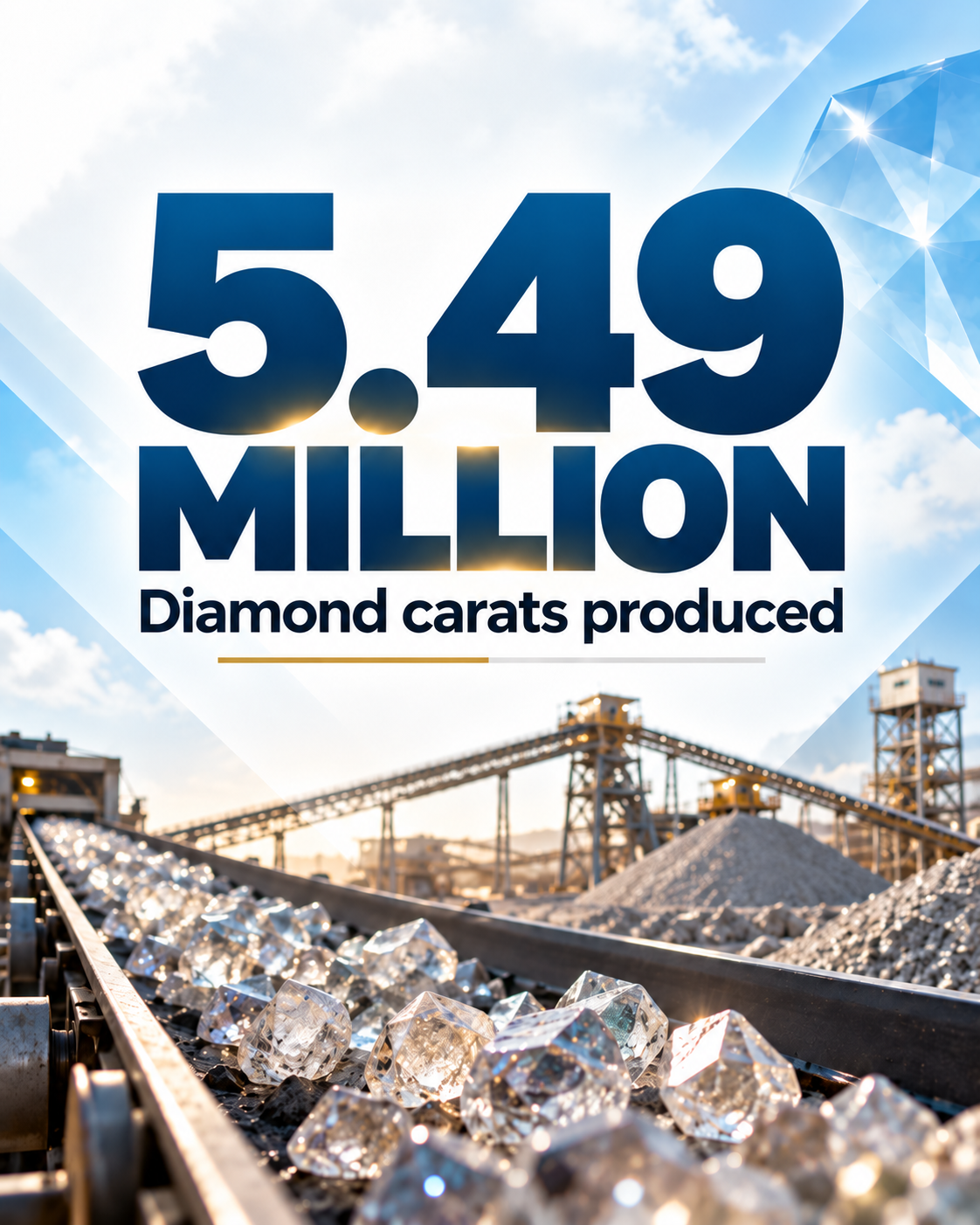
Mining and quarrying expanded by 81.7% compared with the second quarter of 2025, with diamond mining value added rising by 94.7%. Botswana’s diamond production reached 5.49 million carats, more than double the level recorded a year earlier. These increases explain much of the headline growth, but they also reflect comparison with a depressed production base. A large percentage rebound following a severe downturn does not necessarily signal renewed prosperity.

The market figures tell a less encouraging story. De Beers’ consolidated rough diamond sales value fell by 44% to US$665 million, while its average realised price dropped by 37% to US$110 per carat. Botswana’s production figures and De Beers’ consolidated sales figures cover different geographical scopes, so they cannot establish precisely how much Botswana’s diamond inventory increased. Nevertheless, their divergence raises an uncomfortable possibility: a substantial part of the recovery may represent diamonds moving from the ground into storage rather than into customers’ hands.
National accounts record production even when goods remain unsold. Inventory accumulation therefore contributes to measured GDP, although it does not immediately deliver export receipts or the cash associated with sales. Stored diamonds retain potential value, but that value depends on future buyers and prices. Rising production should consequently be welcomed cautiously until sales demonstrate that the market can absorb it.
BENEATH HEADLINES
Diamond cutting and polishing contracted by 21.4%, a troubling result for Botswana’s ambition to capture more value domestically through beneficiation. Rail contracted by 33.2%, a decline that warrants scrutiny as Botswana considers major new railway investments. Public administration remained the largest contributor to nominal GDP, accounting for 18.2%, illustrating the continuing weight of the state in the economy.
The quarter’s different growth measures also require careful reading. Real GDP rose by 1.3% from the first quarter, but nominal GDP fell by 4.4% to P70.04 billion. These measure different things: inflation-adjusted output increased while its value at current prices declined. The quarterly estimates are provisional and not seasonally adjusted, so the movements should be interpreted cautiously.
HOUSEHOLD SQUEEZE
The clearest evidence that recovery has yet to spread is the 7.3% decline in household consumption. Total final consumption fell by 3%, despite government consumption increasing by 2.4%. Public spending provided some support, but could not offset the contraction in household demand. Agriculture contracted by 23%, manufacturing by 9.2% and construction by 1.6%. Diamond trading fell by 27.9%.
Livestock activity was particularly badly affected. The review records a 47.8% contraction, alongside foot-and-mouth disease restrictions and sharply reduced cattle sales to the Botswana Meat Commission. Meat processing fell by 61%. Some services continued growing, but these gains were insufficient to produce overall growth outside mining: non-mining GDP contracted by 0.2%.
That is the diversification warning. Botswana remains capable of recording strong national growth through diamonds while much of its broader productive economy struggles.
INFLATION PRESSURE
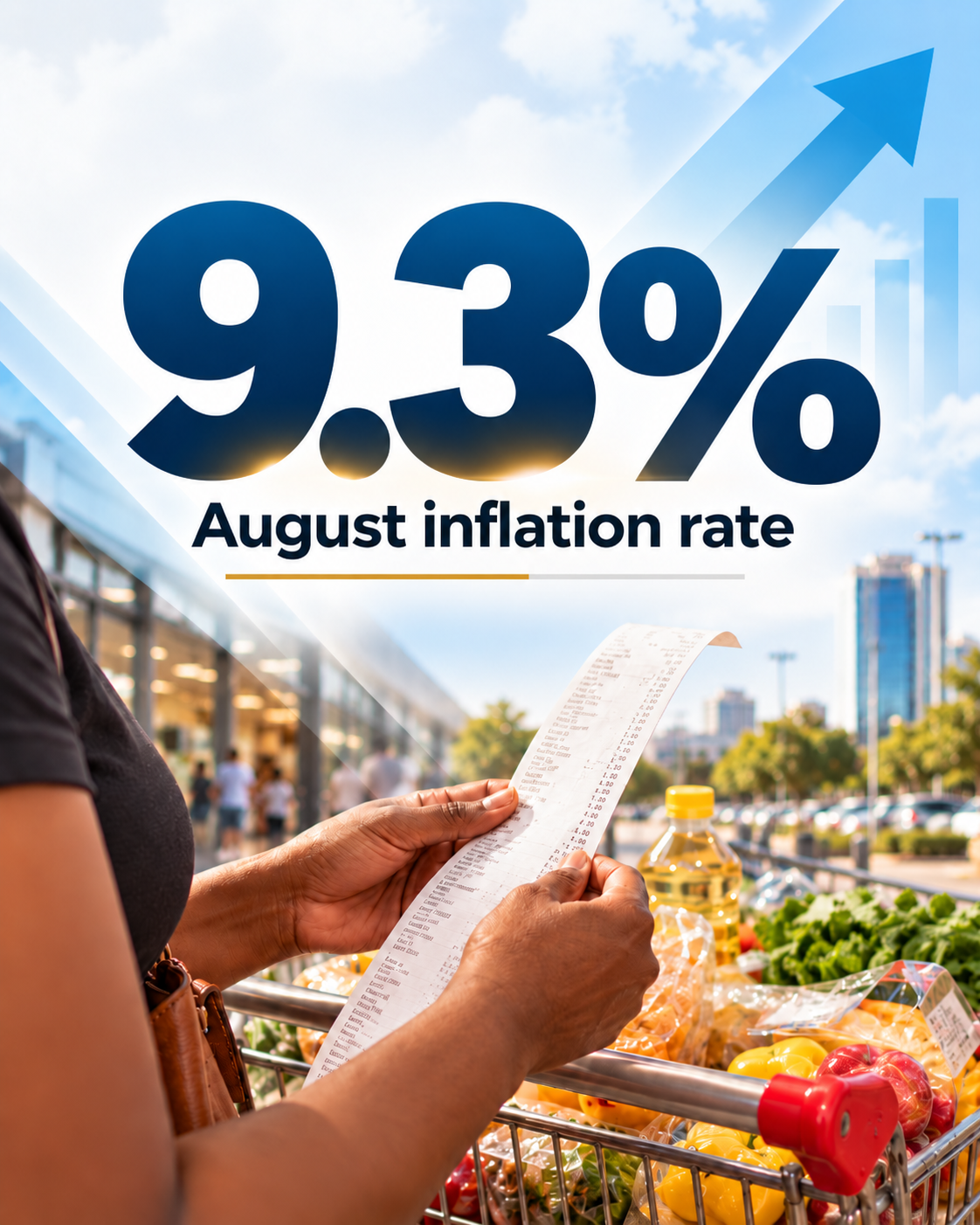
Households also face rising prices. Inflation stood at 9.3% in August, well above the Bank of Botswana’s 3 to 6% objective range and the 1.4% recorded a year earlier. Imported tradeables inflation reached 13%, while an electricity tariff increase contributed to domestic price pressure. The Monetary Policy Rate stood at 5.5% in September.
Weak household demand would ordinarily strengthen the case for easier monetary conditions, but elevated inflation constrains that response. For businesses, higher turnover may simply reflect higher prices rather than more customers or stronger sales volumes. For households, inflation reduces purchasing power precisely when consumption is already contracting.
FISCAL WARNING
September’s sovereign credit rating decisions underline the pressure on public finances. S&P affirmed Botswana’s BBB− rating with a negative outlook. Moody’s lowered its rating from Baa1 to Baa2, while changing the outlook from negative to stable. Both retain Botswana within investment grade, but S&P’s negative outlook remains a significant warning. The agencies’ concerns centre on weak diamond demand, fiscal pressures, limited diversification and depleted financial buffers.
Foreign exchange reserves of P59.1 billion in June provide a meaningful cushion. Continuing trade deficits nevertheless show why that cushion requires protection. The fiscal challenge is to rebuild buffers while financing essential services and productive investment. More borrowing increases the importance of demonstrating what each investment will earn or save.
DE BEERS TRANSITION
Anglo American’s planned disposal of De Beers introduces further uncertainty. For Botswana, greater ownership could increase influence over a strategically important company. It could also deepen public exposure to the industry already responsible for much of the country’s export earnings and fiscal volatility. The decisive questions concern the purchase price, financing, future capital requirements and sustainable cash distributions. Strategic importance alone cannot establish that an acquisition offers an attractive financial return.
Pension investors face similar considerations. Their members’ employment and domestic investments are already affected by Botswana’s diamond cycle. Additional diamond exposure could intensify that concentration.

PAYING ASSETS
The Botswana Economic Transformation Programme offers potential investment opportunities, but inclusion in a government programme does not make a project suitable for pension savings. The review identifies contracted electricity generation as the clearest demonstrated model for relatively predictable, recurring revenue. A properly structured power purchase agreement establishes a buyer, tariff and payment arrangements, making income easier to assess. Scatec’s completed 120 MW Mmadinare Solar Cluster, operating under a 25-year agreement with Botswana Power Corporation, illustrates the model. Energy still carries risks. Investors must examine the purchaser’s ability to pay, grid access, curtailment, maintenance and currency exposure.
Mega transport schemes require particular caution. The proposed Trans-Kalahari Railway and new airports involve substantial costs and uncertain demand. Pension commitments should depend on independent feasibility studies, conservative traffic assumptions and enforceable customer contracts. The encouraging domestic signal is the 7.8% increase in fixed investment. Its eventual value will depend on whether it creates employment, strengthens local suppliers and improves productivity.
Botswana’s recovery now faces a practical test: whether diamonds become sales, investment becomes household income and borrowing builds assets that pay their way. Until those links strengthen, the GDP headline will remain more reassuring than the economic experience of many Batswana.