
President Duma Boko’s new focus on maintenance and household relief raises questions about the fate of last year’s ambitious transformation and jobs commitments.
DR DOUGLAS RASBASH
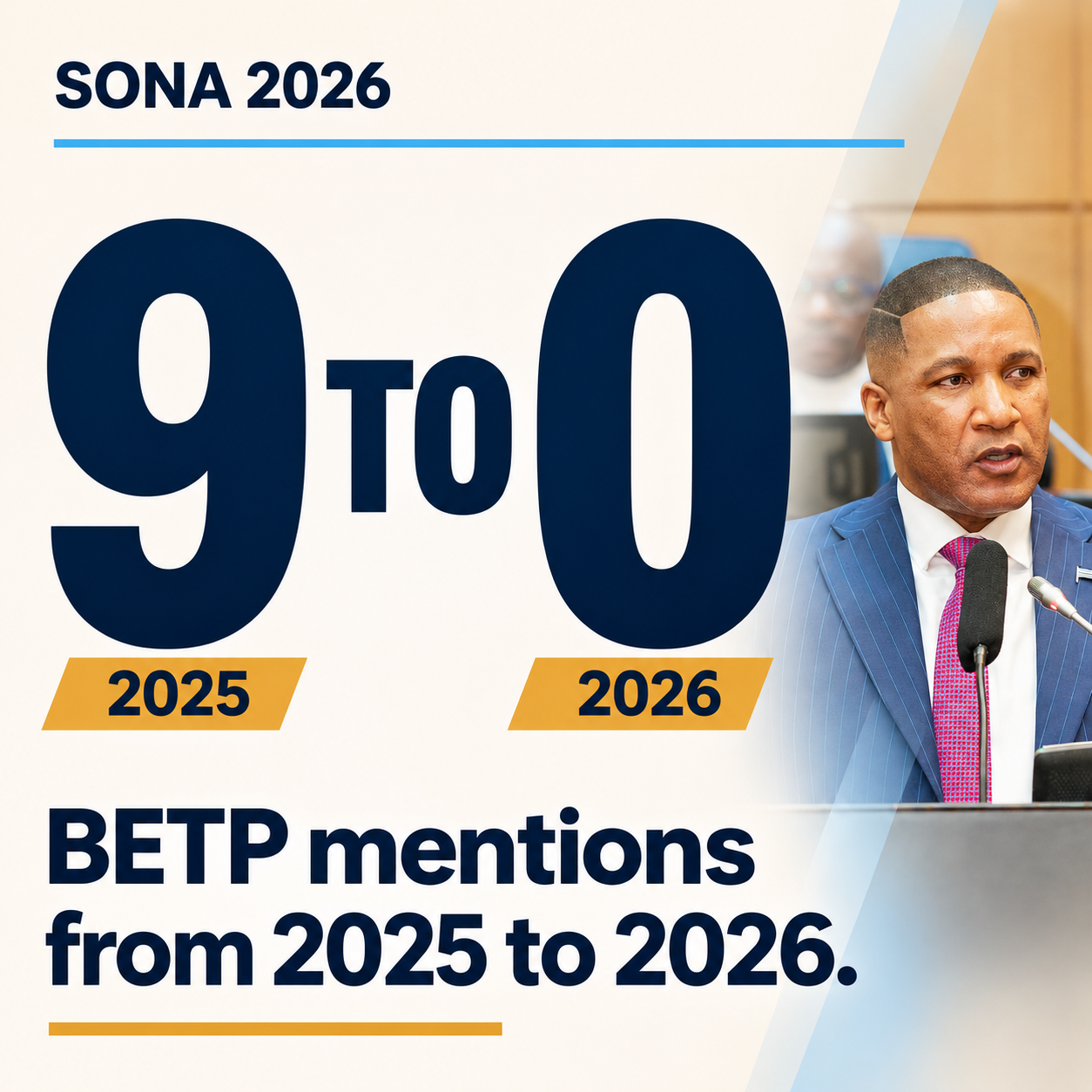
A year ago, the Botswana Economic Transformation Programme (BETP) was central to President Duma Boko’s State of the Nation Address. It was to help Botswana reach high-income status by 2036, raise per-capita income to P200,000 and create 512,000 jobs. The acronym BETP appeared nine times across seven paragraphs. In the 2026 address it appeared zero times. For a programme given such prominence a year earlier, its disappearance from the speech is astonishing. The President offered neither an account of its progress nor an explanation of where it now fits in government’s plans.
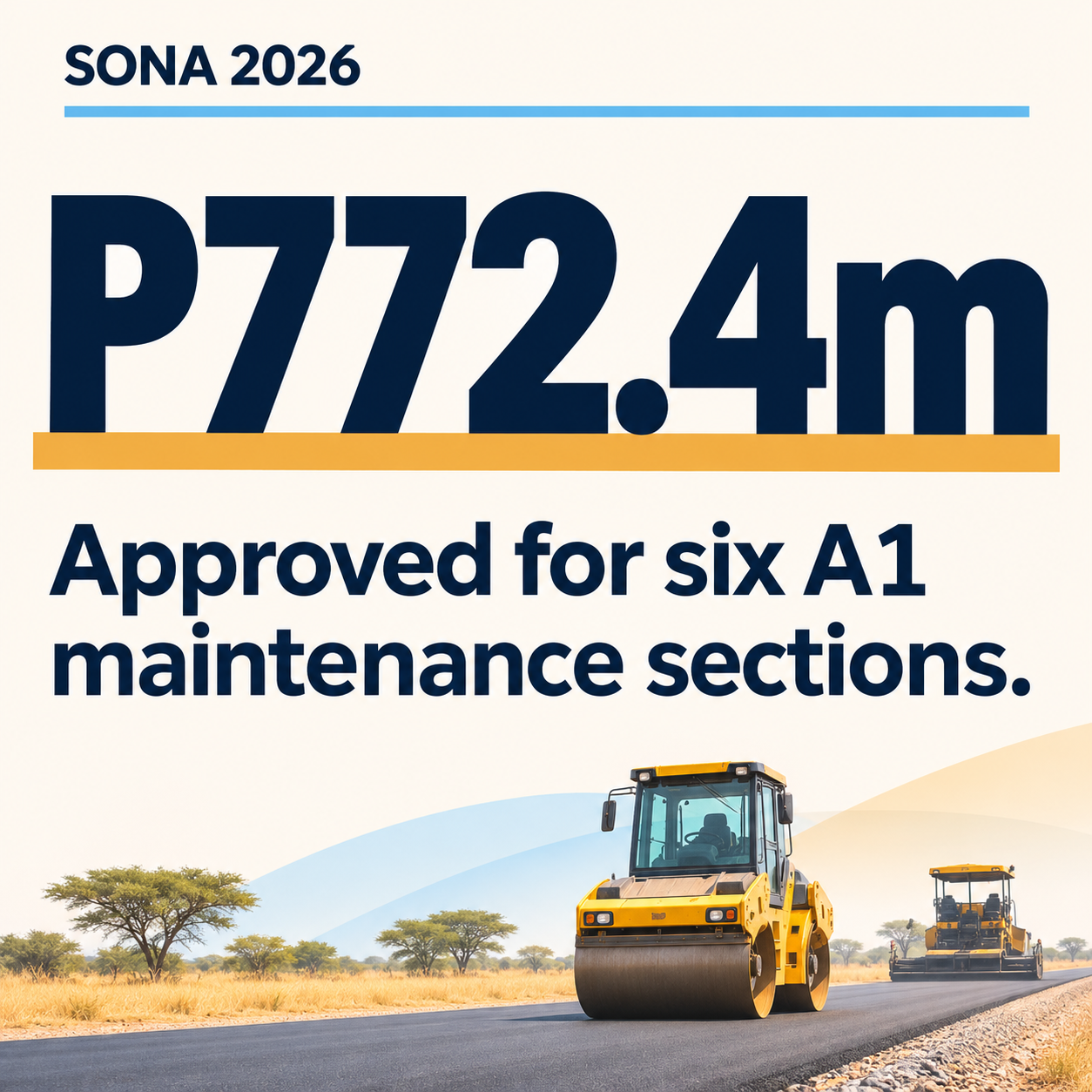
What he did offer was a clue to the change in emphasis. Given limited resources, he said, government had become “increasingly frugal”. For the A1, he cited P772.4 million approved for urgent maintenance on six sections. The previous year’s promise to begin feasibility work on an A1 toll road received no specific update. My reading is that the 2025 agenda exceeded what government could realistically finance and execute, and that this year’s speech signals a more prudent order of priorities.
PRESERVING PUBLIC ASSETS
The strongest case for this change is visible in the work itself. Through the skills component of Ikageng, nearly 27,600 young people, 79 percent of them women, were engaged in building and maintaining public infrastructure. The President also reported that the Education Infrastructure and Management Company uses Ikageng participants and technical and vocational graduates in school maintenance. This gives young people a chance to earn and learn while keeping existing facilities in use. The same principle should guide the care of clinics and other public buildings.
Maintenance is a financial decision as much as an engineering one. A road kept in good condition can serve for longer before it needs expensive reconstruction. A school repaired while it is still in use preserves the value of what taxpayers have already paid for. The test of the A1 allocation is how much work is completed, how long the repairs last and how the road performs afterwards. The value of school maintenance is measured in classrooms that stay open and usable.
The shift is clearest in the work described for the near term. The Mmamabula–Lephalale and Mosetse–Kazungula–Livingstone rail links received no specific update. The same applies to the 900 MW solar programme named in 2025 for Maun, Letlhakane and Isang. The 200 MW reported added to the grid came from Mmadinare and Jwaneng. The Trans Kalahari Railway and the Chobe–Zambezi water transfer remain in the speech, with contractor procurement envisaged for 2027/28 subject to successful feasibility work. SONA 2027 should reveal the fate of the remaining megaprojects. Parliament still needs to know which earlier commitments have been deferred, redesigned or dropped. Hopefully Budget 2027 will bring more transparency.
HOUSEHOLD RELIEF
Frugality has a social purpose when it protects the services people rely on and eases the costs they face. The tertiary allowance rose from P1,900 to P2,200. Technical and vocational students moved from P300 to P1,900 and then to P2,200. The promised P2,500 remains the target. The P300 monthly infant grant reached 16,501 eligible infants in their first year, with P34.3 million paid out between July and October.
The Basic Bank Account is a practical reform, aimed particularly at people earning below P4,000 a month. It requires P50 to open, has no monthly maintenance fee and offers free deposits, three free withdrawals a month and a free first bank card. Government also suspended the fuel, road and security-of-supply levies for six months, at a reported cost of about P700 million. That cost belongs in any assessment of how government has chosen to provide relief.
The President reported 567 previously started Bonno homes completed and handed over, and construction begun on another 1,366. By 30 October, 5,277 of 8,951 outstanding pension claims from serving and former military personnel had been paid. Serowe’s rehabilitation centre opened for outpatient care in its first phase. Parliament approved the National Health Insurance Policy in August and work on the bill began. That is a step towards easing the cost of care. Families still need to know when coverage will start, what it will cover and what they will pay.
THE JOBS GAP
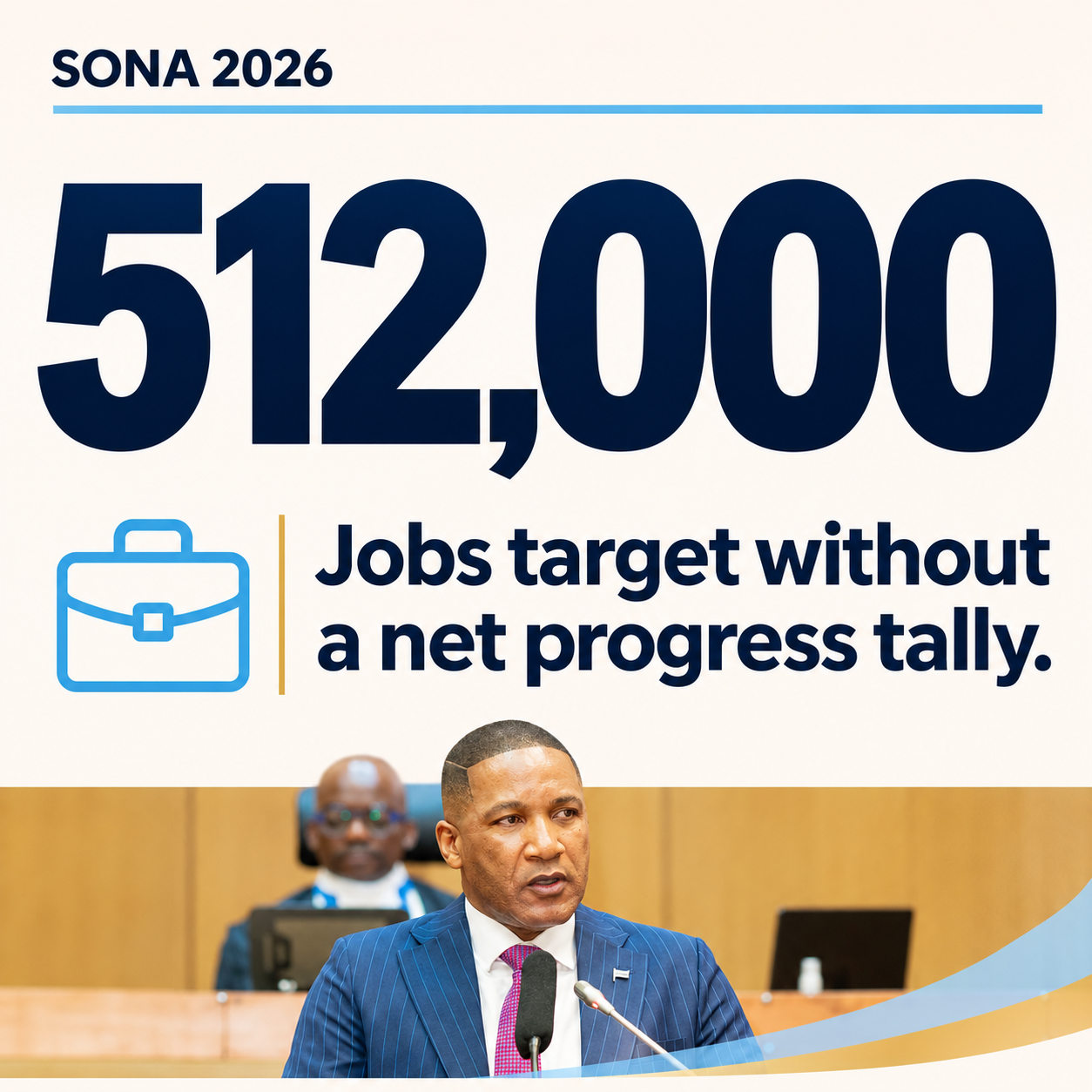
The employment figures cited in the speech add up to roughly 46,000 instances of work, placement or programme participation. They include Ikageng, 4,366 temporary public service workers moved into permanent posts, 804 private-sector internships, and other permanent and temporary employment reported across different periods. The figures may overlap. Insourcing gives existing workers greater security, and public works and internships give people paid work or experience. The speech supplied no national tally of net new, lasting jobs against the 512,000 target announced in 2025. That makes the silence on BETP consequential. Given that reducing unemployment is the number one priority, the need for a jobs barometer should be obvious.
THE DELIVERY TEST
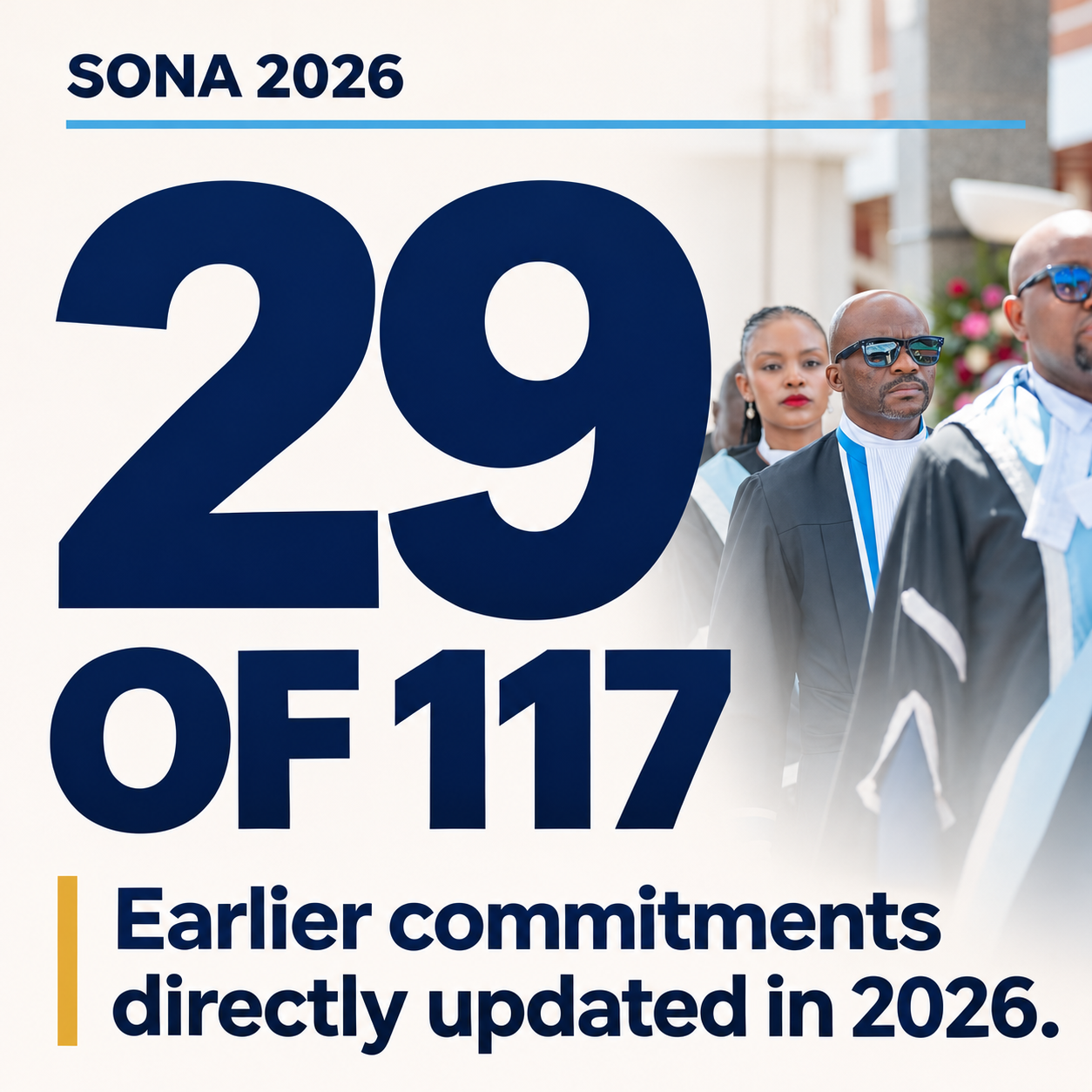
Our comparison found that 29 of 117 commitments from 2025 received a direct update. Another 29 drew related remarks without a specific answer, and 59 received no specific mention. The new speech set out 45 forward undertakings, of which 30 were distinct from the 2025 commitments, 14 renewed or specified earlier ones and one revised an earlier promise. This measures what Parliament was told. An omission leaves the delivery status open.
The same discipline should apply to De Beers. The proposed deal would raise Botswana’s stake from 15 to 30 percent if it closes, making Botswana the largest single shareholder and revising the majority-stake ambition of 2025. Greater influence may be valuable. Parliament needs to know the purchase price, how it will be financed and what rights Botswana would secure, especially if diamond sales disappoint.
A public delivery ledger would give substance to the President’s claim of greater frugality. For each commitment it should show the original target, what was spent, what was delivered and the next deadline. For maintenance, publish the condition before and after the work. For jobs programmes, track how many participants move into lasting employment. For BETP, say which commitments still stand and who is responsible for them. Government has made a plausible case for taking better care of the assets Botswana already owns. The next step is to show what that choice delivers, and to explain what it means for the promises on which Parliament was asked to rely last year.
PROMISES DASHBOARD
| Policy area | 2025 promises | Direct updates | New in 2026 | 2026 total |
|---|---|---|---|---|
| Social | 39 | 14 | 8 | 15 |
| Economic | 30 | 8 | 8 | 11 |
| Technical | 22 | 2 | 9 | 10 |
| Environmental | 9 | 1 | 0 | 1 |
| Government | 17 | 4 | 5 | 8 |
| Total | 117 | 29 | 30 | 45 |
Sources: Botswana’s 2025 and 2026 State of the Nation Addresses and the Gazette commitments crosswalk.