
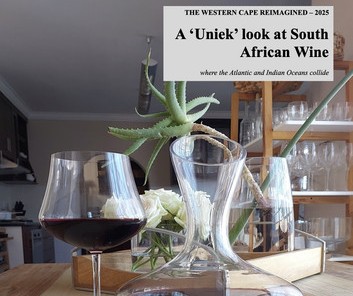
This e-book drags South African wine out of the cellar of snobbery and pours it straight onto the family table
GOSEGO MOTSUMI
Some wine books swirl. Local author and wine enthusiast,Cornelius Gaetsaloe’s A ‘Uniek’ Look at South African Wine struts in like it’s late for a braai and carrying the good bottle. Set where the Atlantic and Indian Oceans high-five the Cape, the e-book trades Latin-laced tasting notes for storytelling, turning terroir into something you can actually taste without Googling.
“South African wine has been overlooked by the global wine world for far too long,” he told Time Out. “It should be held in much higher regard than the pervading perception of mass produced, bulk vino.”
DOWN WITH THE DECANTER
Gaetsaloe’s mission is radical in the most disarming way: talk about wine like you talk about spinach. “Wine is an agricultural product intended to end up on our tables,” he insists, rejecting the velvet-rope language that made the industry feel like a private club.
“Wine is no longer exclusively the domain of royalty or the fabulously wealthy.”
It’s a line that lands like a cork popping — celebratory, disruptive and a little bit rebellious.
By stripping away jargon, he reframes acidity, tannins and body as dinner-table conversation rather than exam material. The result is a guide that reads less like a textbook and more like a road trip with a knowledgeable friend who knows where the good bottles are.
HEROES OF THE HEMEL-EN-AARDE
The real stars aren’t just the vines; they’re the people. Gaetsaloe spotlights winemakers of colour reshaping the Cape’s narrative, including Berene Sauls of Tesselaarsdal, whose Pinot Noir and Chardonnay rise from Khoisan lineage to world-class acclaim, and Banele Vakele, the Elsenburg-trained talent turning township beginnings into Cape Winemakers Guild prestige.
Their stories ferment alongside the wine, proof that transformation in the glass mirrors transformation in society.
OCEANS IN THE BOTTLE
Geography becomes flavour. The cold Atlantic bite and Indian Ocean warmth stretch ripening seasons, building acidity, freshness and food-friendly structure. It’s climate as co-author, drought as antagonist, and biodiversity as the quiet hero.
But Gaetsaloe never lets science overshadow the social. Wine, in his telling, is the stage for long lunches, cattle-post sunsets and the slow theatre of conversation.
THE COMMUNION OF THE CAPE
For Botswana readers with easy access to Cape bottles, the book feels like a neighbourly invitation: drink closer to home, drink better than the price tag suggests, and understand the human hands behind the label.
The book was launched on 27th February 2026 as an e-book on Kobo (https://kobo.com) with a retail price of ZAR155 (USD14.99).