
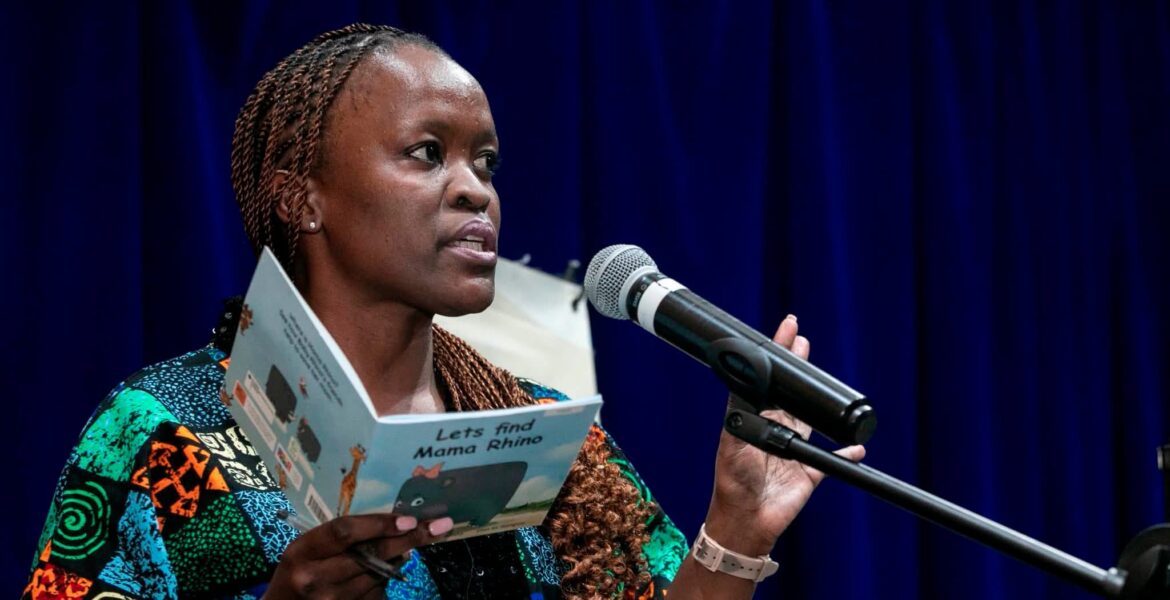
AI can generate a story in seconds. But can it create the electricity of a room full of people arguing, laughing and imagining together? The Gaborone Book Festival is betting it cannot.
GOSEGO MOTSUMI
Artificial intelligence may be rewriting the rules of creativity, but the Gaborone Book Festival is making one thing clear: the human gathering is not obsolete.
Returning for its ninth edition after a two-year pause, the festival has come back less like a routine literary date and more like a reset. For co-curator Keikantse Phele, the break offered the curatorial team an opportunity to step back and ask a deceptively simple question: what should the festival become next?
“We took a pause for two years,” Phele says, explaining that the time allowed the team to reflect on “what do we want to do? How do we want to look like?”
The answer appears to be simple: make room for bigger questions.
THE AI ELEPHANT IN THE ROOM
The festival arrives at a moment when AI is challenging everything from authorship to originality. Naturally, that raises another question for literary gatherings: if technology can produce words, do we still need physical spaces devoted to them?
Phele’s answer is an emphatic yes.
“Book festivals will and remain as very gracious, they are needed spaces for us to have conversations,” she says.
And these are not meant to be polite conversations only. GBF aims to create room for “controversial conversations” and serious debate, particularly around African literature and who gets to shape its future.
Where are African stories going? Who are they written for? How should they be retold? And can writers collaborate with technology without losing the human pulse that makes storytelling matter?
STORIES MEET THE WORLD
The festival is also pushing literature beyond the page, with conversations exploring storytelling and the environment against the backdrop of climate change.
That made the edition feel particularly alive. Books become the starting point, not the finish line.
This year’s festival was staged in partnership with the Office of the Vice Chancellor for Research at the University of Wisconsin-Madison, with Dr Kirk Sides, an Associate Professor of English at the university, serving as co-curator.
The programme featured a largely local line-up of authors and writers, including Thalefang Charles, Phodiso Modirwa, Kenneth Middleton, Gothataone Moeng, Priscillar Ndadi, Pearl Stabile Ndovu and Onica Lekuntwane.
The festival also widened its creative lens beyond literature, featuring musician and filmmaker Game Zeus Bantsi and acclaimed folklore artist Ntirelang Berman.
In a world increasingly crowded with AI-generated content, GBF’s message feels timely: stories may be generated by machines, but the conversations that give them meaning still need people.