
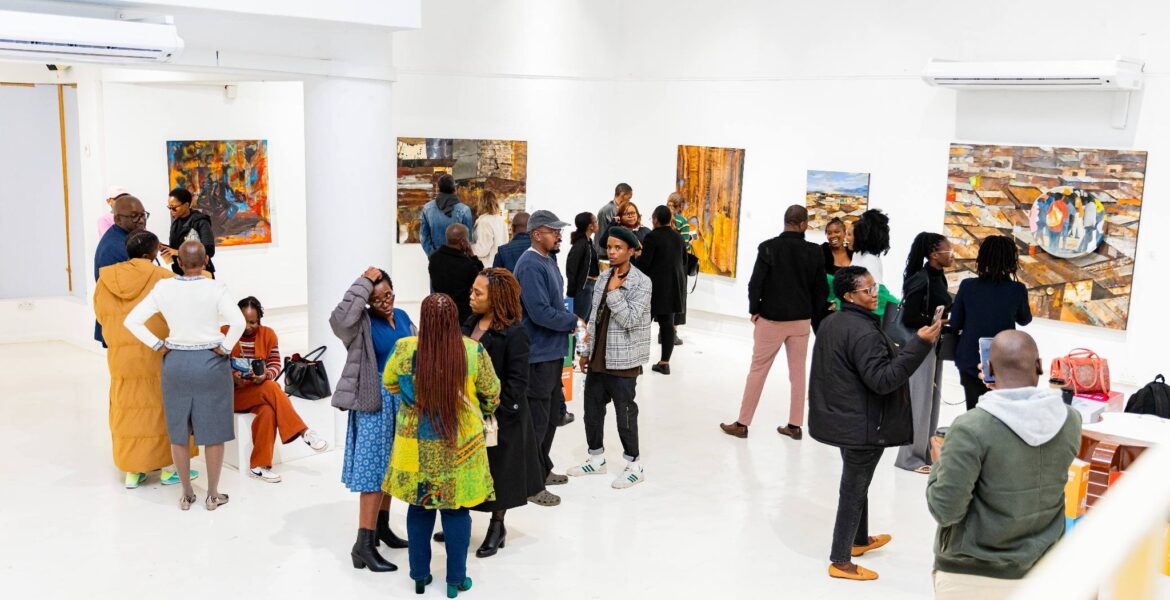
At the National Museum’s Art Gallery, artist Totang Motoloki is turning discarded metal into emotional, rebellious art and forcing audiences to rethink what society throws away
GOSEGO MOTSUMI
There’s something deliciously rebellious about watching rust become beautiful.
Inside the halls of the National Art Gallery in Gaborone, scrap metal, abandoned fragments, and forgotten industrial leftovers now breathe with startling new life in Beyond The Scrap, a solo exhibition by Totang Motoloki that feels less like an art show and more like a cultural wake-up call.
Running until May 28, the exhibition does not politely whisper about sustainability. It grabs Botswana by the collar and asks audiences to reconsider what they throw away, and whether “waste” is truly useless or simply misunderstood.
Motoloki’s work refuses to let waste die quietly.
THE POETRY OF RUST
The mixed-media pieces pulse with energy. Bent metal sheets morph into layered visual stories carrying the scars of urban survival, African identity, resilience, and reinvention. The works feel alive precisely because they once lived another life before being thrown away.
Curator Thabo Kgatlwane said the exhibition was designed to challenge the idea of value itself.
“It’s about shifting mindsets, from disposal to reimagination,” he told Time Out.
That philosophy hangs over the gallery like smoke. Every rusted edge and salvaged texture becomes evidence that beauty is often hiding inside neglect.
ART WITH GREASE UNDER ITS NAILS
Unlike many eco-conscious exhibitions that drift into polished activism, Beyond The Scrap stays grounded in Botswana’s lived realities. There’s grit here. The artworks echo scrapyards, crowded streets, survival economies, and the quiet creativity people use every day to make something from almost nothing.
Kgatlwane deliberately avoided framing the works as simple “recycled art.” Instead, the exhibition unfolds like a journey from abandonment to rebirth.
“We also framed the exhibition around the themes of conservation and resilience, ensuring that
every element; from the curatorial text to the viewing experience, reinforced the idea that these
works are not just objects, but reflections of society, environment, and human experience.”
And audiences are responding.
Opening night drew conservationists, collectors, business leaders, and curious first-time gallery visitors. Several pieces sold immediately, while others sparked commissioned requests.
WHEN WASTE BECOMES A MOVEMENT
At a time when climate anxiety dominates global conversation, Beyond The Scrap arrives with perfect timing. But its real power lies in making sustainability feel human rather than fashionable.
The exhibition argues that artistic responsibility now extends beyond aesthetics. Young artists, especially, are being challenged to create with intention, conscience, and courage.
“Art has a responsibility; not just to be seen, but to
contribute to conversations that matter. And right now, sustainability and environmental awareness are among the most critical conversations we can be part of,” Kgatlwane added.