
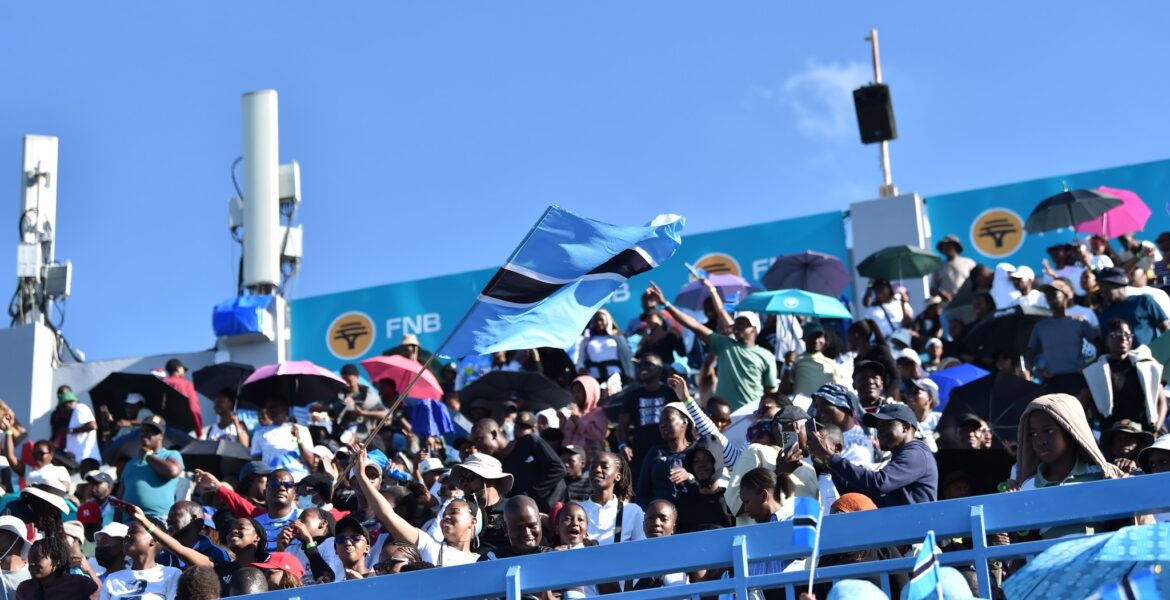
As Botswana prepares to host the world at the World Athletics Relays, the question isn’t just about medals, it’s about mood. Where is the music to carry the moment?
GOSEGO MOTSUMI
There’s a peculiar silence hanging over Gaborone and it has nothing to do with the calm before the storm. As the country gears up to host the world for the Debswana World Athletics Relays in early May, the stadium is ready, the athletes are locked in, and the flags are poised to rise.
But the music speakers? They’re quiet.
Because here’s the uncomfortable truth: Botswana has no defining theme song for this moment.
THE ART OF THEME SONGS
There was a time when major events, even global sporting events didn’t just arrive; they sounded like something. When Shakira dropped Waka Waka (This Time for Africa) during the 2010 FIFA World Cup, it wasn’t just a hit it was a cultural ignition. The song outlived the tournament, embedding itself into memory as the unofficial pulse of a continent.
Today, Botswana stands on the brink of its own global spotlight. The world’s fastest athletes are heading to Gaborone, Botswana, for the historic Debswana World Athletics Relays Gaborone on Saturday, 2 May, and Sunday, 3 May 2026—but without a unifying sound to bottle the energy.
“Music is not decoration for an event; it’s the emotional engine,” Botswana Musicians Union President Papi Rakhudu told Time Out. “Without it, you’re asking people to feel something you haven’t sonically defined.”
A STAGE WITHOUT A SOUNDTRACK
The irony is hard to ignore. Botswana has the athletes, the infrastructure, and the moment. What it lacks is the feeling, the sonic glue that binds audiences, from stadium seats to street corners.
A theme song does more than hype, it travels. It turns a local event into a global memory. It gives broadcasters something to loop, fans something to chant, and a nation something to rally behind.
Without it, the energy risks fragmentation.
“Musicians are influenced by the hype around them to create, and there hasn’t been any information shared to involve and engage artists. But it’s important to have songs that define the moment,” Rakhudu said.
“We do need a theme song, even if it’s a direct appointment, to create the buzz around the event and it’s never too late to release a song.”
WHO DROPPED THE BEAT?
So how does a country hosting one of athletics’ premier events miss this note?
“National organising committees often prioritise logistics over cultural storytelling. Music becomes an afterthought, if it appears at all,” one critic opined.
But that explanation only goes so far.
Because Botswana isn’t short on talent. From Afro-pop to Amapiano-infused sounds, the local scene is vibrant, export-ready, and hungry for moments exactly like this.
The gap, then, isn’t creativity. It’s coordination.
THE COST OF SILENCE
In an era driven by virality and cultural moments, silence is expensive.
Platforms like TikTok thrive on sound. A single catchy hook can turn a relay race into a global trend. Without an official or even organic anthem, Botswana risks missing out on the kind of digital afterlife that extends an event far beyond its closing ceremony.
And more importantly, it risks missing the chance to define how this moment feels.
CAN THE MUSIC STILL ARRIVE?
The race hasn’t started yet. Rakhudu said there’s still time for a late entry, a collaboration, a surprise drop, a grassroots anthem that catches fire.
Because if history has taught us anything, it’s that the right song doesn’t just accompany a moment it becomes it.
Botswana doesn’t just need to host the world. It needs to give it something to remember.
And right now, the world is listening for a beat that hasn’t dropped.