
The Year 2025 will be remembered as a consequential and, at times, an unsettling one for Botswana’s judiciary
GAZETTE REPORTER
The year 2025 will be remembered as a consequential and, at times, unsettling period for Botswana’s judiciary. It was a year marked by leadership transitions at the highest level, heated legal and constitutional debates, controversial appointments, and a growing judicial workload that tested the system’s capacity and independence.
As political change and social pressures intensified, the courts increasingly found themselves at the centre of national conversation, praised by some for asserting independence, criticised by others for perceived opacity and political proximity. What emerged was a judiciary in transition, navigating reform while under unprecedented public scrutiny.
A NEW CHIEF JUSTICE AT A CRITICAL MOMENT
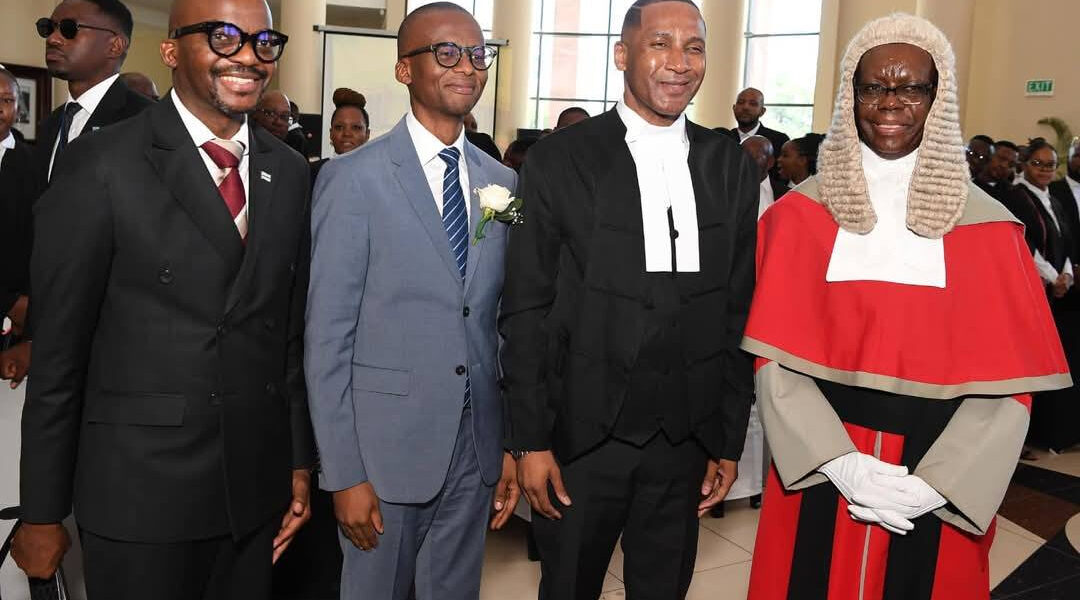
On 18 January 2025, Judge Gaolapelwe Gee Ketlogetswe was sworn in as Chief Justice, following the resignation of Justice Terrence Rannowane on health grounds. His appointment came at a sensitive time, as public confidence in institutions faced strain amid political realignments and rising criminal activity.
Justice Ketlogetswe’s elevation was widely welcomed across the legal fraternity. Known for his measured temperament, integrity and firm belief in judicial independence, his appointment signalled both continuity and renewal. From the outset, the new Chief Justice stressed efficiency, transparency and the safeguarding of judicial autonomy—priorities that would shape the judiciary’s direction throughout the year.
A NEW PROSECUTORIAL ERA
In August, President Duma Boko appointed prominent private attorney Kgosietsile Ngakaagae as Director of Public Prosecutions. The appointment drew keen interest, given the DPP’s central role in politically sensitive and high-profile criminal cases.
Ngakaagae’s arrival was seen by many as an attempt to restore confidence in the prosecution service. His reputation for legal rigour and independence raised expectations that prosecutorial decisions would be more insulated from political influence.
The appointment also reignited national debate around capital punishment. With President Boko publicly opposed to the death penalty, Ngakaagae’s tenure became intertwined with broader conversations about criminal justice reform and human rights. Civil society groups renewed calls for abolition, while opponents insisted that the death penalty remained a necessary deterrent for the most serious crimes.
CONSTITUTIONAL COURT PROPOSAL SPARKS DEBATE
Against this backdrop, the UDC-led government introduced proposals to amend the Constitution to establish a dedicated Constitutional Court. The move was justified as a way to strengthen constitutional oversight, particularly in human rights and governance disputes currently handled by the Court of Appeal.
The proposal proved divisive. Supporters argued that a specialised apex court would enhance clarity and consistency in constitutional interpretation. Critics countered that the public had not been adequately consulted and warned that such a court could be used to advance political objectives—particularly the possible judicial abolition of the death penalty.
The debate underscored deeper anxieties about judicial reform, separation of powers and the pace at which structural changes were being pursued.
SHIFTS IN THE ATTORNEY GENERAL’S CHAMBERS
Attorney General Mmako Abram served for much of the year, providing continuity in an otherwise turbulent legal environment. However, controversy erupted in November when Abram was appointed to the High Court bench.
The Law Society of Botswana (LSB) attempted to challenge the appointment, arguing that proper procedures had not been followed. The matter exposed deep divisions within the legal profession, with some praising Abram’s legal competence, while others feared the precedent of politically influenced judicial promotions.
Before the challenge could be tested in court, Abram was sworn in by President Boko, effectively closing the door on immediate legal intervention. The government later appointed veteran lawyer Dick Bayford as the new Attorney General—a move largely welcomed as a stabilising and experience-driven appointment.
STRENGTHENING THE APPELLATE AND HIGH COURT BENCHES
In June, the Court of Appeal was bolstered with the appointment of three new justices—Tshepo Motswagole, Michael Leburu and Lot Moroka—all elevated from the High Court. The appointments were aimed at easing a growing appellate backlog while preserving institutional continuity.
Earlier, in April, Dr Onkemetse Tshosa and Onkagetse Pusoentsi joined the High Court bench, reinforcing capacity in criminal and constitutional matters. Additional appointments followed: Justice Modiri Letsididi and Advocate Sidney Pilane were elevated to the Court of Appeal, Justice William Moncho joined the High Court, and Filbert Nagafela was appointed to the Judicial Service Commission.
Together, these appointments reflected an aggressive push to expand judicial capacity amid rising caseloads.
CASES THAT DEFINED THE YEAR
Several court battles dominated headlines in 2025. Foremost among them was the corruption case involving former Permanent Secretary to the President, Carter Morupisi. The matter became a litmus test for judicial independence, drawing both domestic and international attention. While some hailed the courts for pursuing accountability, others questioned procedural fairness and alleged political motivations.
The Law Society’s failed challenge to judicial appointments—particularly Abram’s elevation—also stood out, highlighting tensions between the legal profession and the executive.
Labour disputes featured prominently, with public service unions battling DPSM over stalled salary negotiations. The 5+1 unions’ legal challenge against BLLAHWU’s separate agreement led to interdictions in the Industrial Court, deepening fractures within organised labour.
In March, DISS agents sued the State for P4.4 million, alleging unlawful arrests and improper searches conducted without warrants—a case that revived concerns about security sector accountability.
TRADITIONAL AUTHORITY DISPUTES
In December, the government dropped all criminal charges against Kgosi Kgafela II, ending a saga that had spanned more than a decade and forced the Bakgatla paramount chief into exile. While the decision was celebrated within the Bakgatla community, critics and victims’ advocates questioned whether justice had truly been served.
Another landmark ruling came in November, when the High Court upheld Chief Sinvula of the Basubiya, declaring the government’s attempt to alter his status under the Bogosi Act unconstitutional. The judgment reaffirmed judicial willingness to check executive overreach in matters of traditional authority.
JUDICIAL REFORM AND THE ROAD AHEAD
Responding to escalating violent crime, Chief Justice Ketlogetswe announced the establishment of specialised criminal courts in the latter half of the year. The reform was aimed at fast-tracking serious cases and reducing backlogs, though questions remain about resources and sustainability.