
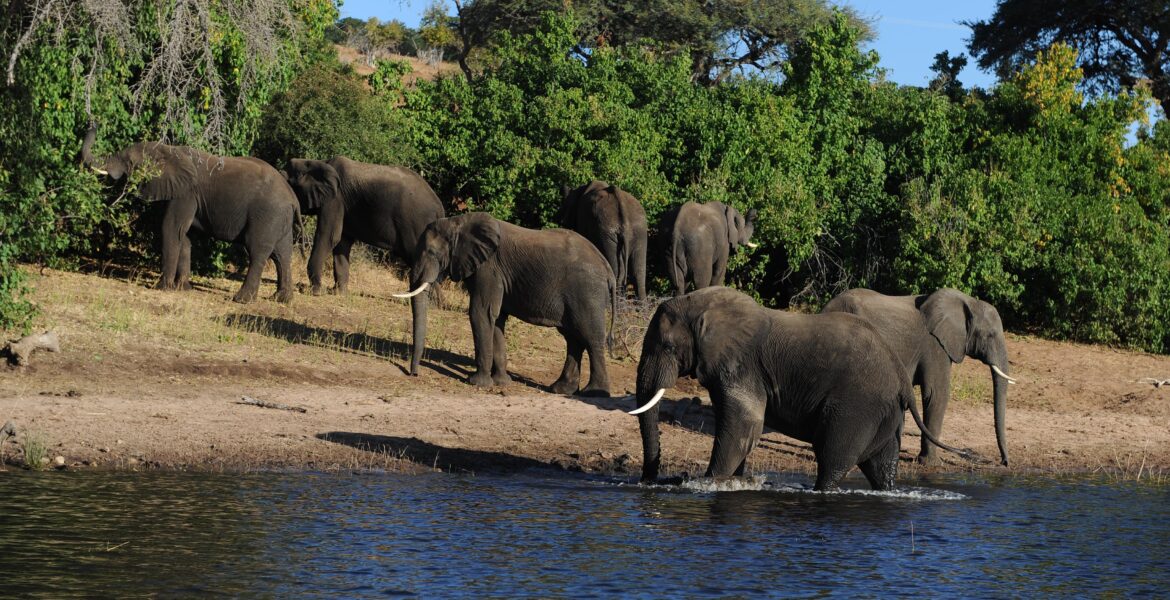
Authorities say arresting and prosecuting elephant poachers is difficult as suspects often cross borders shortly after the offences
BONGANI MALUNGA
Botswana have reported a continued escalation in elephant poaching, with official figures confirming that 35 elephants were killed in 2025 alone. The Ministry of Environment and Tourism has, however, expressed concern that no arrests or successful prosecutions have yet been recorded in connection with the incidents.
Appearing before Ntlo Ya Dikgosi, the Minister of Environment and Tourism Wynter Mmolotsi acknowledged that no arrests or prosecutions have yet been made in connection with the incidents, citing operational challenges in remote conservation areas.
“Investigations are ongoing. Apprehension and prosecution of these criminals is often a challenge as the poaching occured in the wilderness of Chobe and Okavango and is perpetrated by foreign nationals who cross back into their countries as soon as they have completed their deeds or realise that their presence has been detected,” Mmolotsi told Ntlo Ya Dikgosi on Monday.
RENEWED CONCERNS
The revelation has renewed concerns over wildlife protection in Botswana’s northern conservation corridors, particularly in the Chobe and Okavango areas where vast terrain and porous borders complicate enforcement efforts. Wildlife officers have repeatedly warned that syndicates often exploit remote landscapes, allowing suspects to evade capture by quickly crossing into neighbouring countries after carrying out illegal hunting activities.
Weaknesses in cross-border coordination and limited surveillance capacity in some protected zones have also been cited as contributing factors to the ongoing poaching incidents.
The Ministry has indicated that efforts are being intensified to strengthen patrols, improve intelligence sharing, and enhance collaboration with neighbouring states to curb wildlife crime. Government officials have further highlighted plans to expand community-based natural resource management programmes, deploy additional anti-poaching units and invest in aerial surveillance technologies such as drones and helicopters to improve detection rates, while also seeking increased support from international conservation partners and neighbouring countries in strengthening border monitoring and intelligence sharing efforts ongoing now.
UNDERMINING CONSERVATION GAINS
Tourism stakeholders have expressed concern that continued poaching could undermine conservation gains and negatively affect Botswana’s reputation as a leading safari destination. Mmolotsi says they remain committed to bringing perpetrators to justice, despite the logistical challenges posed by difficult terrain and transboundary wildlife movement.
Cross-border intelligence gaps continue to hamper rapid response operations, making coordinated regional enforcement essential for reducing elephant poaching incidents across protected ecosystems in southern Africa.