
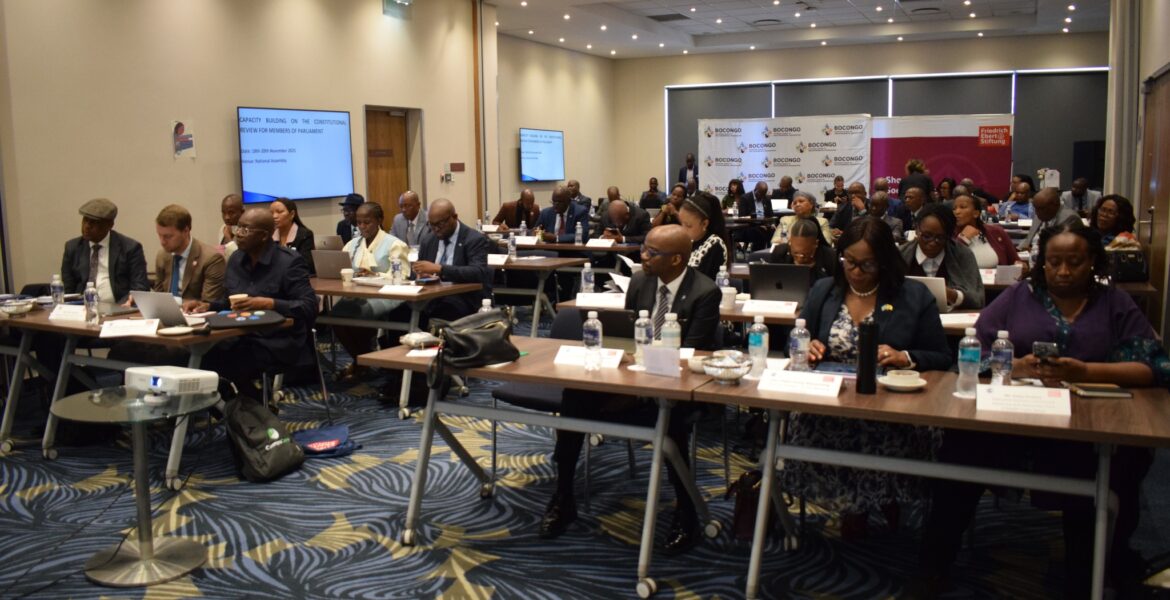
BOCONGO Executive Director Kutlwano Romeo Pelontle says public consultations on the new bill may be merely procedural, as the draft was introduced before input began
SESUPO RANTSIMAKO
The Botswana Council of Non-Governmental Organizations (BOCONGO) has questioned whether ongoing stakeholder consultations on the proposed Constitutional Court will genuinely influence both the court’s structure and the broader constitutional review process.
In an interview with the Botswana Gazette, BOCONGO Executive Director Kutlwano Romeo Pelontle raised concerns that “consultations are taking place after the Bill has already been drafted and introduced”.
This, he said, casts doubt on whether public input can meaningfully shape the outcome. “Consultation should not be a procedural formality but a genuine opportunity for citizens to influence outcomes,” Pelontle said.
CONCERNS OVER COURT’S STRUCTURE
BOCONGO has consistently raised concerns about the establishment of the Constitutional Court, arguing it could concentrate judicial power and undermine transparency and accountability in the legal system. The NGO also criticized the lack of comprehensive public education on the court’s potential impact, warning that ordinary citizens may not fully understand its implications for constitutional governance.
INCLUSIVITY AND PARTICIPATION CONCERNS
While BOCONGO acknowledged the government’s multi-sectoral engagement which includes council leadership, civil society organizations, trade unions, and the business community it stressed that ordinary Batswana must be given more meaningful opportunities to participate. The NGO also noted that relying heavily on Kgotla meetings, while important, cannot alone ensure broad-based participation.
CALLS FOR MORE ACCESSIBLE ENGAGEMENT
Pelontle further criticized the timing of consultations, pointing out that meetings held during working hours exclude many citizens. He urged the government to plan consultations deliberately, using varied platforms and flexible schedules to ensure all segments of society can engage meaningfully.
BOCONGO’S RECOMMENDATIONS
To strengthen citizen involvement, BOCONGO suggested that the government should conduct widespread public education campaigns to explain the Constitutional Court’s role and implications. The organization also recommends using multiple consultation platforms and scheduling meetings at different times to allow broader participation.
After public backlash over a lack of consultation on the controversial proposed Constitutional Court Bill that has already been tabled in Parliament, the government recently began engaging stakeholders to consult the public about the Bill.