
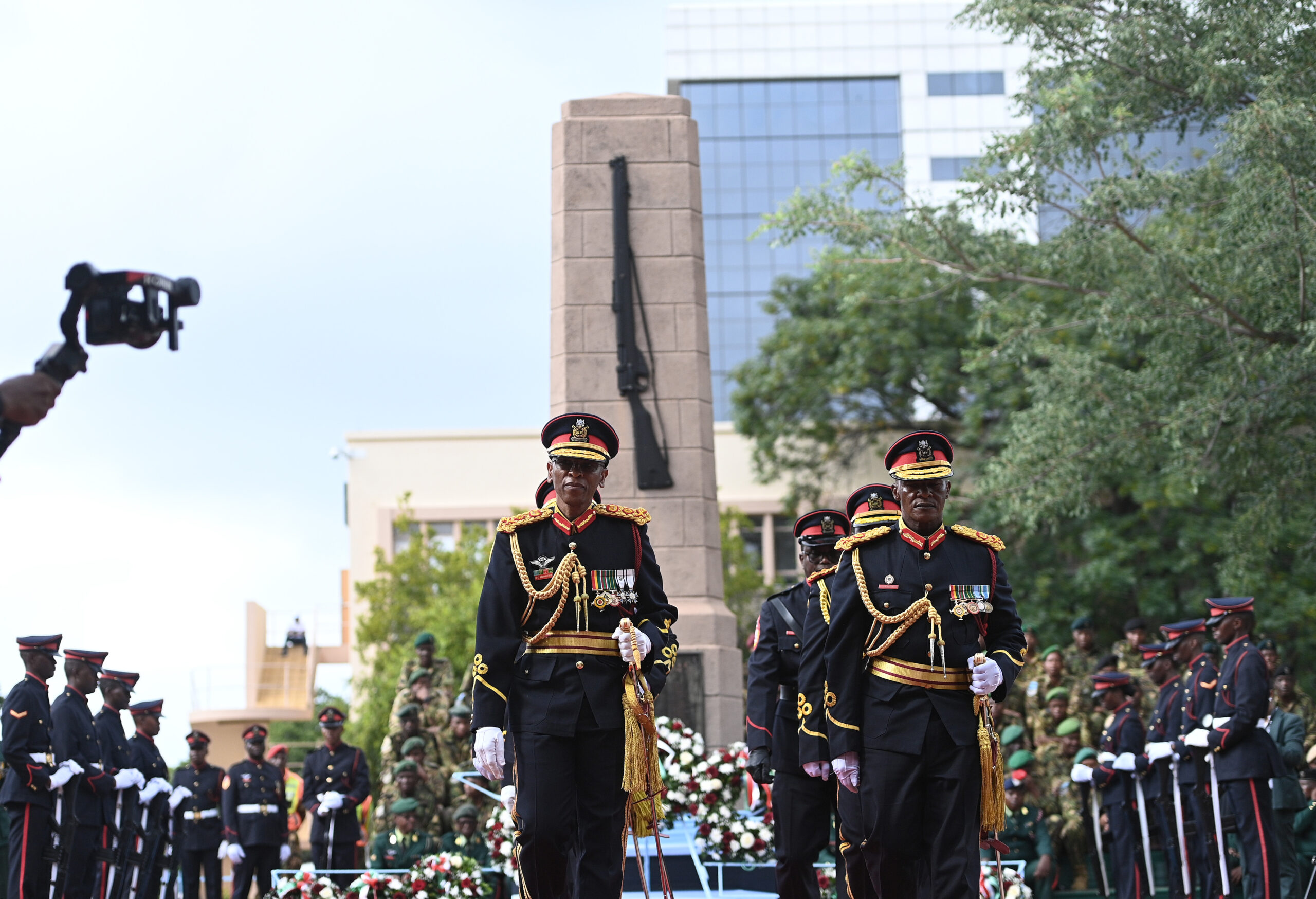
A new study credits Botswana’s troops with containing militants in Mozambique but warns that weaknesses in the regional mission left its security gains vulnerable to reversal.
GAZETTE REPORTER
Botswana’s military intervention in Mozambique helped suppress insurgent operations but failed to establish lasting stability, according to a new study that questions the long-term impact of regional military diplomacy.
The study, titled ‘Assessing Botswana’s Military Diplomacy and Its Contribution to Security in Mozambique: A Study of the SADC Mission in Mozambique (SAMIM)’, found that Botswana’s participation in the Southern African Development Community mission from 2021 to 2024 produced ‘moderately positive but ultimately limited impacts’ in insurgency-hit Cabo Delgado.
Fragile Gains
The research was authored by Botswana Defence Force (BDF) Brigadier Rashia Phofuetsile, Director of Organisational Support, Peterlinus Odote, a lecturer at the National Defence University-Kenya in Nairobi, and Kizito Sabala, a lecturer at the University of Nairobi.
The authors found that the intervention suppressed militant activity, improved intelligence-sharing and opened humanitarian access. But those gains were undermined by operational weaknesses and the withdrawal of foreign forces.
“These achievements were fragile and were easily reversed,” the researchers argue. They credit SAMIM with building “regional collective pressure”, reducing insurgents’ operational capacity and restoring state presence in some districts. The mission also demonstrated SADC’s willingness to confront a cross-border security threat.
Intelligence Weaknesses
Intelligence-sharing was identified as SAMIM’s most significant operational advantage. Information on militant movements, supply routes and planned attacks helped forces anticipate threats, position patrols and reduce attacks during peak periods.
Formal SADC channels and bilateral cooperation, particularly with Mozambique and Rwanda, strengthened situational awareness. However, “Frequent information security incidents” damaged trust among participating forces, while irregular attendance at joint intelligence meetings exposed different national priorities and working practices.
The study found that forces struggled to gather strategic intelligence on the financial networks, recruitment systems and cross-border activities sustaining the insurgency. Short deployment cycles, uneven military capabilities and parallel bilateral operations also weakened continuity and unified command.
Withdrawal Fallout
According to reporting cited in the study, Botswana led a phased withdrawal in April 2024. As foreign troops left, insurgents adapted, regained ground in some districts and continued exploiting porous borders and governance weaknesses.
“Tactical containment is valuable in its own right but is not necessarily strategic stabilisation,” the authors warn.
Beyond Military Force
The researchers call for stronger joint intelligence structures, secure communications, dedicated analytical teams, longer and better-coordinated deployments, and clearer coordination with bilateral missions, including Rwanda’s.
They also recommend predictable funding for SADC, a stronger Standby Force and parallel reforms in governance, development, policing and Mozambique’s armed forces.
“[Military diplomacy] cannot secure lasting stability without parallel institutional, political and developmental actions that tackle the structural causes of violence,” the study concludes.