
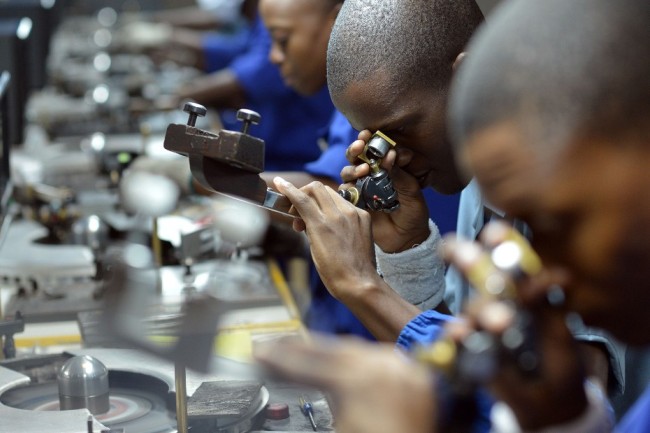
Botswana’s return to growth may conceal falling diamond sales, weak household demand and mounting fiscal strain, the World Bank warns in its October 2026 outlook.
GAZETTE REPORTER
Botswana’s return to economic growth may be masking structural weaknesses, with rising diamond production failing to translate into stronger exports, the World Bank has warned.
In its October 2026 Macro Poverty Outlook, the Bank cautions that the recovery follows two consecutive years of contraction and may not be as strong or sustainable as headline growth figures suggest.
Rebound Questioned
After contracting by 2.8 percent in 2024 and 0.7 percent in 2025, the economy grew by 3.5 percent year-on-year in the first quarter of 2026, supported by mining, electricity generation, diamond trading and selected services.
However, the Bank says “the recovery could be partially misleading”. Diamond production rose by 4.8 percent year-on-year in the first quarter, but stronger output was not matched by stronger export sales. De Beers’ sales fell by 23 percent in the first half of 2026, while diamond exports dropped by 33.6 percent, increasing inventories.
Weak Domestic Demand
Growth was driven largely by inventory accumulation and public consumption rather than household spending and private investment.
“Household consumption contracted by 3.2 percent and gross fixed capital formation fell by 10.4 percent,” the report states. Utilities, trade and mining grew while agriculture and construction contracted, pointing to what the Bank calls a “fragile and narrowly based recovery”.
Living Costs Rise
Inflation increased from 4.2 percent in March to 10.7 percent in June 2026, driven by higher fuel and food costs linked to conflict in the Middle East. The report says this is “eroding household purchasing power and disproportionately affecting poorer households.”
Fiscal Squeeze
Foreign reserves increased from US$3.5 billion in December 2025 to US$4.4 billion in April 2026, equivalent to about seven months of import cover. The improvement was supported by external borrowing, Southern African Customs Union receipts and changes in banking-sector portfolios.
Between June 2025 and June 2026, the pula weakened by 5.7 percent against the US dollar and 12.5 percent against the South African rand. The fiscal deficit is estimated at 5.9 percent of GDP, while public debt reached about 32.1 percent of GDP in the first quarter of 2026.
The World Bank calls for tighter spending controls, restraint of the wage bill, rationalisation of transfers to state-owned enterprises and improved public investment appraisal and procurement. It cautions that government arrears are not fully captured in headline debt figures.
Fragile Outlook
The Bank forecasts real GDP growth of 3.4 percent in 2026 and about 3 percent in both 2027 and 2028, with only a marginal reduction in poverty over the following two years.
It says “economic diversification and stronger job creation” are needed for inclusive growth. Risks include weaker diamond demand, higher fuel prices, foot-and-mouth disease outbreaks, El Niño-related weather, tighter financing, falling SACU receipts and delays in fiscal and structural reforms.