
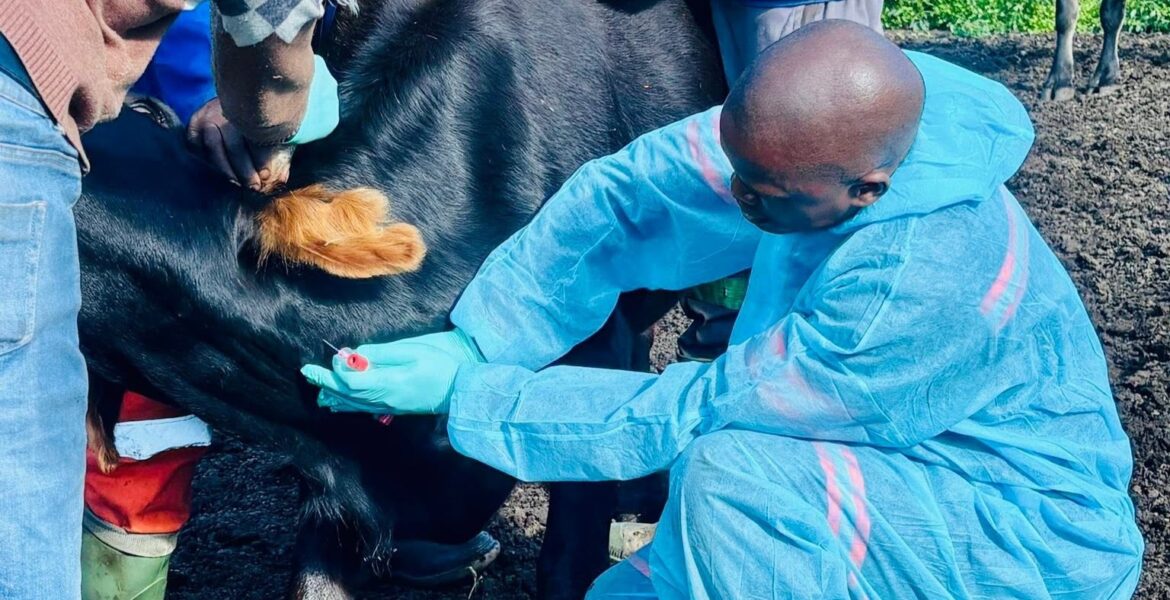
Namibia and South Africa’s plans to manufacture more foot-and-mouth disease vaccines at home could weaken Botswana Vaccine Institute’s valuable regional export business.
BONGANI MALUNGA
Botswana Vaccine Institute (BVI) faces a long-term threat to its regional foot-and-mouth disease (FMD) vaccine exports as Namibia and South Africa move to strengthen domestic production.
Namibia, which has relied heavily on BVI, is planning its own manufacturing plant to reduce dependence on imported vaccines.
The move raises questions about future demand following a three-year arrangement under which Namibia received more than 3.8 million doses from Botswana, worth N$60.7 million, approximately P50.43 million.
Namibian Plans
Ben Haraseb, Namibia’s agriculture ministry director for agricultural production, extension and engineering services, outlined plans for the facility at the Agriculture Investment Conference and Expo in Windhoek in October.
Botswana is currently Namibia’s largest supplier of FMD vaccines. The immediate risk to BVI may be limited because Namibia’s plant is not yet operating and a multi-year supply arrangement remains in place.
However, successful local production could eventually reduce Namibian orders and weaken a key export market.
South Africa Produces
South Africa, another major BVI customer, resumed domestic FMD vaccine production through the Agricultural Research Council (ARC) in February 2026 after more than two decades without large-scale local production. Its first locally produced batch was handed over on 6 February.
In September, Agriculture Minister Willie Aucamp announced plans to allow qualifying private companies to use ARC intellectual property to manufacture its vaccine at scale.
The ARC is also expanding its own capacity, potentially reducing South Africa’s reliance on imports if domestic output reaches planned levels.
In 2025, South African authorities and industry spent R72 million on 900,000 BVI doses. Millions more doses were secured from Botswana during subsequent outbreaks.
Export Exposure
BVI CEO Andrew Madeswi said in February that regional demand was roughly 43 million doses against the institute’s optimal capacity of about 25 million doses, underlining the opportunity in Southern Africa.
BVI has supplied a range of African markets, and Botswana-produced SAT-type vaccines became particularly important as outbreaks spread. In 2025, South African industry described BVI as the region’s only producer of SAT-type FMD vaccines at the time.
Long-Term Risk
The greater threat is a gradual loss of market share rather than an immediate collapse in demand. Namibia and South Africa may continue buying Botswana vaccines while their production facilities scale up, particularly during outbreaks.
But once reliable domestic manufacturing is established, BVI could shift from being a primary supplier to competing for supplementary orders.