
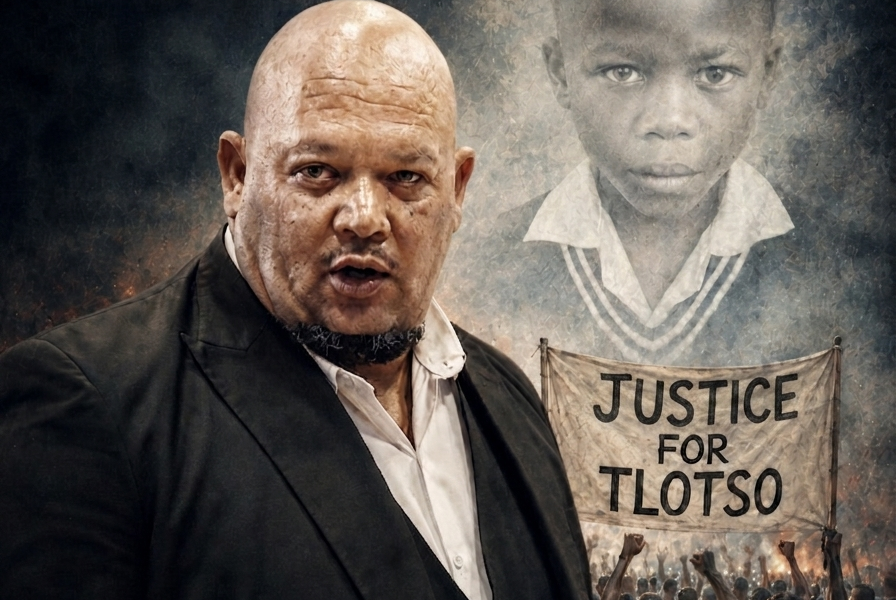
UDC MP Kamal Jacobs’ claims over the weekend linking the BDP to ritual killings have reopened a dark and deeply uncomfortable conversation in Botswana. From Segametsi Mogomotsi to Tlotso Karema, unresolved and suspicious cases continue to haunt the national psyche, feeding cultural fears and shaping political discourse around justice, power and accountability.
BONGANI MALUNGA
Umbrella for Democratic Change legislator Kamal Jacobs has reignited one of Botswana’s most emotionally charged and controversial debates after allegedly insinuating that members of the former ruling Botswana Democratic Party used ritual killings to gain political power.
Kamal’s utterances at a political rally in Selibe Phikwe last weekend triggered outrage across the political divide but they also reopened painful national memories surrounding ritual murder allegations, unresolved public suspicions and the long-standing silence of the Botswana government on the issue.
His remarks revived memories of the 2022 murder of 7 year old Tlotso Karema, a case, currently before the courts, that rapidly spiralled beyond a criminal investigation and into the political arena. The killing drew widespread public speculation around ritualistic motives, with social media and public discourse linking the matter to powerful individuals despite limited publicly available evidence.
VICTIMISED
The case also engulfed former finance minister Thapelo Matsheka, who found himself heavily scrutinised and politically victimised after his name became associated with public speculation surrounding Karema’s death. Although no conviction tied Matsheka to the murder, the controversy inflicted damage on his political and public image, demonstrating how ritual killing allegations in Botswana often evolve into tools of political destruction long before facts are conclusively established.
Kamal’s remarks have therefore revived deeper concerns about Botswana’s unresolved relationship with ritual killings, a subject that continues to exist in whispers, rumours, political accusations and community fears.
Despite presenting itself as a human rights-driven democracy with a stable justice system, Botswana remains alarmingly silent on ritual killings.
RITUAL KILLINGS NOT RECOGNISED
While murder is criminalised under Botswana law, the country does not legally recognise ritual killing as a distinct offence. Critics argue that this omission has created a dangerous grey area where allegations are politically weaponised, investigations become clouded by secrecy while communities are left haunted by suspicion and unresolved trauma.
The issue resurfaced sharply on March 24 this year when Minister for State President, Defence and Security, Moeti Mohwasa told Parliament that Botswana’s statutes do not recognise ritual killings as a specific crime.
CONSTRAINED TO SPEAK
“In our statutes in general and the Penal Code in particular, we don’t have an offence called ritual killing. We are therefore constrained to speak to a crime that is not in our statutes. The taking of human life is criminalised as murder,” Mohwasa told Parliament.
Mohwasa’s remarks exposed what many legal and social commentators have long argued, that Botswana has historically chosen a pragmatic but evasive approach to ritual killing allegations. Local law enforcement prosecutes murder but avoids formally engaging with the cultural, political and spiritual dimensions often associated with ritualistic crimes.
That silence has become increasingly uncomfortable for a country where rumours and accusations of body mutilations, disappearances and killings linked to wealth-seeking rituals have persisted for decades.
REOPENING PAINFUL MEMORIES
Kamal’s comments also revived memories of the murder of Segametsi Mogomotsi in 1994, a case that fundamentally altered public trust in Botswana’s justice system and remains at the centre of the country’s national trauma.
The 14-year-old secondary school student disappeared under mysterious circumstances before her mutilated body was later discovered. Reports surrounding the case alleged that certain body parts had been removed, fuelling widespread public suspicion that the killing may have involved ritual practices.
The state’s handling of the matter ignited unprecedented unrest. Students protested violently, accusing authorities of attempting to suppress the truth and shield powerful individuals allegedly linked to the murder. The demonstrations spread nationally and became one of Botswana’s most explosive moments of civil unrest post independence.
LASTING PERCEPTION
For many citizens, the Segametsi case established a lasting perception that Botswana’s political and legal establishment preferred silence over confrontation whenever ritual killing allegations emerged. To this day, the case remains emotionally raw because many people believe justice was never fully served and critical questions were never adequately answered.
The government’s cautious approach may partly stem from fears of inflaming public panic, legitimising superstition or compromising criminal investigations. However, some argue that refusing to directly acknowledge ritual killings has instead deepened conspiracy theories and public distrust.
REGIONAL COMPARISON
Botswana’s position sharply contrasts with developments elsewhere in the region. In neighbouring Zimbabwe, authorities have openly condemned ritual killings and acknowledged their existence as a serious social problem. Zimbabwean President Emmerson Mnangagwa has publicly denounced such crimes amid growing reports linking murders to ritual practices and the pursuit of wealth.
According to reports from Zimbabwe, nearly 40 percent of that country’s 3 600 murder cases in 2022 reportedly contained elements associated with ritual killings. In Botswana, however, the subject largely survives in courtroom rumours, political rallies, social media speculation and fearful community conversations.
Yet the political exploitation of ritual killing allegations has become increasingly common. Politicians often invoke the issue to discredit opponents, knowing fully that the topic carries deep emotional resonance among ordinary citizens.
ABSENCE OF A LEGAL FRAMEWORK
The danger, social commentators warn, is that the absence of a clear legal and national framework on ritual killings leaves Botswana vulnerable to both misinformation and manipulation. Without formal recognition, there is little room for specialised investigations, national data collection, victim profiling or public education around crimes suspected to involve ritualistic motives.
More importantly, Botswana’s refusal to openly confront the subject risks breeding a culture of silence around one of the country’s most feared and sensitive issues.
More than three decades after the death of Segametsi Mogomotsi and years after the controversy surrounding Tlotso Karema’s murder and the political fallout suffered by Matsheka, Botswana still appears trapped between modern law, cultural fears and political expediency, uncertain whether ritual killings are merely myth, criminal opportunism or a reality too uncomfortable to officially acknowledge.