
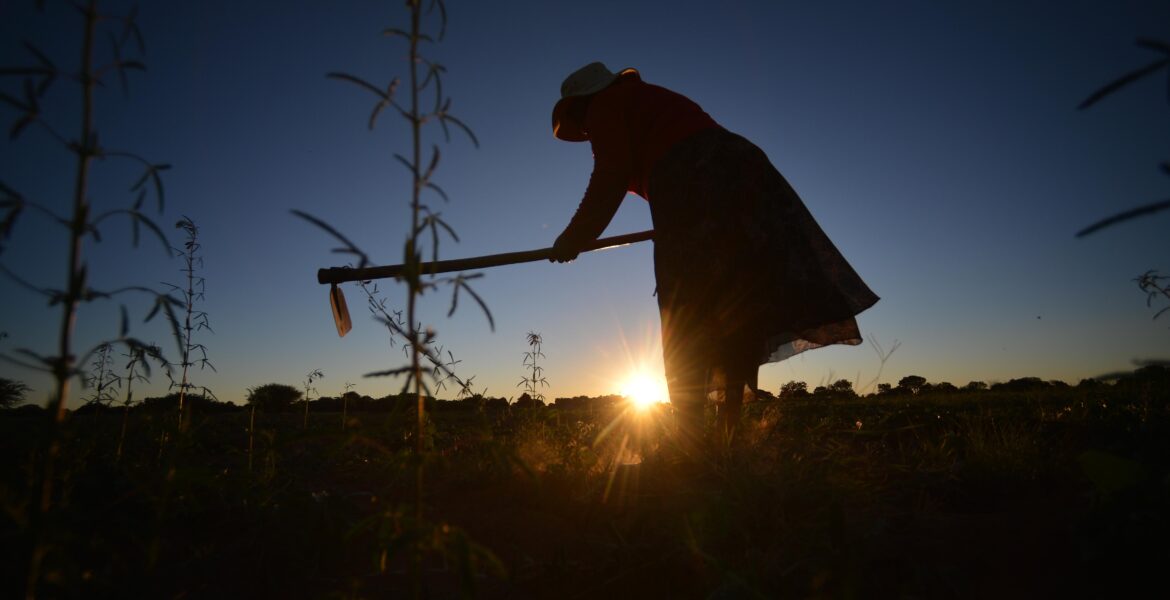
Forecasts point to drier-than-average conditions during Botswana’s crucial October-to-December planting period, raising the risk of poor germination and crop losses.
GAZETTE REPORTER
Botswana faces another difficult agricultural season as forecasts linked to El Niño point to drier-than-average conditions during the critical summer planting period.
Dry Spell
A new assessment by the European Commission’s Joint Research Centre highlights growing weather risks across Southern Africa and warns that Botswana could be among the countries hardest hit if anticipated dry spells materialise.
The forecast comes as farmers prepare for the 2026/27 summer cropping season, with rainfall projections showing a greater risk of below-normal precipitation between October and December, a crucial period for planting and early crop development.
While Southern Africa’s aggregate cereal production for 2026 is projected at 43.4 million tonnes, about 10 percent above the five-year average, the regional outlook masks risks facing individual countries.
According to Copernicus rainfall forecasts, Botswana, Zimbabwe, Namibia, South Africa, Mozambique and Madagascar are among countries expected to experience drier-than-average conditions.
Planting Risk
For Botswana, where rain-fed agriculture depends heavily on the timing and consistency of seasonal rainfall, prolonged dry conditions could undermine planting and crop establishment.
Below-average rainfall between October and December could delay planting, reduce germination and expose young crops to moisture stress.
The Joint Research Centre warns that climatic uncertainty poses a significant risk to agricultural production, particularly in countries already vulnerable to drought and food insecurity.
If dry conditions persist into the growing season, farmers could face reduced yields or, in severely affected areas, complete crop failure.
Food Security
The Food and Agriculture Organization (FAO), in a June assessment, had already warned of rising food-security risks in parts of Southern Africa.
Reduced harvests could increase dependence on food imports and Government assistance while putting further pressure on household incomes and food prices, particularly in communities heavily dependent on subsistence farming.
Uneven Outlook
The forecast is not uniformly bleak. Northeastern Angola, northeastern Zambia and northern Mozambique are expected to receive near-average precipitation, offering some relief for agricultural production in those areas.
However, much of Southern Africa faces the possibility of below-normal rainfall, with uneven conditions likely to widen differences in food production across the region.
Adaptation Needed
The assessment underscores the need for preparations around drought-tolerant crops, water conservation, early-warning systems and other climate-adaptation measures as Botswana’s farmers move into the planting season.