
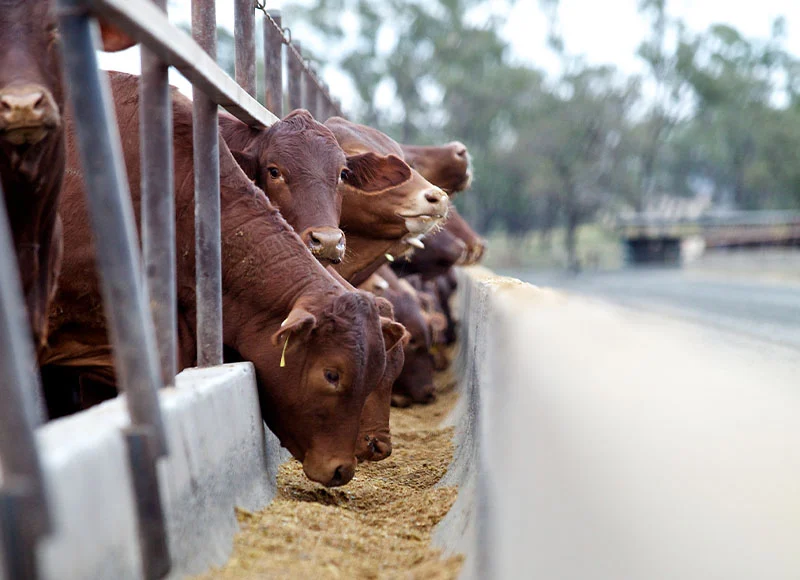
Feedlot operators are pushing for a World Organisation for Animal Health-backed route to market as FMD restrictions deepen financial and animal-welfare losses.
BONGANI MALUNGA
Botswana feedlot operators JS Beef and Primelots are invoking World Organisation for Animal Health (WOAH) mechanisms in a renewed push for a practical, science-based route to market for thousands of cattle stranded by Foot and Mouth Disease (FMD) restrictions, weeks after suffering a High Court setback.
Cattle stranded
The Lobatse-area operators say approximately 6,600 cattle remain trapped in their feedlots despite prolonged isolation, repeated vaccination and veterinary supervision. They argue that the crisis is inflicting severe financial and animal-welfare damage while squeezing thousands of farmers who depend on the feedlots as a market.
“Combined we work with approximately 25 000 cattle producers who supply cattle to our feedlots. These cattle were specifically purchased and prepared for supply to the European Union market. Under normal circumstances they should have been slaughtered, processed and supplied through Botswana’s approved export system. Instead, they remain trapped in our feedlots,” the companies said in a joint statement released last week.
The companies said their feedlots have been in isolation since April 2, with no cattle entering or leaving. The animals are fully traceable, have been vaccinated three times under veterinary supervision and remain subject to biosecurity controls.
Court setback
Their latest push comes after the Gaborone High Court last month dismissed with costs an urgent application brought by JS Beef and Primefast (Pty) Ltd over the FMD restrictions. Justice Onkemetse Tshosa ruled that the case did not meet the requirements for urgency, finding that the operators had waited too long to approach the court after months of engagement with veterinary and government authorities failed to produce a solution.
The operators had sought targeted relief that would allow the cattle to be slaughtered or exported rather than overturn the broader disease-control regime. Government opposed the application, arguing that the operators’ commercial interests had to be balanced against disease control and the interests of the wider cattle industry.
WOAH route
With the court route failing to provide immediate relief, the companies are now pressing authorities to pursue mechanisms recognised under WOAH standards.
“We are not asking for veterinary safeguards to be ignored, we are asking for a practical and science based pathway to market. The World Organisation for Animal Health provides mechanisms through which meat from vaccinated cattle can be handled and traded safely when correct controls are applied. The necessary processing measures can be implemented and buyers are interested. What is missing is an urgent and practical agreement between the relevant authorities,” they said.
Costs mount
For farmers and the feedlots, time has become the biggest enemy. Cattle that would ordinarily spend around 120 days in a feedlot have now been confined and fed for between 280 and 360 days, according to the statement.
The prolonged stay has depleted financial resources, forcing the operators to rely partly on assistance from suppliers and members of the public for feed, while some creditors have postponed payments. The companies say extended confinement is increasingly affecting animal welfare, with some cattle becoming sick and others already dying.
Market choke
The pressure stretches beyond the 6,600 stranded animals. With the feedlots sourcing cattle from thousands of producers, failure to clear finished animals restricts their ability to take in new stock, choking an important route to market and transferring the strain deeper into the farming community.
The crisis followed FMD outbreaks that triggered movement and slaughter restrictions. In April, the European Union suspended beef imports from affected Botswana zones while WOAH suspended the larger zone’s FMD-free status.
JS Beef and Primelots insist they are not seeking weaker disease controls. Instead, they want authorities to translate internationally recognised science into a workable route that protects veterinary safeguards without allowing farmers, feedlots and thousands of cattle to remain indefinitely trapped by the FMD crisis.