
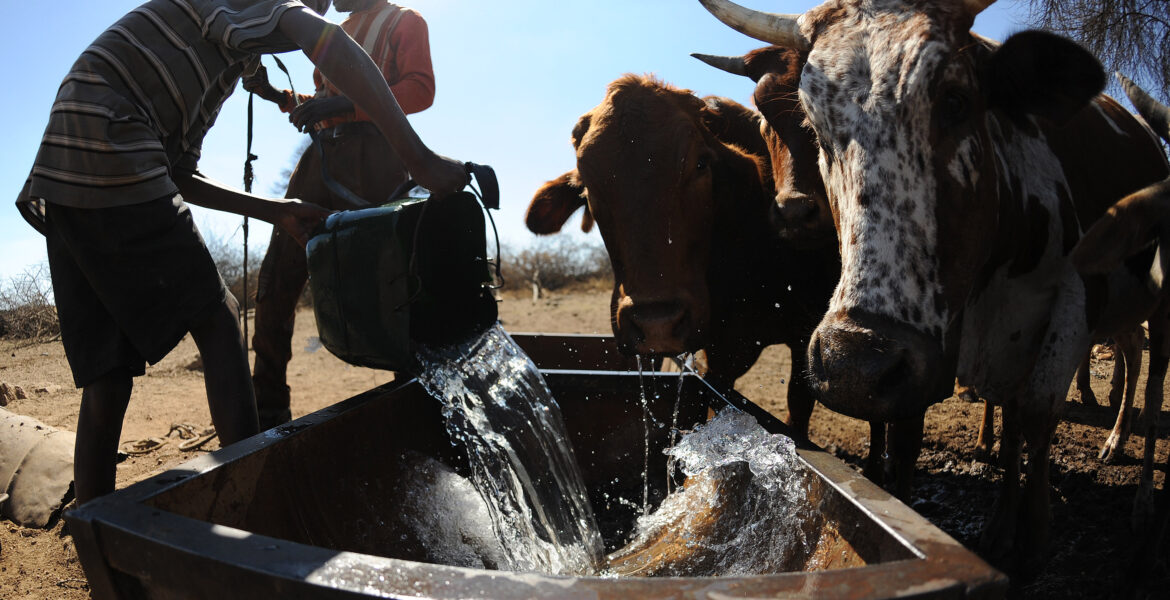
Renowned veterinarian and epidemiologist Prof Kereng Masupu, who led the 1995 cattle lung disease response that resulted in the culling of over 300,000 cattle, has linked the recent FMD outbreak to possible internal sabotage, saying evidence points to an internal breach, contrary to claims of external sabotage
SESUPO RANTSIMAKO
Veteran veterinarian and epidemiologist, Professor Kereng Masupu has raised alarm over possible internal sabotage at the Ramatlabama Artificial Insemination Centre following the recent outbreak of Foot and Mouth Disease (FMD), intensifying scrutiny on biosecurity systems at one of the country’s most sensitive livestock facilities.
Speaking to the Botswana Gazette, Professor Masupu said while authorities are investigating a suspected cyber-extortion link, evidence on the ground points more convincingly to an internal breach.
STRINGENT CONTROLS IN PLACE
Masupu said the stringent biosecurity protocols typically enforced during outbreaks make it highly unlikely that the virus could have entered the country or facility through conventional external channels.
“Under normal outbreak conditions, surveillance at border posts is significantly heightened,” he explained. “There are stringent controls in place, and any potential contaminants are subjected to decontamination processes that would effectively destroy the virus.”
He added that such measures severely limit the possibility of infected materials slipping through undetected, thereby casting doubt on theories of cross-border transmission.
GOVERNMENT INVESTIGATES
The concerns come as government probes a potential link between the outbreak and a ransom demand made to the Botswana Meat Commission (BMC). Acting Minister of Lands and Agriculture, Edwin Dikoloti, recently confirmed that the BMC received an email in February from an unknown sender demanding USD 500,000, with threats to deliberately spread FMD if the demand was not met.
A follow-up email reportedly sent on March 8 questioned why the initial demand had been ignored, raising fears of agro-terrorism targeting Botswana’s critical beef industry.
However, Masupu cautioned against overemphasizing the cyber angle, noting that the physical realities of the outbreak suggest a breach from within.
“Given these barriers, it is highly unlikely that the virus was imported. This raises the possibility that the outbreak could be the result of internal actions,” he said.
SECURITY CONCERNS MOUNT
Echoing Masupu’s assessment, former Minister of Agriculture, Molebatsi Molebatsi, said the theory of an inside job cannot be dismissed.
He described the Ramatlabama facility as a high-security installation with tightly controlled access, constant monitoring, and the presence of law enforcement and intelligence personnel.
“Security personnel have always been part of the centre, and access is tightly controlled,” Molebatsi said. “Given the level of security in place, the likelihood of an internal breach cannot be ignored.”
BIOSECURITY UNDER THE MICROSCOPE
The unfolding situation has sparked broader concerns about internal controls within Botswana’s livestock value chain, particularly at strategic facilities tasked with safeguarding the country’s disease-free status — a cornerstone of its beef export market.
As investigations continue, pressure is mounting on authorities to not only establish the source of the outbreak but also restore confidence in the country’s biosecurity systems amid growing fears of deliberate sabotage.