
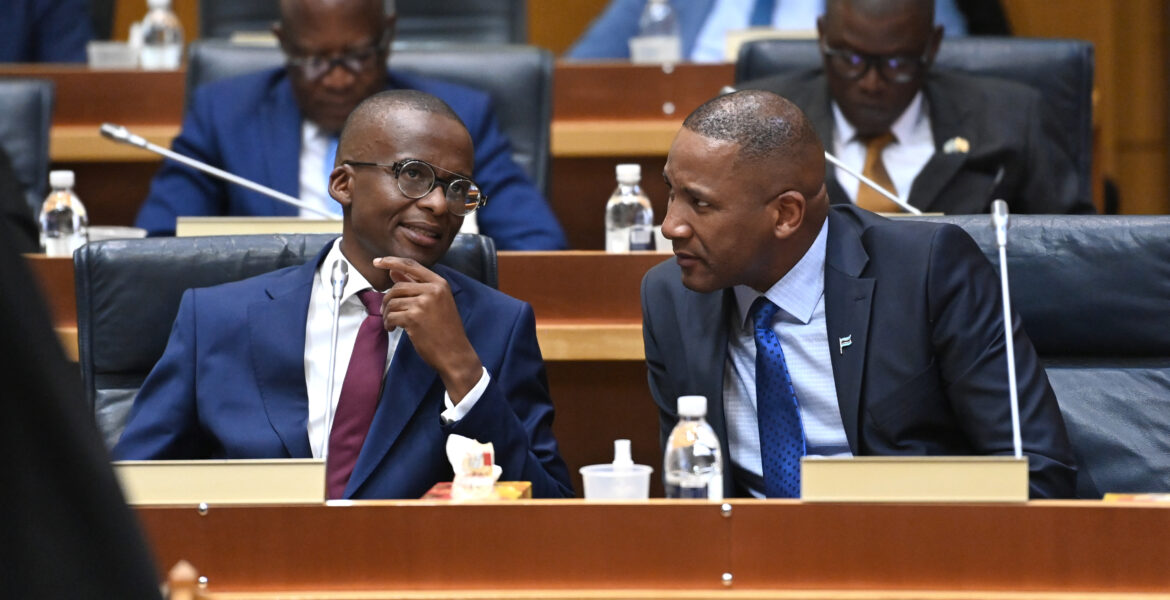
Unpaid Government Purchase Orders have surged past P20 billion, far outstripping the country’s P2 billion cash reserves, as officials warn that reckless spending and inflated costs continue to strain public finances
BONGANI MALUNGA
The government is under financial distress for what senior officials describe as persistent reckless spending, with unpaid Government Purchase Orders (GPOs) ballooning to more than P20 billion despite repeated assurances that strict controls had been put in place.
The staggering figure stands in sharp contrast to the country’s shrinking cash position, with national coffers reportedly holding just P2 billion against the mountain of unpaid invoices.
The revelation was made by Dr Tshokologo Kganetsano, Permanent Secretary in the Ministry of Finance during a Charles Hill District Council address led by the Permanent Secretary to the President Emma Peloetletse last week.
EXAGGERATED COSTS
According to Dr Kganetsano, many of the invoices currently being processed reflect exaggerated costs, pointing to entrenched malpractice in how sections of the private sector do business with the state. The Permanent Secretary underlined that reckless spending has not been fully eliminated, adding that inflated pricing remains a key driver behind the runaway GPO bill.
The latest disclosure casts comes a few months after government claims made late last year that the problem was being brought under control. In October, authorities announced that outstanding GPOs had dropped dramatically from P1.6 billion in May to P400 million by October following the introduction of tighter oversight measures.
“We are currently standing at around P2 billion against unpaid invoices worth more than P20 billion. We are refusing to adjust to the new reality because reckless spending in government continues to rise,” Dr Kganetsano stated.
CONTROL MEASURES BYPASSED
“We have centralised a generation of GPOs. Every GPO goes through my office, I check every line and I see wonders. For example (in most cases) we pay P30 for something that is worth P5, that is what I see every day,” he revealed.
As per the Permanent Secretary’s submission, the resurgence of unpaid obligations to levels exceeding P20 billion suggests that control measures have been routinely bypassed. With suppliers waiting months and in some cases years for payment, the swelling GPO backlog is also raising fears of knock-on effects across the economy, including cash-flow problems for local businesses and further erosion of public trust in government spending.