
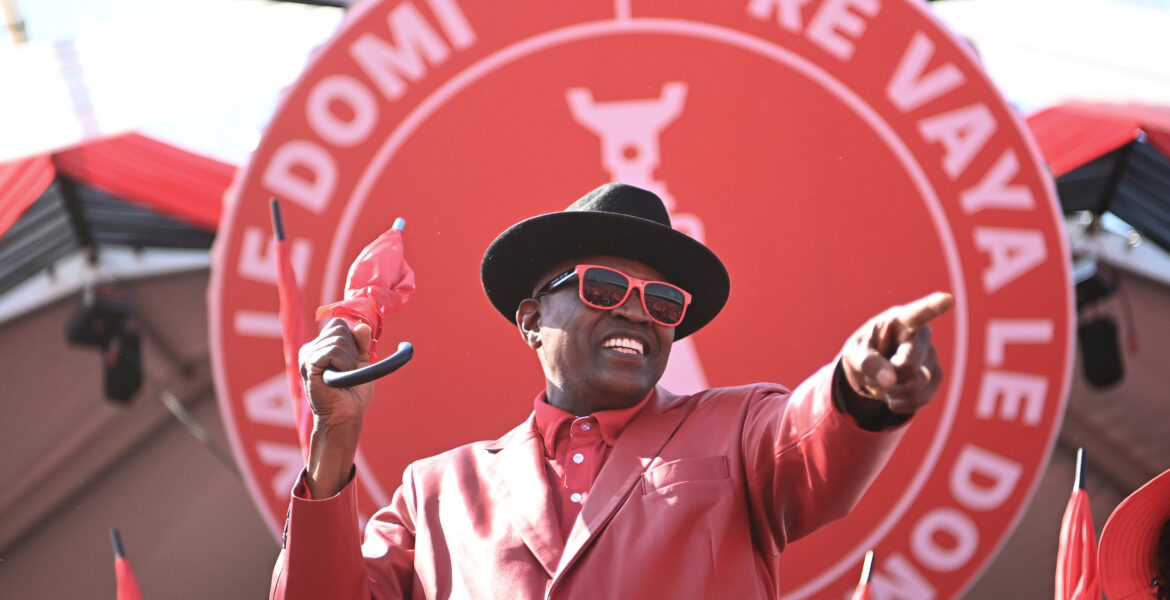
Former President Mokgweetsi Masisi has stirred political debate after urging citizens to embrace the current economic hardships, comments that have been widely interpreted as a swipe at the ruling UDC government’s handling of the economy
GAZETTE REPORTER
Former President Mokgweetsi Masisi has sparked a political storm after remarks that appeared to criticise the ruling Umbrella for Democratic Change (UDC) in a recent speech at a tombstone unveiling of his party’s former legislator.
The comments have drawn sharp rebuke from the Botswana National Front (BNF), which accuses his administration of being responsible for plunging the country into economic distress.
Speaking at a tombstone unveiling for former BDP legislator Boemetswe Mokgothu, Masisi used the occasion to urge political patience, suggesting to the attendees that impatience, likely with his administration, had ultimately cost them dearly.
He also drew on Mokgothu’s legacy, urging those in attendance to learn to be patient and appreciative, and to remain thankful for what they have, “including the current situation”, which he described as “a period of suffering.”
The remarks were widely interpreted as a veiled critique of the current government, with the Botswana National Front (BNF) arguing that Masisi was deflecting responsibility for Botswana’s economic challenges.
BNF FIRES BACK, BLAMES BDP LEGACY
BNF, a key component of the ruling coalition, hit back strongly, accusing Masisi and the Botswana Democratic Party (BDP) of leaving behind a legacy of mismanagement, corruption, and looting of state resources.
BNF spokesperson Carter Joseph said the country is now “swimming in the mess” of the BDP’s nearly six-decade rule, insisting that ongoing economic difficulties are a direct result of past governance failures.
“We are swimming in their mess and remedying their 58-year rule of mismanagement and corruption,” said Joseph.
UDC DEFENDS EARLY REFORMS
Joseph argued that despite being in power for only two years, the UDC has already made significant progress in addressing structural challenges inherited from the previous administration.
He cited interventions such as the introduction of old age pensions, student allowances, the absorption of police constables into permanent positions, and the ongoing conversion of previously unpensionable workers into pensionable employment among many others as evidence of early reform efforts.
CALLS FOR ACCOUNTABILITY INTENSIFY
Joseph added that broader institutional and economic reforms are underway to stabilise the state and improve service delivery.
He further said that accountability for past governance failures must now take its course, adding that former leaders, including Masisi and his administration, “must now await the law to account.”