
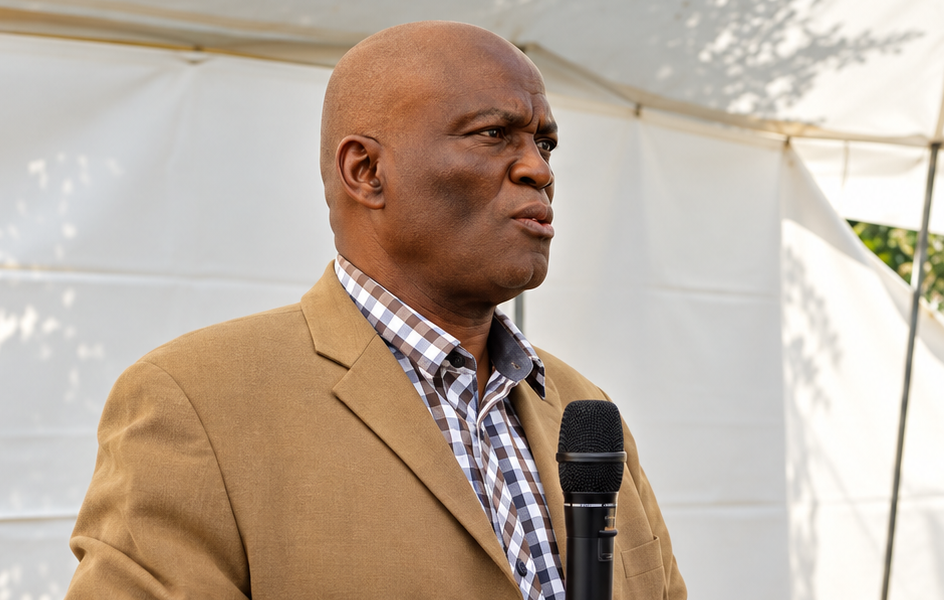
Former BNF president Otsweletse Moupo warns that the UDC must confront public frustration over unfulfilled promises and move beyond opposition-style politics now that it governs.
SESUPO RANTSIMAKO
The Botswana National Front (BNF) is preparing to confront one of the UDC government’s most politically sensitive challenges, growing public expectations and frustration over the pace of delivery, at its upcoming special policy conference in Selebi-Phikwe.
Expectations collide
A draft document on the relationship between the party and state power after attaining government, prepared by former BNF president Otsweletse Moupo, describes the situation as a “crisis of public expectation”, acknowledging that sections of society are increasingly disgruntled that the UDC has not delivered on its election promises.
The document says the crisis has been intensified by what it describes as an unfavourable economic environment inherited by the UDC, including a prolonged slump in the country’s main export commodity market and a severe fiscal crisis.
It attributes the fiscal difficulties largely to what it calls the “gross fiscal mismanagement, generalized waste and corruption” of the previous regime, arguing that the legacy has constrained the UDC government’s ability to fulfil its electoral promises in the short term.
Results demanded
The document does not dismiss public frustration as unreasonable. Instead, it acknowledges that students, unemployed people, ordinary workers and underpaid private-sector employees voted for the UDC expecting a fundamentally different socio-economic dispensation.
“Now that the UDC is in power, masses are holding it to account,” the draft states.
New message
The document warns that the BNF and UDC cannot continue communicating with the public as though they remain opposition parties.
While it says the party should continue explaining socio-economic problems it believes were inherited from prolonged BDP rule, including the failure to diversify the economy, it argues that the political message must now acquire “a new content”.
It calls on public speakers to abandon, or significantly move away from, the traditional opposition style of spending most of their time attacking rival political parties.
Instead, the document says the party’s messaging should be built around demonstrable achievements under the UDC government, supported by “accurate concrete data” on political and socio-economic progress.
Admit failures
Crucially, the document also calls for the party to acknowledge the government’s shortcomings rather than attempting to explain away every failure.
It says the BNF and UDC must explain why positive changes promised by the new government are taking longer than expected while simultaneously offering the public a positive outlook for the future.
Promises watched
The challenge is particularly significant given the scale of commitments made by the BNF and its UDC partners ahead of the 2024 election.
Among the promises contained in the BNF’s 2024 manifesto were the creation of between 400,000 and 500,000 jobs within five years, increasing tertiary education allowances to P2,500, introducing health insurance and reducing the pension eligibility age from 65 to 60 years.
These commitments have become part of the expectations against which the new government is being judged, particularly among young people, students, workers and unemployed citizens.
The document argues that only by combining evidence of progress with honesty about shortcomings can the governing movement retain credibility and continue to inspire hope among the population.