
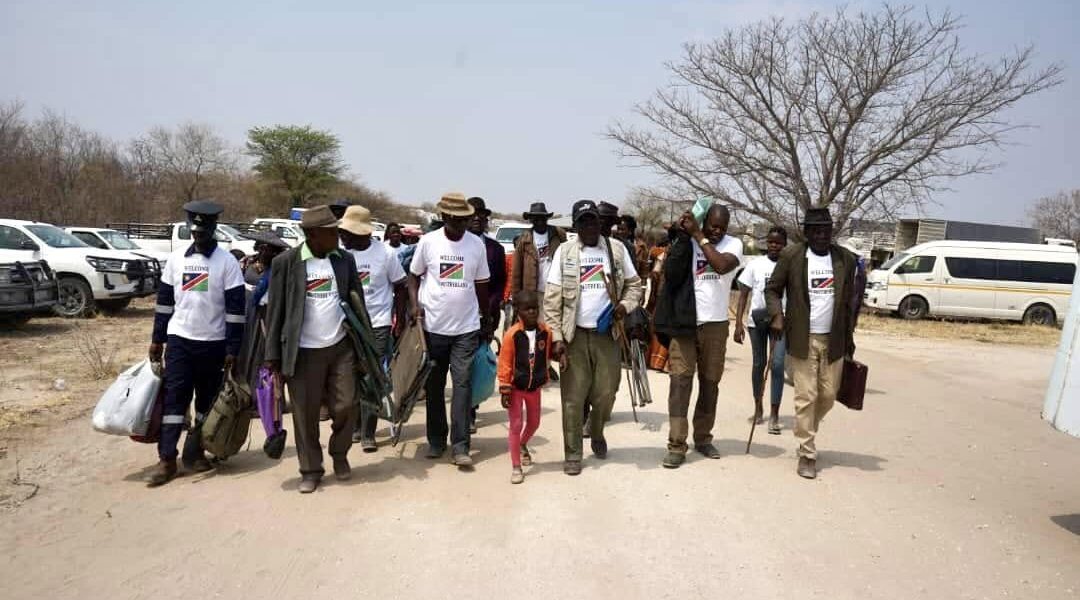
After more than a year in temporary settlement camps, repatriated Batswana of Namibian descent are set to receive permanent housing as the Namibian government begins a long-awaited relocation process
BONGANI MALUNGA
The Namibian government has moved to resolve the accommodation crisis facing repatriated Batswana who have been living in temporary settlement camps for more than a year following their relocation from Botswana.
The intervention comes two months after the returnees publicly voiced frustration over what they described as unfulfilled government promises, including access to permanent housing, employment opportunities, land and education
CHALLENGING CONDITIONS
Repatriated families have endured difficult living conditions in interim settlements, with uncertainty over their future weighing heavily on livelihoods and children’s schooling. Many complained of prolonged stays in makeshift camps, limited economic opportunities and the psychological strain of not knowing when permanent solutions would materialise.
Authorities have now committed to addressing these challenges by rolling out sustainable housing solutions and facilitating access to essential services and development opportunities.
PERMANENT RESIDENCE
According to a report by Namibian state-owned newspaper New Era, Botswana returnees of Namibian descent currently residing in the Gam area are set to receive permanent housing.
The government has announced that the returnees will be allocated resettlement units in the Otjozondjupa region as well as in Otjipaheua village, a move expected to provide long-term stability and allow families to rebuild their lives.
GOVERNMENT VISITATION
The announcement follows complaints from the repatriated community that government officials had rarely visited the settlements to engage with them directly.
New Era reported that the Minister of Agriculture, Fisheries, Water and Land Reform, Inge Zaamwani, recently visited the group, signaling renewed political attention to their plight.
RELOCATION PROCESS BEGINS
Addressing the returnees, Minister Zaamwani emphasised that the relocation would be a gradual process requiring cooperation between government and the affected families.
“As we speak, some of the trucks are parked outside this hall waiting for you to start the relocation process. Let’s remember that this will not be a one-day process, so teamwork and cooperation will be very important in getting us all to where we want to be. Government will provide all the necessary support to ensure that families become productive citizens of this country, just like all other Namibians,” she was quoted as saying.
PASSPORTS, IDS AND WELFARE SUPPORT
In the interim, the returnees are set to receive a month’s supply of food, access to potable water and healthcare services. The report further noted that members of the group have been issued with Namibian passports and national identity cards.
Elderly returnees aged 60 and above have also been enrolled to receive old-age grants, providing a measure of social security as families transition into permanent settlements.