
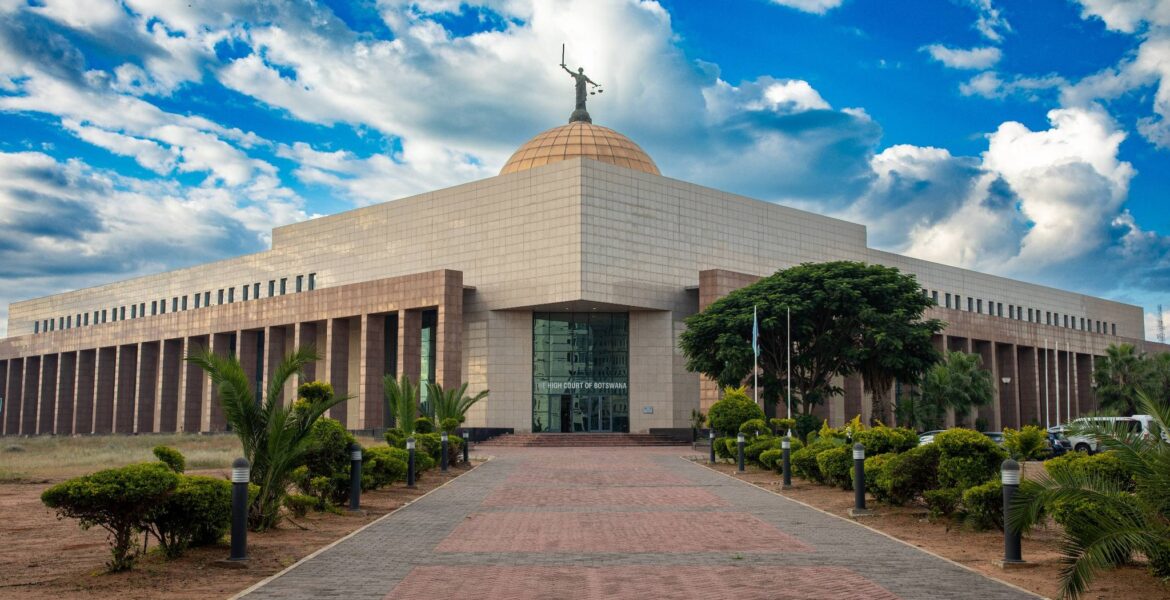
As the government pushes ahead with a costly Constitutional Court referendum, Botswana’s existing courts are reportedly struggling with basic consumables, forcing the Law Society to coordinate donations of paper, toner and ink cartridges
BONGANI MALUNGA AND SESUPO RANTSIMAKO
Botswana’s justice system is facing a distressing operational crisis, with courts across the country reportedly struggling with shortages of basic consumables such as printing paper, toner and ink cartridges, raising fears over disruptions to court processes and delays in the administration of justice.
The shortages have become so severe that the Law Society of Botswana (LSB), acting on behalf of the Administration of Justice, has launched an appeal within the legal fraternity to source donations of essential office supplies needed to keep court operations running.
POLITICALLY SENSITIVE TIME
The development comes at a politically sensitive time as government presses ahead with plans for a Constitutional Court referendum expected to cost taxpayers an estimated P275 million. The contrast between the planned expenditure on a new justice structure and the apparent inability of courts to secure day-to-day operational supplies has sparked concern.
A widely circulated email believed to be from the LSB exposed a reality of courts operating with limited printing capacity, potentially affecting the preparation of court records, judgments and other critical legal documents. The shortages threaten to worsen existing case backlogs and place further strain on the judiciary.
The consumables crisis has also raised questions about funding priorities within government while existing institutions reportedly lack the most basic resources to function effectively.
FUNDS ALLOCATED
This is despite the fact that in March 2025, the Administration of Justice was allocated P450 million by the National Assembly’s Committee of Supply for administrative purposes. While a significant portion of the budget was earmarked for the maintenance of court facilities and judges’ and magistrates’ houses, the justice department also advanced plans to expand computerized systems such as e-filing. The e-filing system is intended to reduce reliance on paper by digitizing the submission, storage and management of legal documents, thereby cutting printing requirements.
In March 2026, the Ministry of Justice and Correctional Services, under which the Administration of Justice falls, also revealed to the Committee of Supply that the Case Management System (CMS) had not been operational due to system errors. The CMS is designed to ease processes such as case registration, status checks, requests for case summaries and the withdrawal of cases.
Reached for comment on whether the Administration of Justice was allocated a budget dedicated to consumables, the Minister of Justice and Correctional Services, Nelson Ramaotwana stated that he was unable to comment as he was held up in a series of meetings in his constituency.
REFERENDUM
Asked whether the reported P275 million referendum cost had been budgeted for and if the exercise would be financed under the Independent Electoral Commission’s (IEC) 2026/2027 development budget, IEC Secretary Jefferson Siamisang declined to disclose whether the commission has made financial provision for the process. Siamisang maintained that the IEC, which is constitutionally mandated to facilitate and conduct referendums, would only comment on the matter after the formal issuance of the writ of referendum.
“We can only talk about the matter after the President has issued the writ of referendum, so let us wait for that,” he told The Botswana Gazette.
At the time of going to press, Law Society Executive Secretary Lillian Marang Muzimo said they were not yet in a position to respond to The Botswana Gazette enquiries, as they were still deliberating on the matter in order to formulate a response.
PET PROJECTS
The Leader of Opposition, Dumelang Saleshando believes that the government has developed a trend of prioritising the President’s most endeared projects over basic responsibilities.
“It’s hardly surprising because the government has somewhat abdicated its role in handling its core responsibilities. This is happening across all sectors, it’s a common problem. There seems to be a reliance on the private sector or donations to cover for the government’s shortcomings. It’s clear that the government prioritises the President’s pet projects over other responsibilities,” Saleshando told this publication.
The government is currently pushing ahead with plans to establish a standalone Constitutional Court, a move that proponents of the move believe will strengthen constitutional democracy and improve the handling of constitutional matters. For now, the unusual sight of lawyers and legal practitioners being asked to donate paper and printer supplies has become a stark symbol of the growing resource pressures confronting Botswana’s courts.