
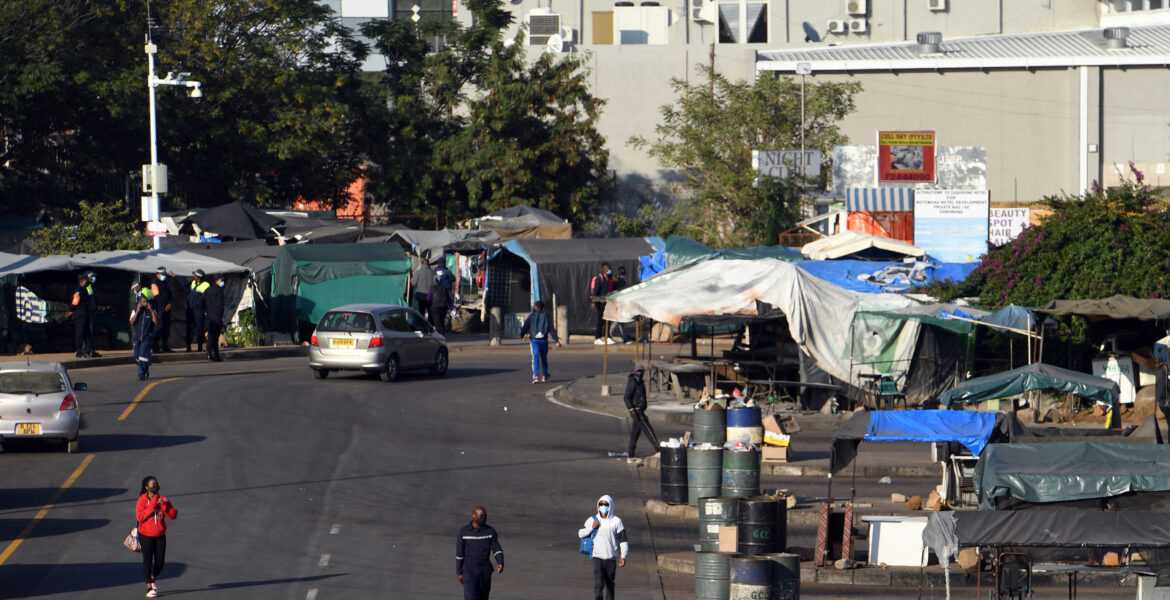
More than 683,000 people remain below the poverty line as population growth offsets nearly a decade of gains in the national poverty rate.
GAZETTE REPORTER
Botswana’s fight against poverty has barely reduced the number of people living below the poverty line over nine years, despite a decline in the national poverty rate, according to the latest government statistics.
The Poverty and Inequality in Botswana Statistical Brief, based on the Botswana Multi-Topic Household Survey (BMTHS) 2024/25, reveals that poverty declined from 33 per cent in 2015/16 to 28.9 per cent in 2024/25, a reduction of 4.1 per centage points over almost a decade.
At this rate, poverty would still affect close to a quarter of the population by the mid-2030s, leaving Botswana significantly short of the Sustainable Development Goal (SDG) 1 target of ending poverty.
Population Pressure
The modest improvement in the poverty rate has done little to reduce the number of people living below the poverty line.
In 2024/25, a total of 683,634 people were classified as poor, compared with 684,284 in 2015/16. This represents a reduction of approximately 650 people over nine years.
“Population growth absorbed almost all of the improvement in the rate,” the statistical brief states.
It warns that measuring poverty exclusively through per centages risks concealing the scale of the problem, as governments could record improvements in poverty rates while the actual number of people requiring assistance remains virtually unchanged.
Rural Divide
The findings also expose the deep geographical inequalities underpinning poverty, with rural Botswana bearing a disproportionately heavy burden.
The rural poverty rate stands at 47.2 per cent, almost five times the 9.7 per cent recorded in cities and towns. This means nearly half of the rural population continues to live below the poverty line.
At district level, the disparities are even more pronounced. Orapa recorded the lowest poverty rate at 2.1 per cent, while Letlhakeng emerged as the country’s poorest district, with 61.1 per cent of its population living in poverty.
Half of Botswana’s 32 districts recorded poverty rates above the national average, with the highest concentrations found in the Kgalagadi, Kweneng and North West areas.
Working Poor
The report further raises questions about the extent to which employment is lifting households out of poverty.
Although working people are generally better protected against poverty, the working poverty rate declined by less than one per centage point over the decade, compared with the national reduction of 4.1 per centage points.
The working poverty rate currently stands at 15.7 per cent, suggesting that employment alone has not delivered sufficient improvements in living standards for a significant proportion of workers.
Consumption Inequality
Meanwhile, consumption inequality has narrowed, with the Gini coefficient declining from 0.540 to 0.493. However, the report cautions that inequality remains high, with consumption still heavily concentrated among wealthier households.
Rural Botswana is particularly disadvantaged, recording an inequality coefficient of 0.500, higher than the national average.