
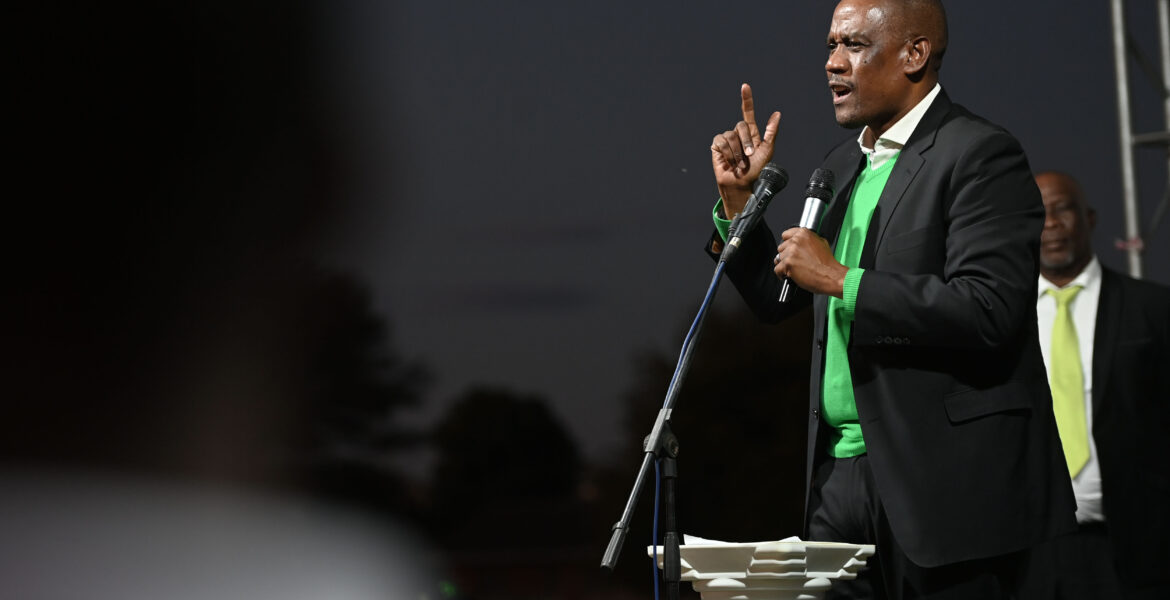
Leader of Opposition Dumelang Saleshando has challenged the UDC’s account of the Electoral Amendment Bill, saying the reform process began shortly after the 2024 general elections and was not rushed after the All-Party Conference.
GAZETTE REPORTER
Leader of Opposition Dumelang Saleshando has accused senior Umbrella for Democratic Change (UDC) leaders of distorting the history of the Electoral Amendment Bill, saying the legislation was not hastily conceived as suggested in Parliament.
Not Rushed
Saleshando has pushed back against claims by Minister of State President Moeti Mohwasa that the Bill was rushed following the recent All-Party Conference (APC), arguing that the electoral reform process dates back to shortly after the 2024 general elections.
Responding on his official Facebook page to Mohwasa’s parliamentary remarks, Saleshando said the reform process began on 14 November 2024, immediately after the elections. He questioned how the Bill could reasonably be described as having been hurriedly prepared in response to the APC, given the time that had elapsed.
“Can a Bill to amend any law be cobbled up within 30 days and be ripe for Parliamentary debate?” Saleshando asked.
Legislative Trail
Saleshando pointed to the legislative record as evidence of the Bill’s progression. He said the proposed amendments were published in the Government Gazette on 5 June 2026 before being considered by the Parliamentary Committee on Governance and Oversight on 16 July and again on 6 August.
The Bill was subsequently tabled before the Parliamentary General Assembly on 13 August before being brought before Parliament. Saleshando said the sequence demonstrated that the reforms had been in development well before the recent APC.
Misrepresentation Claim
The opposition leader accused Mohwasa of presenting Parliament with what he described as a false account of the Bill’s origins. According to Saleshando, Mohwasa had told Parliament that Government had noted that one of the parties participating in the APC had subsequently taken some of the proposed reforms to Parliament independently.
Saleshando rejected that version, saying records showed that he had initiated the electoral reforms in November 2024. He described Government’s position as a “clear misrepresentation of facts and dishonesty”.
Deputy Speaker
Saleshando also criticised Deputy Speaker Helen Manyeneng, expressing disappointment that she had, in his view, advanced the same narrative while presiding over Parliament.
He said her position was particularly concerning because Manyeneng had chaired the Parliamentary General Assembly where MPs from all political parties represented in Parliament unanimously committed themselves to supporting the Electoral Amendment Bill.
“Honesty requires a lot more than what some of the ruling party MPs have,” he said, accusing the UDC leadership of “disingenuity”.
Mohwasa Stands Firm
Mohwasa has refused to withdraw his comments. Asked to respond to Saleshando’s accusations, the Minister said he stood by the statement he made in Parliament.
“We are focused on making changes to the Electoral Act,” Mohwasa said.