
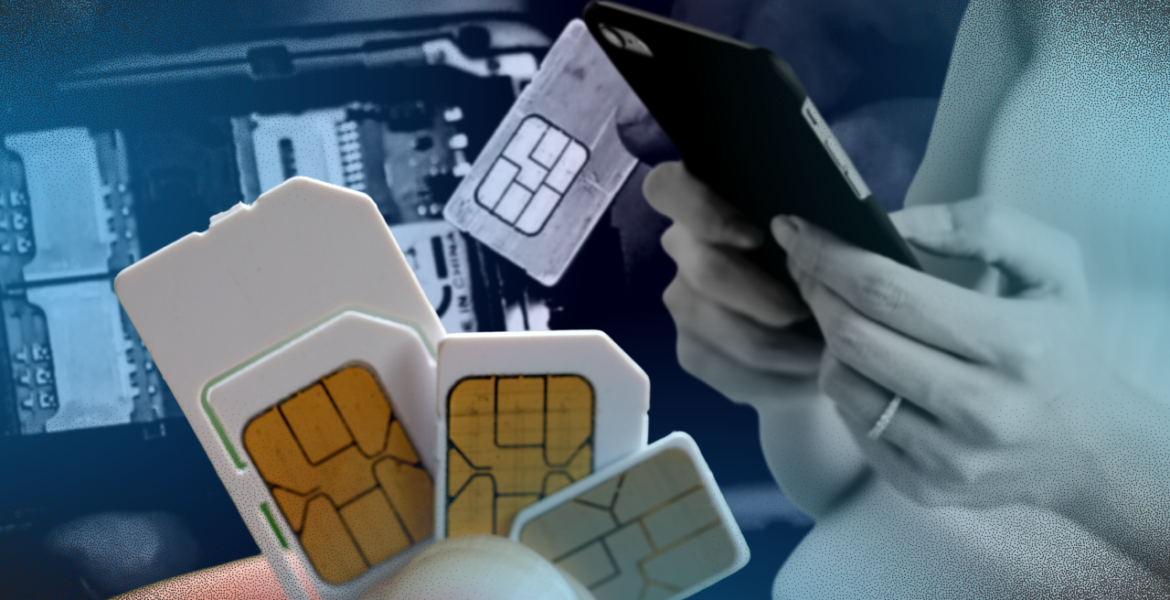
Scammers Exploit SIM Registration LoopholesThe communications minister admits that fraudsters are exploiting borrowed SIM cards and mobile wallets despite mandatory registration, as millions of pula are lost to scams.
BONGANI MALUNGA
Botswana’s SIM registration regime is failing to completely shut out telecommunications fraud as scammers increasingly exploit numbers and mobile wallets registered to other people, Minister of Communications and Innovation David Tshere has acknowledged.
Responding to a parliamentary question from Shoshong MP Moneedi Bagaisamang on Tuesday, Tshere said mobile network operators have successfully blocked telephone numbers reported and identified as being linked to fraudulent activities.
However, the Minister conceded that SIM registration, introduced partly to improve traceability of mobile subscribers, does not eliminate telecommunications-related fraud.
Registration Gaps
“SIM registration alone does not eliminate the risk of telecommunications-related fraud but facilitates identification of the identity of the owner of the number,” Tshere stated. The admission highlights the limits of registration and Know Your Customer (KYC) requirements when fraudsters can still operate through SIM cards formally registered under different identities.
According to Tshere, perpetrators continue to use different methods to conceal their true identities, obtain personal information and circumvent safeguards implemented by mobile network operators.
Of particular concern is what the Minister described as a growing practice of people lending their registered numbers and mobile wallets to others, potentially allowing criminals to operate behind legitimate subscriber identities.
Borrowed SIMs
“It is therefore incumbent for the public to ensure that they register their numbers, update their KYC when legitimately requested to do so through formal channels publicised by Operators, and not participate in conduct that would lead to criminal activities, such as lending their numbers and mobile wallets,” Tshere stated. “Unfortunately, and with concern, the Authority has observed this as a growing trend.”
The warning comes against a backdrop of growing concern from the Botswana Police Service (BPS) over cyber-enabled fraud. Police Commissioner Dinah Marathe told the Public Accounts Committee in June that cybercrime had risen by 25 percent during the year under review, with criminals increasingly using technology for online fraud, identity theft and other cyber offences.
Fraud Losses
Fraud Losses
More recently, police reported that Molepolole residents alone had lost more than P1.3 million to cybercriminals in 2026, more than double the approximately P638 000 recorded there in 2025. BPS warned that fraudsters were sharpening their tactics as people received money from savings schemes and other financial arrangements.
BPS has also repeatedly warned of criminals impersonating bank employees and other institutions. In October, police cautioned that victims were being contacted by fraudsters claiming banking information needed to be updated before being sent links that ultimately enabled unauthorised withdrawals. Police urged the public not to disclose PINs, passwords, card details or other sensitive banking information and to independently verify unsolicited communications.
Regulatory Response
Tshere said the Botswana Communications Regulatory Authority (BOCRA) will continue engaging mobile network operators, law enforcement agencies and other regulatory stakeholders to strengthen interventions aimed at identifying both perpetrators and individuals who facilitate their activities.
Regulatory Response
Tshere further revealed that scammers also exploit “SIM renting,” where fraudsters gain access to SIM cards registered in other individuals’ names, making it difficult for investigators to establish the actual identity of the person committing the offence.
The Minister also identified sequential dialling, inadequately protected customer registers, malicious applications, phishing and spoofing as some of the methods through which scammers obtain contact details and personal information.
Tshere said tackling telecommunications fraud will therefore require more than SIM registration, pointing to stronger KYC controls, improved information security, cooperation between service providers and effective law enforcement.