
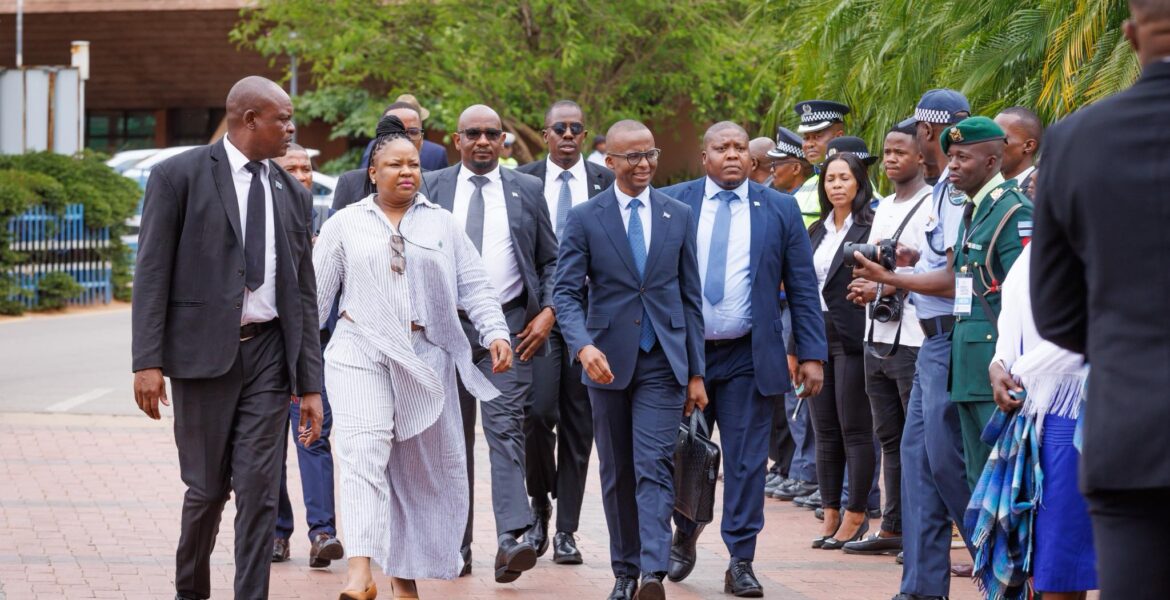
Vice President, Ndaba Gaolathe has underlined that in order to become a high income nation, Botswana must finance its development from within
BONGANI MALUNGA
A fresh wave of tax increases could be on the horizon as the Botswana government moves to tighten its fiscal grip and ramp up domestic revenue mobilisation. Vice President and Minister of Finance, Ndaba Gaolathe, has signalled a decisive policy shift, underscoring the urgency for Botswana to finance its development agenda from internal resources rather than external borrowing.
The push comes as the Botswana Unified Revenue Service (BURS) sets an ambitious revenue collection target of P65 billion in the 2026/2027 financial year, an aggressive leap aimed at closing the country’s relatively low tax-to-GDP ratio of 13.4 percent.
TAX ADMINISTRATION ACT
Addressing the Tax Pitso in Gaborone last week, Gaolathe’s remarks pointed the introduction of tax reforms in the coming financial cycle. The government is set to table a single unified piece of legislation, the Tax Administration Act, before Parliament in due course according to Gaolathe.
“Botswana’s tax-to-GDP ratio stands at approximately 13.4 percent, far below and significantly lower than the African average let alone comparable economies in our region. This means that we are not yet mobilising enough of our own national strength to finance the future we all aspire to. This reality underscores a simple but critical truth, that if we are to achieve our shared ambition of becoming a high income nation, we must increasingly finance our development from within,” Gaolathe asserted.
The development places businesses and consumers on alert, with social media commentators, the opposition and economists warning that any tax hikes could weigh on economic activity, particularly at a time when households are already grappling with rising costs of living. However, the government appears resolute, framing the move as a necessary step toward long-term economic resilience and self-sufficiency.
DEEPENING PUBLIC DEBT
For his part, BURS Commissioner General, Phodiso Valashia stated that the projected P65 billion collection target will help fund infrastructure, social services and diversification efforts without deepening public debt.
“This will finance about 75 percent of government expenditure and account for 80 percent of government revenue. In practical terms, the functioning of the government will depend largely on what is collected. What is collected will depend on what is declared and paid,” Valashia explained.