
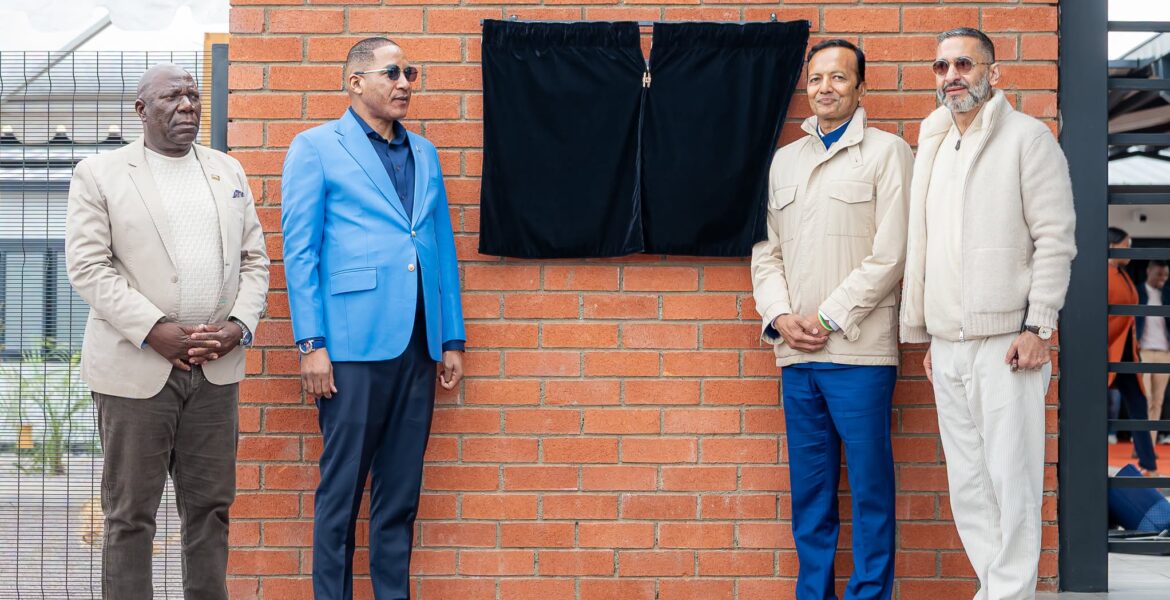
The Manual Workers Union wants security, financial and planning records for Zunaid Moti’s school and clinic project, alongside clarity on whether the government will ultimately pay.
SESUPO RANTSIMAKO
The Manual Workers Union is demanding documentary proof that businessman Zunaid Moti’s recently opened school and clinic project in Gaborone has undergone government scrutiny, saying statutory safeguards must not be bypassed in the name of speed or private investment.
In a statement, the union called on authorities responsible for security vetting, financial compliance, public finance and town planning to show that the project and Moti’s corporate interests had met applicable requirements.
Vetting Demands
The union wants evidence that Moti and his corporate vehicles underwent and passed what it described as the Directorate of Intelligence and Security (DIS) background vetting required for major foreign infrastructure developers.
It also demanded proof of Financial Intelligence Agency (FIA) scrutiny, warning against undermining financial monitoring systems Botswana had worked to strengthen.
“Botswana has fought a difficult battle to satisfy Financial Action Task Force standards and escape heightened international scrutiny. Therefore, bypassing established financial monitoring mechanisms could expose the country’s banking sector to unnecessary risks,” the union said.
Approval Records
The union asked the Ministry of Finance to clarify whether it had formally approved the project and whether any budgetary allocation had been made under the Public Finance Management Act or the Public-Private Partnership framework.
It also wants confirmation that the necessary land-use and zoning applications were submitted to and approved by the Gaborone City Council.
“If Moti truly loves Botswana, he must understand that our national sovereignty, our land and our laws are not a playground for un-vetted corporate experiments,” it said.
The union argued that bypassing state systems to avoid government delays or wastage would amount to administrative lawbreaking and disrespect for the rule of law.
Who Pays?
It also questioned Moti’s assertion on Facebook that the government had contributed “zero pula” and that African Hero was funding the initiative entirely through corporate resources.
The union asked why Moti had said at the project’s official launch that payments would come later if it was entirely privately funded.
“Why then did you state on record at the official ceremony that payments will come later?” it asked.
It said the apparent contradiction required clarity about the project’s financial and legal structure, particularly the relationship between private corporate funding and government involvement.
Safeguards, Not Opposition
The union said it was not opposing the construction of schools and clinics, but demanding compliance with Botswana’s laws and institutional safeguards.
It warned against the country becoming a testing ground for what it described as “unregulated off-balance-sheet corporate experiments.”