
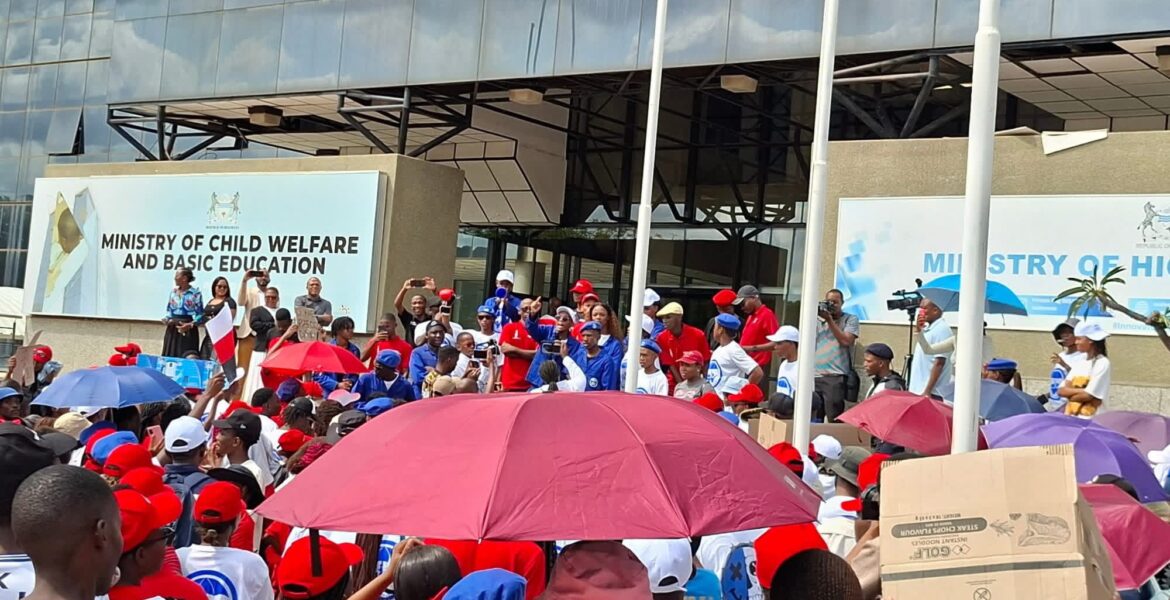
Botswana is facing mounting social and economic pressures, with a new United Nations report warning that rising youth unemployment and persistent gender-based violence could worsen amid a troubled economy
GAZETTE REPORTER
Botswana’s social stability is facing growing pressure from worsening economic conditions, with the United Nations warning that high youth unemployment and gender-based violence (GBV) could intensify if structural challenges remain unaddressed.
In its Annual Results Report 2025 released this week, the UN country analysis conducted in late 2025 cautioned that “longstanding social challenges such as high youth unemployment and elevated levels of gender-based violence risk being further exacerbated by emerging economic pressures.”
ALARMING LABOUR MARKET CONDITIONS
The report paints a concerning picture of Botswana’s labour market, citing overall unemployment at 27.6 percent and youth unemployment rising to 38.2 percent as of the first quarter of 2024. It describes a “persistent disconnect between growth and employment” in the country’s mining-dependent, capital-intensive economy.
“Youth unemployment remains one of the most binding constraints to inclusive development,” the report notes, pointing to growing frustration among young people excluded from meaningful economic participation.
GBV CONCERNS DEEPEN UNDER ECONOMIC PRESSURE
At the same time, the UN warns that gender-based violence remains a deep-seated challenge, with economic stress likely to worsen levels of domestic and societal abuse, particularly affecting women and vulnerable groups.
Analysts say unemployment, poverty, and inequality often create conditions that fuel violence in homes and communities, intensifying risks for already vulnerable populations.
DIAMOND SLOWDOWN HITS ECONOMIC GROWTH
The situation is being aggravated by a slowing economy. Botswana’s growth contracted between 2024 and 2025, driven largely by a sharp decline in diamond production. Output at Debswana fell by 43.7 percent year-on-year in the second quarter of 2025, sending ripple effects through trade, transport, and manufacturing sectors.
RISING FISCAL PRESSURES
Fiscal pressures are also mounting, with government recording a P11.8 billion budget deficit in the 2024/25 financial year. Projections indicate an even wider deficit of P22.1 billion—about 7.6 percent of GDP—in 2025/26. While inflation has stabilised within central bank targets, this has not translated into broad-based economic recovery.
“Botswana is at a structural inflection point,” the report warns, citing limited diversification and widening inequality, particularly affecting women, youth, and rural communities.
Urbanisation—now exceeding 70 percent of the population—alongside climate shocks such as recurring droughts and water scarcity are further compounding vulnerabilities, especially in rural livelihoods.
UN CALLS FOR URGENT REFORMS
In response, the UN is urging urgent, coordinated reforms to diversify the economy, expand employment pathways, and strengthen social protection systems targeting youth and women.
“The evolving context reinforces the need for integrated, systemwide support that addresses structural transformation, human capital resilience, climate adaptation, and inclusive growth,” the report states.
LOOKING AHEAD TO 2027–2031 FRAMEWORK
Looking ahead, the UN Country Team is preparing a new Cooperation Framework for 2027–2031 aligned with Botswana’s national priorities. However, it warns that declining global funding and domestic fiscal constraints may limit implementation capacity.
“2026 will require a stronger focus on forging innovative and diversified partnerships,” the report concludes, as the UN seeks to maintain impact amid tightening resources.