
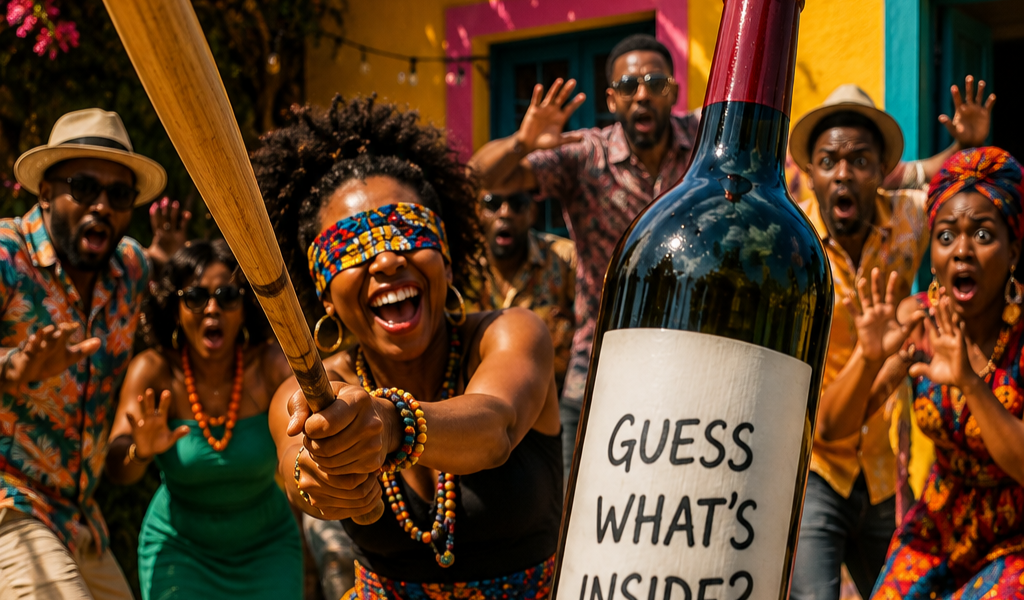
Strip away the label, the price and the prestige, and blind tasting asks the only question that really matters: do you actually enjoy what is in your glass?
Wine has a fascinating ability to make us both confident and uncertain at the same time. Place a beautiful bottle on the table with an impressive label, a prestigious region, a recognisable producer and perhaps a story involving generations of winemakers, and our expectations begin forming before the first drop touches our lips. We are no longer simply tasting wine; we are tasting the story, the reputation and, sometimes, even the price.
Then take away the bottle. Remove the label. Hide the producer. Forget the region. Suddenly, everyone becomes a little more humble. That is the magic of blind tasting. It is the great equaliser of the wine world because it forces us to engage with what is actually in the glass rather than what we think should be there.
POWER OF PERCEPTION
Human beings are influenced by context. We pay more attention to a meal when it is served in an elegant restaurant. We expect a luxury car to feel different from an ordinary vehicle. We assume an expensive product must be better because, surely, nobody would charge that much if it were not. Wine is no different.
A label can create anticipation before we even smell the wine. A famous region can make us search for particular characteristics. A high price can persuade us that what we are drinking must be exceptional. Sometimes our brains begin tasting before our palates have had a chance.
THE HONEST QUESTION
That is why blind tasting is so fascinating. It strips away expectation and leaves us with a much more honest question: do I actually enjoy this wine?
Not, “Am I supposed to enjoy this wine?” Not, “Will people think I know what I am talking about if I say I like this wine?” Simply: “What is happening in my glass?”
EXPERTS GET HUMBLED
There is a popular misconception that wine experts have some magical ability to identify every wine with complete confidence. They do not. They have trained palates, experience and an understanding of regions, grape varieties and winemaking techniques. But they are still human, and wine remains wonderfully unpredictable.
Nothing humbles a wine expert faster than confidently describing a wine’s “Old World elegance” before discovering it came from a bottle bought at a supermarket. That moment of silence is usually followed by a very thoughtful sip and perhaps a quick adjustment of vocabulary.
WHY SURPRISE MATTERS
That unpredictability is one of the reasons wine remains exciting. If every bottle behaved exactly as expected, perhaps we would eventually lose interest. Some of the best wine experiences happen when our assumptions are challenged and a bottle forces us to reconsider what we thought we knew.
This idea came to life during the July gathering of the Gaborone Wine Club, when the Cape Town Wine Society joined us virtually for part of the evening.
A SIMPLE TEST
One of the most fascinating things they shared was their approach to blind tasting. Wines are tasted without the producer, region or grape variety being revealed. Members assess the wine, discuss what they experience and score it out of 100. It is a simple concept, but a powerful one.
Without knowing the story behind the bottle, the conversation changes. People focus on the wine itself: the aromas, flavours, structure, balance and, ultimately, enjoyment. Someone who might normally dismiss a grape variety can suddenly find themselves enjoying it. Someone who always reaches for a familiar producer may discover a wine that deserves attention.
CURIOSITY WINS
The blind tasting table becomes a place where curiosity replaces assumption. What I found particularly interesting about the Cape Town Wine Society’s approach is that the score is not the end of the conversation; it is the beginning. A number out of 100 creates a framework for discussion, but it does not remove the most important question: did you enjoy it?
Because a technically impressive wine that does not excite you is still not necessarily your wine.
THE PRICE TEST
One of the most entertaining parts of blind tasting is seeing how often price and preference fail to align.
That does not mean expensive wines are not worth their price. Many premium wines command their value because of vineyard location, limited production, ageing potential and extraordinary craftsmanship. Some wines fully deserve their reputation and their price tags. But price does not guarantee personal enjoyment.
YOUR PALATE WINS
A P2,000 bottle may be technically impressive, beautifully made and highly regarded, but if your palate prefers the P250 bottle sitting next to it, that is a perfectly valid opinion. Wine is not an investment portfolio where the most expensive option automatically wins. The best wine is the one that creates the best experience for you.
Blind tasting reminds us of exactly that. It separates appreciation from expectation and reminds us that enjoyment is deeply personal.
JOY OF NOT KNOWING
Perhaps that is why blind tasting remains one of the most enjoyable parts of wine culture. It reminds us that discovery is still possible.
Even people who have spent years exploring wine can be surprised. Experienced enthusiasts can find themselves reconsidering old opinions. Experts, too, can be reminded that wine always has another story to tell.
KEEP DISCOVERING
That is the beauty of the journey. Wine is not a destination where you eventually know everything. The moment you think you have figured it all out, a new grape, region, producer or bottle arrives to challenge you.
So the next time you open a bottle, try forgetting the label for a moment. Taste first. Judge later.