
By Manuel Veiruapi Ruhapo | The Brand Paradox | The Botswana Gazette
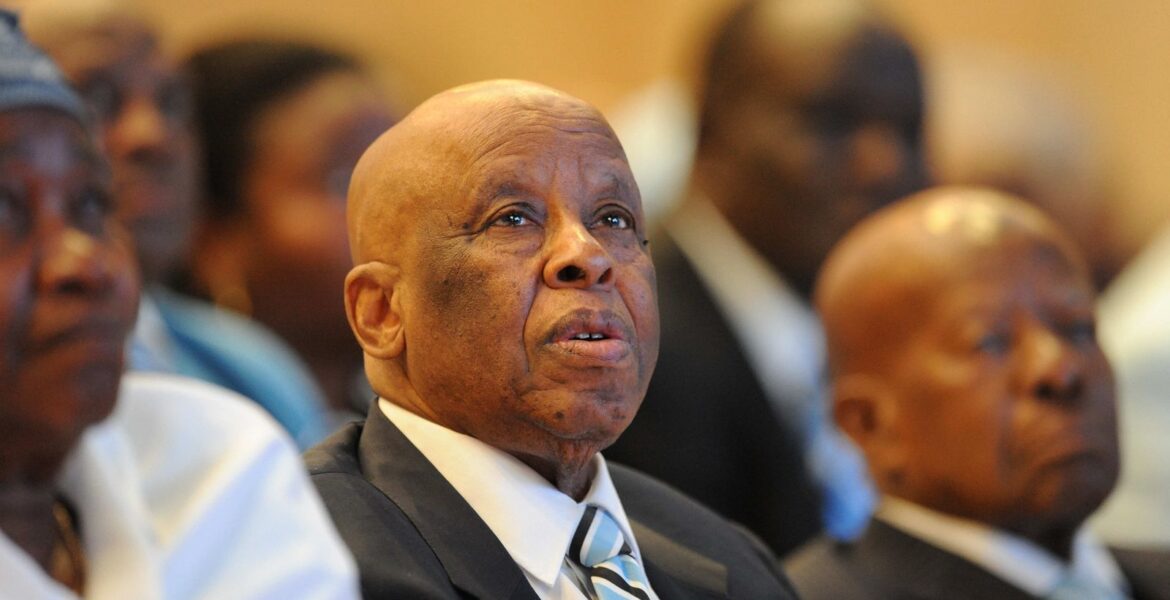
Festus Gontebanye Mogae, third President of the Republic of Botswana, 1939 to 2026. This article is written in his memory.
The Paradox
On 8 May 2026, Botswana lost Festus Gontebanye Mogae at the age of 86. President Duma Boko announced three days of national mourning. Tributes arrived from across Africa and the world. The language used to describe him was consistent: good governance, integrity, courage, visionary leadership.
What is striking about that language is what it does not contain. Nobody described Mogae as a great communicator. Nobody cited a memorable advertising campaign, a powerful brand slogan, or a sophisticated reputation management strategy. Nobody pointed to the quality of his public relations operation. The tributes were not about how Mogae presented himself. They were about what he actually did.
This is the legacy paradox. The leaders and organisations that build the most enduring legacies are almost never the ones that set out to build a legacy. They set out to solve a problem, to make a decision that needed to be made, to do the thing that was necessary even when it was uncomfortable. The legacy arrived as a consequence of the work, not as the goal of it. And the leaders who set out to build a legacy, who manage their image, protect their reputation, and curate their narrative, tend to produce something that looks impressive in the short term and dissolves in the medium one.
Mogae’s life is the most instructive Botswana case study for this argument. And in the moment of his passing, it is worth examining precisely what he built, and how the building of it contains lessons that Botswana’s brands, businesses, and leaders urgently need.
The Situation He Inherited
Festus Mogae became Botswana’s third president in 1998. He inherited a country that was, by African standards, a success story. The diamond revenues that had transformed a landlocked, cattle-grazing territory into one of the continent’s most stable and prosperous nations were still flowing. The institutions that Seretse Khama and Ketumile Masire had built were functioning. The rule of law was intact.
He also inherited a crisis that threatened to undo everything.
By the late 1990s, Botswana had one of the highest HIV prevalence rates in the world. Approximately 24 percent of adults aged 15 to 49 were estimated to be living with HIV. In some age cohorts, the infection rate was dramatically higher. More than one third of all deaths in children under five were attributable to AIDS. The demographic projections were catastrophic. In 2001, standing before an international audience, Mogae said what most leaders in his position would have been advised never to say publicly: “We are threatened with extinction. People are dying in chillingly high numbers. It is a crisis of the first magnitude.”
That statement was not a communications strategy. It was a diagnosis. And the willingness to make it publicly, to name the scale of the crisis without diplomatic softening, was the first act of the leadership that would define his presidency.
The Decision That Defined the Decade
In 2002, Botswana became the first African country to launch a programme of free, universal antiretroviral therapy for all citizens living with HIV who needed treatment. This was not a small decision. It was made at a time when the prevailing international consensus, including from some major donor institutions, was that antiretroviral treatment was too expensive and too logistically complex for sub-Saharan African health systems to deliver at scale. The argument was that prevention was the appropriate focus for resource-constrained governments, and that treatment should wait until systems were ready.
Mogae rejected that argument. He partnered with the Bill and Melinda Gates Foundation and pharmaceutical company Merck to establish the African Comprehensive HIV/AIDS Partnership, known as ACHAP, in 2000. He mobilised domestic resources at a scale that most governments in comparable situations would not have considered. He made the AIDS response one of the top priorities of his administration’s budget and attention.
By 2007, Botswana was delivering HIV treatment to more than 90 percent of citizens who needed it. By the time Mogae left office in 2008, the country had made measurable progress in reducing AIDS-related mortality, preventing mother-to-child transmission, and expanding voluntary testing and counselling across the health system. In 2026, Botswana achieved the UNAIDS 95-95-95 targets ahead of the 2030 deadline: 95 percent of people living with HIV knowing their status, 95 percent of those on treatment, and 95 percent of those on treatment achieving viral suppression. The foundation for that achievement was built in the Mogae years.
In 2008, the Mo Ibrahim Prize for Achievement in African Leadership was awarded to Festus Mogae. The prize, which includes a $5 million award and is chaired by a committee that has included former UN Secretary-General Kofi Annan, is the most prestigious governance award in Africa. Announcing the award, Kofi Annan said: “President Mogae’s outstanding leadership has ensured Botswana’s continued stability and prosperity in the face of an AIDS pandemic which threatened the future of his country and people.”
The Brand Lesson in the Governance Record
What does any of this have to do with brand strategy? Everything.
Mogae’s presidency is a masterclass in the difference between building a reputation and earning a legacy. A reputation is managed. A legacy is accumulated through decisions. A reputation can be constructed through communication. A legacy can only be produced through action. And the most important distinction between the two is this: a reputation can be destroyed by a single crisis, while a legacy built on genuine decisions is almost impossible to erase.
The brands that have built the most durable positions in their markets, in Botswana and globally, have done so through the same mechanism that Mogae used. They made decisions that were correct even when they were uncomfortable. They invested in things that mattered even when the return was not immediately visible. They told the truth about their situation even when the truth was difficult. And they held their course over time, through the pressure of short-term criticism and the temptation of short-term shortcuts.
The brands that have built fragile positions have done the opposite. They managed their image rather than their substance. They communicated values they did not operationalise. They avoided difficult decisions to protect their short-term reputation, and in doing so, built nothing that would survive the first serious test.
The Courage Dimension
There is a specific quality in Mogae’s leadership that is worth naming precisely, because it is the quality that is most absent from Botswana’s current brand and governance landscape.
It is the willingness to say an uncomfortable truth in public and then act on it.
When Mogae said “we are threatened with extinction,” he was not performing vulnerability for strategic effect. He was naming a reality that the data confirmed and that the country needed to hear stated plainly by its leader. The naming of the crisis was not separate from the response to it. It was the precondition for the response. A crisis that is diplomatically softened into a “challenge” or a “concern” does not generate the urgency required to mobilise resources, change behaviour, and build the institutional capacity to address it.
Botswana’s current economic situation has structural parallels to the HIV crisis of the late 1990s. The economy contracted by 3.1 percent in 2024 and continued contracting through 2025. Youth unemployment is approaching 46 percent. The diamond dependency that has sustained the national budget for fifty years is under structural threat from laboratory-grown alternatives. The fiscal deficit reached 9 percent of GDP in the 2024/2025 financial year. These are not small problems. They are existential ones, in the same category of urgency as the crisis Mogae inherited.
The question that Mogae’s legacy poses to Botswana’s current leadership, in government and in business, is whether anyone is willing to say, with the same plainness that he used in 2001, what the data actually shows. And then to make the decisions that the diagnosis requires, regardless of the short-term political or commercial cost.
What Mogae’s Legacy Means for Botswana’s Brand
Botswana’s national brand has always been built, in part, on the quality of its governance. The country’s reputation for political stability, rule of law, and institutional integrity is not an accident. It was built by specific leaders making specific decisions over six decades. Seretse Khama built the foundation. Masire consolidated it. Mogae defended it under conditions that would have destroyed it in most comparable countries.
That brand asset, the reputation for governance quality, is Botswana’s most durable competitive advantage. It is the reason foreign investors have historically viewed Botswana differently from most of its regional peers. It is the reason the country has been able to attract the kind of long-term institutional capital that shorter-term, less stable markets cannot. It is the reason Botswana’s word, in international negotiations and commercial agreements, carries weight.
Mogae’s legacy is a direct contribution to that brand asset. Every decision he made that prioritised long-term national interest over short-term political comfort added to the stock of credibility that the Botswana brand represents. Every decision he made that was transparent, accountable, and grounded in evidence rather than ideology reinforced the institutional architecture that makes the brand credible.
The legacy paradox is that he was not trying to build a brand. He was trying to save lives, maintain stability, and leave the country in better condition than he found it. The brand was the consequence of the governance, not the goal of it.
The Inheritance and the Obligation
Mogae’s passing is not only a moment for mourning. It is a moment for reckoning. The question his legacy poses is not “what did he achieve?” The question is “what do we do with what he built?”
The institutional architecture he helped sustain, the rule of law, the democratic transfer of power, the public health infrastructure that his AIDS response created, the international credibility that his governance record reinforced, is an inheritance. Inheritances can be invested or squandered. They can be built upon or depleted. They do not maintain themselves.
For Botswana’s businesses and brands, the Mogae legacy contains a specific instruction. The governance quality that makes Botswana a credible place to do business is not a background condition that can be taken for granted. It is an active asset that requires active maintenance. Every business that operates with integrity, that pays its taxes, that treats its employees and customers honestly, that makes decisions based on long-term value rather than short-term extraction, is contributing to the maintenance of that asset. Every business that does the opposite is depleting it.
For Botswana’s leaders, in government, in the private sector, and in civil society, the Mogae legacy is a standard. Not a comfortable one. A demanding one. It asks whether the decisions being made today will look, in twenty years, like the decisions of people who understood what was at stake and acted accordingly. Or whether they will look like the decisions of people who understood what was at stake and chose the easier path.
What It Means to You
If you are a citizen or young Botswana professional: Festus Mogae’s legacy is yours. The institutional stability, the public health infrastructure, the international credibility that you inherit as a Motswana are, in part, the product of decisions he made when you were not yet born or were too young to understand their significance. The obligation that inheritance creates is not gratitude. It is stewardship. The question is what you will add to it.
If you are a marketer, entrepreneur, or business owner: The most powerful brand in Botswana is not a corporate one. It is the national brand, built over sixty years of governance decisions, that makes “made in Botswana” or “based in Botswana” mean something in international markets. Your business operates within that brand. Its strength is your competitive advantage. Protect it by operating with the same integrity that built it.
If you are in leadership, in government, a parastatal, or a large organisation: Mogae’s presidency is a case study in what leadership looks like when it is not managed for optics. He made the hard call on HIV/AIDS when the easy call was to wait. He said the uncomfortable truth when the comfortable option was diplomatic silence. He left office on schedule, as the constitution required, and handed power to his successor without drama. These are not extraordinary acts. They are the baseline of what leadership requires. The question is whether the current generation of Botswana’s leaders is meeting that baseline.
The Legacy That Was Never the Goal
Festus Mogae did not set out to build a legacy. He set out to govern a country through one of the most dangerous crises in its history. The legacy is what happened when he did that job with the seriousness, the courage, and the integrity it required.
That is the legacy paradox. The leaders who pursue legacy produce monuments. The leaders who pursue the work produce change. And change, sustained over time, is the only thing that actually lasts.
Botswana has lost one of the architects of its national character. The question now is whether the country will honour that loss by building on what he left, or by depleting it.
The answer will not be found in the tributes. It will be found in the decisions.
Rest in peace, Rra Nametso.
About The Brand Paradox
The Brand Paradox is a weekly column by Manuel Veiruapi Ruhapo that explores the counterintuitive truths behind building great brands in Botswana and beyond. Manuel Ruhapo is the founder of Blacmarc Group, a brand strategy consultancy that helps businesses solve their most complex brand challenges.
Contact: manuel.ruhapo@blacmarc.co.bw / ruhapo@gmail.com