
From sales targets to customer service metrics, poorly designed incentives can make businesses celebrate results that quietly destroy the trust they depend on.
By Manuel Veiruapi Ruhapo | The Brand Paradox | The Botswana Gazette
Imagine calling a company in Gaborone because a charge on your account makes no sense. The employee sounds helpful, but the conversation ends before the problem is resolved. You call again, explain again and lose another part of your morning.
Inside the company, the first call might count as a success: it was handled quickly. Outside, you are deciding whether this business deserves another month of your money.
This hypothetical encounter captures a danger in brand building. Sometimes the business does not simply fail to deliver its promise. Its own reward system encourages people to undermine it.
THE COBRA EFFECT
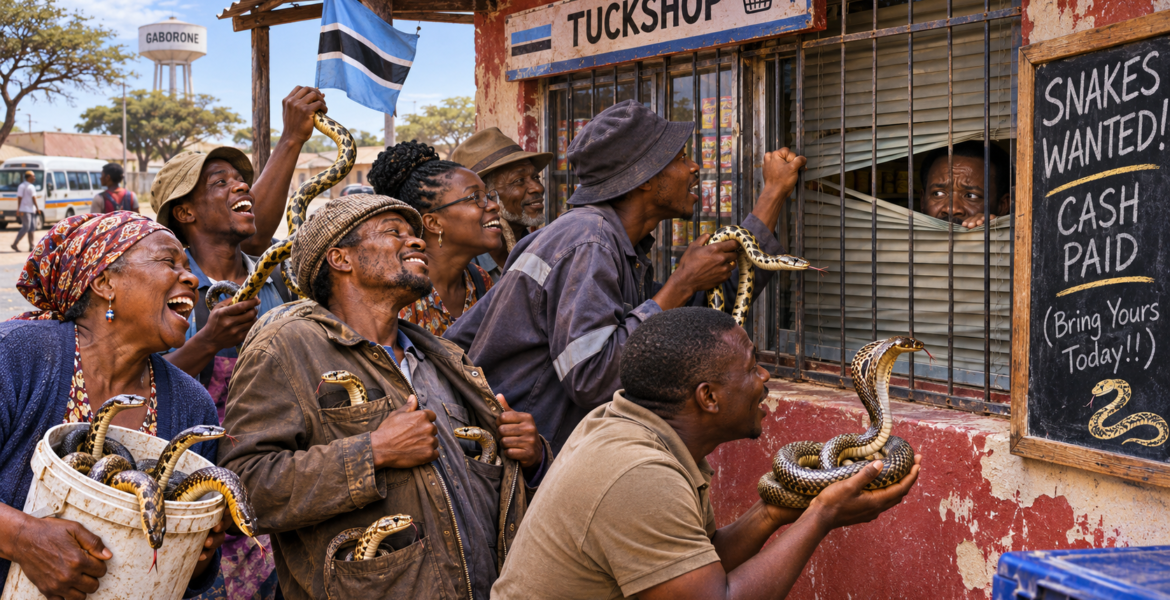
The Cobra effect describes an incentive that encourages behaviour which worsens the problem it was meant to solve. Its name comes from a frequently repeated, historically disputed story about a bounty for dead cobras in colonial India. In the tale, people breed snakes to collect the reward, turning an attempted solution into a bigger problem. It is best treated as a parable, not established history. 1
The business lesson is straightforward: people respond to what gets rewarded, not necessarily to what management intended.
A brand wants loyal customers but rewards staff only for new accounts. It wants useful conversations but pays an agency mainly for engagement totals. It wants excellent service but praises employees for ending calls quickly.
These are not automatically Cobra effects. They become one when the response to the incentive actively weakens the relationship the business wanted to strengthen.
The Cobra Paradox is that a company can spend money promoting trust while paying people to behave in ways that make trust harder to earn.
ACCOUNTS WITHOUT TRUST
Wells Fargo provides a documented warning. In 2016, the US Consumer Financial Protection Bureau said employees, encouraged by sales targets and compensation incentives, opened accounts without customers’ consent. Some customers incurred fees. The regulator also identified inadequate monitoring of the incentive programmes. 2
Days later, the bank announced that it would eliminate retail product-sales goals. 3
The important detail is not the size of a penalty. It is the person discovering that a bank had done something in their name which they had never requested.
A customer who asks for help with money should not become a means of improving someone else’s sales record. Once that happens, the brand promise and the employee’s incentive are pulling in opposite directions.
Misconduct still requires accountability. But dismissing the matter as a few dishonest employees would leave the system that encouraged the behaviour unexamined.
BRINGING IT HOME
Botswana’s promotions show why incentives belong in brand strategy, not just the sales department.
FNB Botswana’s 2024/25 Swipe & Win campaign rewarded qualifying customer activity. It also included prizes for shop tellers whose assisting details appeared on winning customer receipts. 4
That is not evidence the campaign backfired. It shows that a promotion can influence both customers and the people serving them. The design therefore needs to consider what each participant might do to improve their chances.
The distinction is between encouraging useful behaviour and encouraging activity for its own sake. A transaction is measurable. Whether it helped someone manage their money is a different question.
Consider mobile money. Mascom’s MyZaka offers practical services, including buying electricity, paying bills and sending money. 5 Those uses give a customer reasons to keep the service.
Now imagine a mobile-money activation that rewards promoters only for registrations. This is an illustrative scenario, not a claim about Mascom’s practices. A promoter could prioritise completing forms over explaining how the service works. The campaign records growth, but customers leave unable to use what they joined.
The brand has paid for a number and potentially created frustration instead of confidence.
THE EFFICIENCY PARADOX
The Efficiency Paradox follows: making the company look faster can make life slower for its customers.
A service team rewarded only for closing complaints could learn to close the record before solving the problem. The customer returns, the workload grows and the relationship deteriorates. What looked like an efficiency measure has helped create more work.
The same risk applies to a retailer pushing redemption totals without ensuring people understand the offer. Or an activation rewarding repeated social-media tagging until a brand’s invitation begins to feel like spam.
These are possible consequences of badly designed incentives, not allegations against named Botswana businesses.
Botswana’s Competition and Consumer Authority says suppliers must provide accurate, clear and complete information in understandable language. 6 A sales target is no excuse for making that explanation inconvenient.
WHAT IT MEANS
Business owners and executives: Examine what gets bonuses, praise and promotion. Pair sales with evidence of customer consent, suitability and continued usefulness. Do not demand customer care while making it costly for employees to provide it.
Marketing professionals: Before launching an incentive, ask how someone could earn the reward without delivering the intended benefit. Pilot the campaign and follow up with participants. Entries and registrations cannot tell you whether the experience worked.
Brand managers: Follow the customer beyond the winning report. Check whether complaints stay resolved, new customers understand the product and promotional promises are honoured. Give staff credit for preventing a bad sale, not only completing a good one.
The reason is simple: a brand lives in what people experience, not in what the dashboard celebrates.
The Cobra effect warns us that apparent success can carry the seeds of failure. Reward the behaviour you want customers to remember, not merely the activity you can count.