
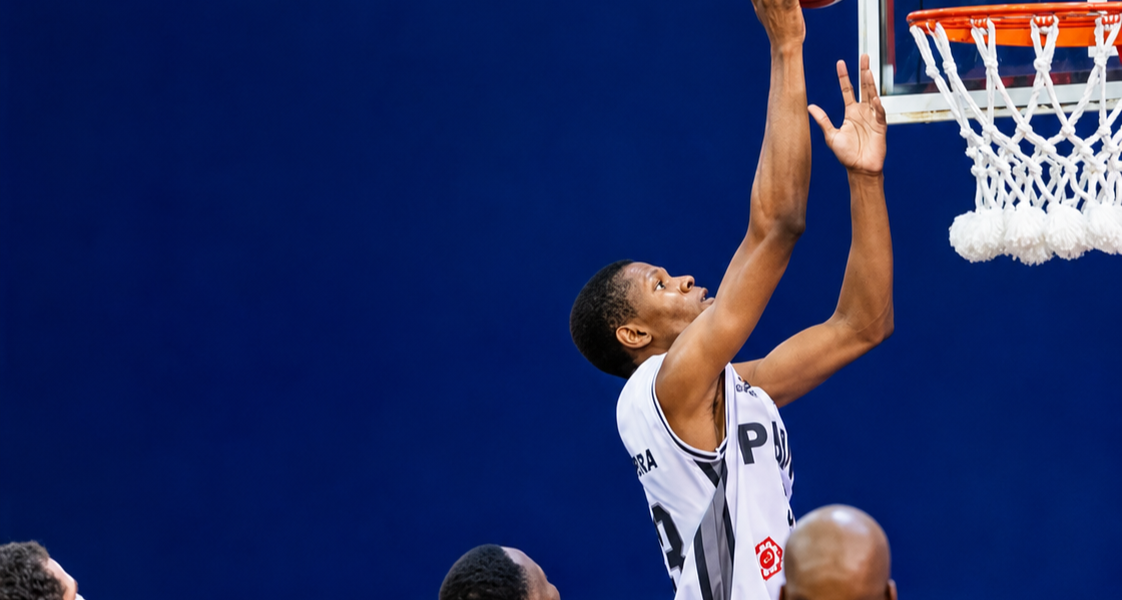
Dolphins’ bench strength and spirited passages offer encouragement, but costly turnovers and defensive lapses leave Botswana’s trailblazers chasing a breakthrough
BONGANI MALUNGA
Dolphins have shown flashes of promise in a bruising start to their Elite 16 campaign, with productive bench performances and competitive stretches offering encouragement despite two opening defeats.Botswana’s first club to reach this stage of the Basketball Africa League (BAL) qualifiers lost 78–62 to Uganda’s Namuwongo Blazers on Monday before suffering a heavier 94–62 defeat against Mozambique’s Ferroviario da Beira on Tuesday in Nairobi, Kenya.
BENCH PROVIDES A SPARK
Dolphins began their opening encounter with intent, racing into a 10–2 lead before the Blazers recovered to take control. Even after falling well behind, the Botswana side mounted a late rally, cutting the deficit to 11 points during the fourth quarter.
William Stanford Jr. provided the biggest scoring contribution with 14 points off the bench, helping Dolphins’ reserves outscore their opponents’ second unit 22–13. Makur Jongkuch added 11 points and six rebounds.
Daniel Prinsloo also delivered a substantial contribution, finishing with 11 points, eight rebounds and three assists. His three successful three-pointers gave Dolphins another attacking outlet. However, Dolphins struggled to turn enough possessions into points. They converted 23 of their 66 field-goal attempts, a 34.8 percent success rate, and made nine of 27 attempts from beyond the arc.
Their mistakes proved particularly expensive, the Blazers scored 23 points off Dolphins’ turnovers, repeatedly punishing lost possession. That damage outweighed the Botswana side’s encouraging bench contribution.
SECOND-HALF UNRAVELLING
Tuesday’s encounter offered another period of resistance before Ferroviario pulled away decisively. After losing the opening quarter 25–17, Dolphins responded by winning the second 19–18. They reached half-time trailing just 43–36, keeping the contest within reach against the Mozambican outfit.
The recovery unravelled after the interval. Ferroviario won the third quarter 27–16 and the fourth 24–10, outscoring Dolphins 51–26 across the second half. A seven-point half-time deficit ultimately became a 32-point defeat, underlining the cost of failing to sustain their earlier competitiveness.
Jongkuch led Dolphins with 14 points, while Tlotlo Tshekega added 12. They were the only Dolphins players to reach double figures, leaving the team short of the scoring support needed to withstand Ferroviario’s second-half surge.
Dolphins now turn their attention to Tanzania’s Dar City on Thursday, November 26, in their final Group B fixture. Their opening performances have identified both promise and priorities, protect possession, find more consistent scoring support and extend their strongest passages across four quarters.