
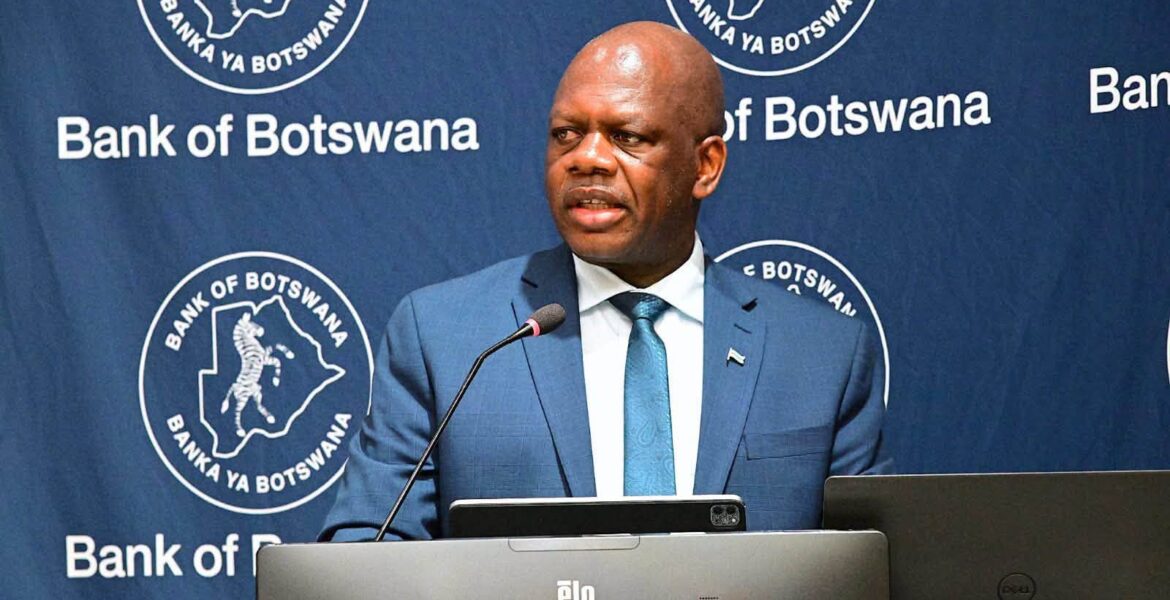
Moseki says exchange-rate adjustments are steering companies towards market-held foreign currency rather than central bank reserves, protecting Botswana’s import capacity
BONGANI MALUNGA
The Bank of Botswana (BoB) has defended its controversial exchange-rate adjustments as a strategic intervention designed to discourage companies from drawing on the country’s official foreign exchange reserves when foreign currency is already available within the banking system.
Speaking at the Financial Stability Council (FSC) media briefing in Gaborone last Wednesday, BoB Governor Lesego Moseki revealed that the adjustments were partly intended to reduce corporate reliance on central bank reserves, encouraging businesses to source foreign currency from commercial banks instead.
Moseki explained that the central bank was aware that substantial foreign currency holdings already existed within the commercial banking sector. However, companies seeking foreign currency were still contributing to demand for the central bank’s reserves, prompting them to rethink the exchange-rate framework.
RECYCLING OF FOREIGN CURRENCY
The intervention was therefore designed to discourage such reliance and encourage the recycling of foreign currency already circulating within the domestic banking system. This means encouraging companies requiring foreign currency to obtain it through commercial banks and other market participants rather than placing additional pressure on Botswana’s official reserves.
Moseki believes the adjustments have achieved positive results, particularly in preserving the country’s foreign currency buffers.
“For us the impact of the adjustments of the exchange rate framework have been very positive. The intention was to preserve the official foreign exchange reserves so that in the future we may be able to buy goods from other countries, also to make our exports more competitive in other markets so that we can get that money that we need to buy,” Moseki explained.
PROTECTING FOREIGN EXCHANGE RESERVES
His remarks underscore the significance of protecting foreign exchange reserves in an economy heavily dependent on imports. With Botswana relying on foreign markets for essential commodities, machinery, fuel and other goods, maintaining adequate reserves is critical to safeguarding the country’s ability to finance future imports.
“We have seen stabilisation and some increase in the level of foreign exchange reserves, that’s a positive,” Moseki added.
The governor suggested that the central bank considers the adjustments successful not merely because of their potential to make Botswana’s exports more competitive but also because they encourage more efficient use of foreign currency already available domestically.
Moseki further noted that the policy presents an economic balancing act, while discouraging corporate reliance on official reserves could strengthen Botswana’s foreign currency position, a weaker Pula also increases the local cost of imported goods.
P