
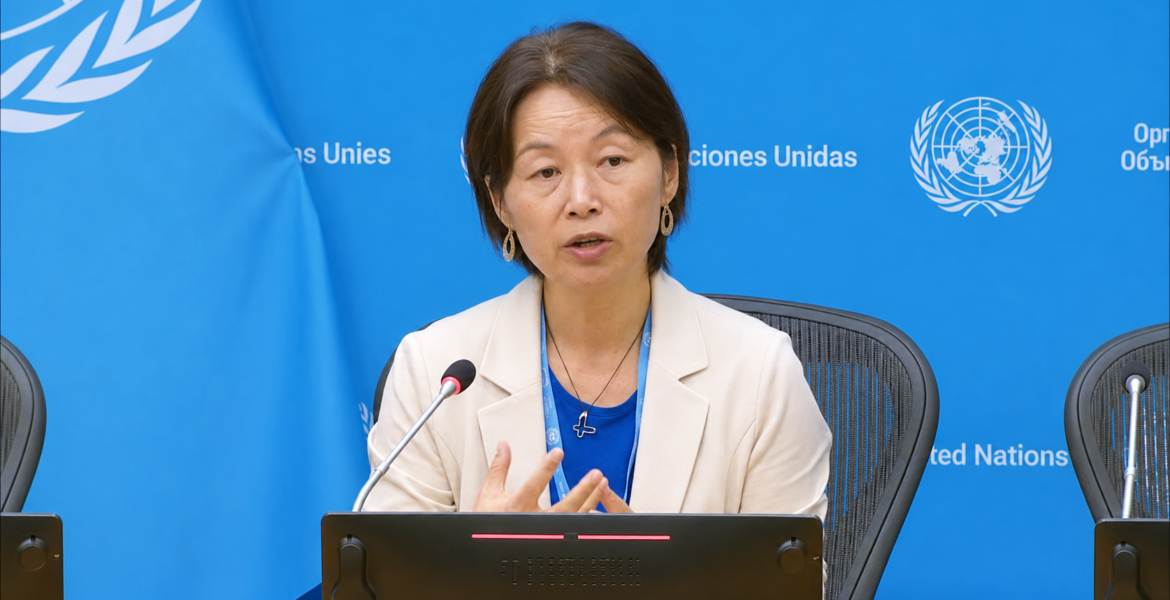
A UN Special Rapporteur will visit Botswana in December to assess child trafficking, sexual exploitation and abuse, and whether laws and institutions are protecting vulnerable children.
GAZETTE REPORTER
The United Nations (UN) is preparing to investigate the scale of child trafficking, sexual exploitation and sexual abuse in Botswana.
The UN Special Rapporteur on the sale and sexual exploitation of children, Ai Kihara-Hunt, will visit Botswana from 1 to 10 December 2026 to assess the situation and the progress made in combating and preventing the sale, sexual exploitation and sexual abuse of children.
The visit will examine Botswana’s compliance with international human rights norms and standards, including measures taken to protect children from exploitation, trafficking and abuse.
Kihara-Hunt’s visit comes as Botswana continues to grapple with public concern over child sexual abuse and gender-based violence, intensified by the Justice for Tshepi campaign. The campaign is a civic and social justice movement calling for accountability and a transparent investigation into the death of Retshepile Setso Tshedu, a 13-year-old girl from Sehithwa whose death was officially ruled a suicide.
According to the United Nations, this will be Kihara-Hunt’s first country visit since assuming her mandate in May 2026.
CALL FOR SUBMISSIONS
In preparation for the visit, the Special Rapporteur has invited civil society organisations, activists, academics and interested individuals to submit information on the nature, scope and magnitude of child exploitation and abuse in Botswana.
The submissions will help the UN establish the extent of the problem, identify vulnerable groups and assess whether existing laws, policies and institutions are adequately protecting children.
Among the issues the UN wants investigated is the sale of children for use in criminal activities, begging, forced labour, sports, adoption, marriage and the transfer of organs.
The inquiry will also examine the exploitation of children for sexual purposes in travel and tourism, as well as trafficking for labour exploitation, domestic servitude, forced criminality and sexual exploitation.
The Special Rapporteur is seeking information on the possession, production and dissemination of child sexual abuse material, including visual and non-visual depictions, as well as the grooming or solicitation of children to engage in sexual activities.
VULNERABLE CHILDREN
The UN has singled out children in remote and rural areas, those affected by poverty, migrant, refugee and asylum-seeking children, children with disabilities, street children, those in alternative care and Indigenous children as groups potentially facing heightened vulnerability.
TESTING PROTECTIONS
The investigation will further scrutinise Botswana’s legislative, policy and institutional framework, including national strategies and mechanisms of cooperation to tackle child exploitation and provide assistance to victims and survivors.
It will also assess the country’s response to recommendations arising from the Violence Against Children and Youth Survey and related national action plans.
The UN wants to establish whether victims have access to effective and child-friendly justice, comprehensive care, recovery and rehabilitation, and whether perpetrators are being investigated, prosecuted and punished.
The Special Rapporteur will also examine the protection of victims’ rights in criminal proceedings, including the principle that victims and survivors should not be criminalised.
MISSION FINDINGS
During her visit, Kihara-Hunt will travel across the country and convene meetings with civil society representatives working on child rights and protection, youth-led organisations and children.
The UN says the meetings are intended to gather information from relevant stakeholders and obtain a first-hand understanding of the challenges facing child protection in Botswana.
At the conclusion of the mission, Kihara-Hunt will brief Government officials on her preliminary findings and hold a press conference to share her initial observations with the public.
The Special Rapporteur will subsequently submit a comprehensive report containing her findings, conclusions and recommendations to the 67th session of the Human Rights Council in March 2028.