
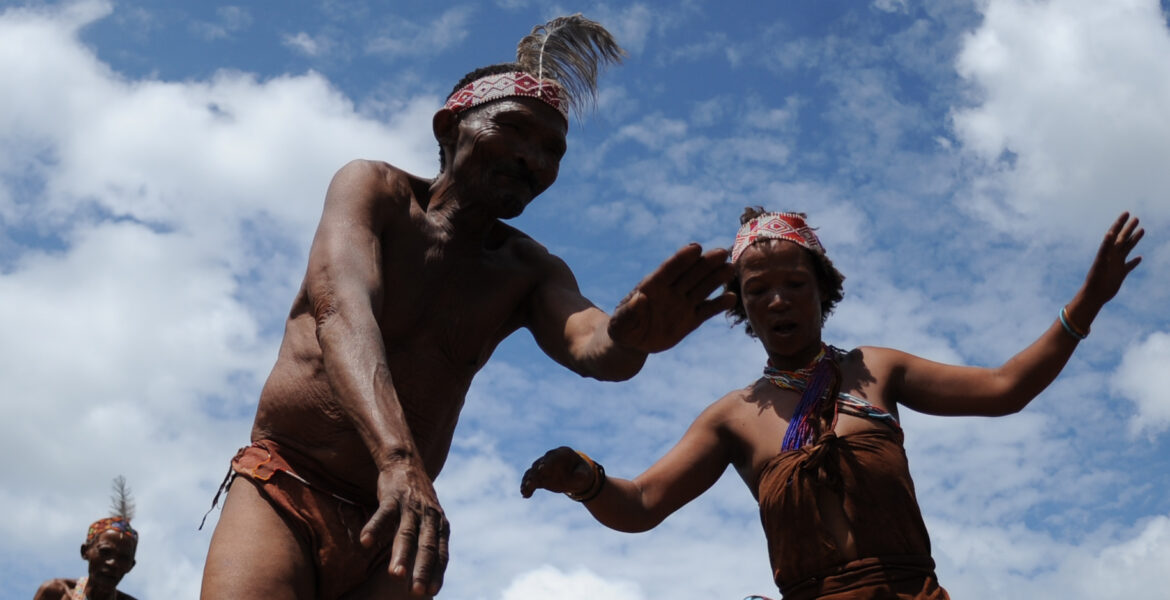
A report presented to President Boko has warned that Basarwa already living in the CKGR fear losing control of territories they have occupied since the controversial relocations and oppose the envisaged return of fellow tribesmen who were relocated
TEFO PHEAGE
President Duma Boko’s plan to restore ancestral land rights to Basarwa in the Central Kalahari Game Reserve (CKGR) faces resistance from within, with CKGR residents opposing the unrestricted return of fellow Basarwa who were relocated to settlements outside the Reserve.
A September 2026 report by the Inter-Ministerial Committee on the Rights of Indigenous Peoples reveals that some respondents in Molapo and Gugamma said they would actively oppose the resettlement of people from New Xade, Xere and Kaudwane into territories they have occupied since the relocations.
The findings expose competing interests among communities that share ancestral connections to the Reserve, raising questions about how Government will reconcile the land claims of those who remained inside the CKGR with those of thousands who were removed and now live outside it.
The report comes into sharp focus following President Boko’s recent declaration that his administration intends to restore ancestral land rights to Basarwa in the CKGR.
Boko’s commitment has revived hopes among displaced communities, many of whom have spent decades seeking redress following their controversial relocation from the Reserve.
Territorial Disputes
According to the committee, consultations conducted at Molapo, Metsiamanong, Mothomelo and Gugamma, as well as New Xade, Kaudwane and Xere, revealed that although all communities wanted to benefit from the CKGR, their expectations about physical return differed considerably.
“People in settlements within the CKGR would not universally welcome the return of those who had been living in the settlements in particular those who had voluntarily relocated predominantly to Xere and Kaudwane,” the report states.
It adds that some respondents in Molapo and Gugamma insisted that they would actively oppose unrestricted resettlement by people from New Xade, Xere and Kaudwane into land they had occupied exclusively since the relocations
The committee further found that communities already living inside the Reserve wanted their interests represented by an organisation distinct from those representing people currently living in the three resettlement settlements.
The disagreement is also rooted in questions of traditional territorial ownership and identity.
The report says communities inside the CKGR identify themselves variously as G//anakhoe, Tsila and G/wikhoe, with each settlement maintaining what it considers clearly defined territorial rights
Residents of Metsiamanong, for instance, maintained that they had no rights of residence or access to natural resources in neighbouring territories associated with Molapo and Mothomelo.
Smaller settlements, including Gugamma, also expressed concern that their traditional boundaries and interests could be swallowed up by larger communities under a collective arrangement.
Address the Insecurities-scholar
Professor Andy Chebanne, a scholar who has extensively researched San communities, in an interview with this publication urged Government to pay close attention to the emerging disagreements and objectively address the insecurities underlying them to prevent tensions that could ultimately undermine the restitution initiative.
He warned that “the emerging socio-political and economic fears must be adequately addressed if the process is to achieve its intended objectives”.
Not Everyone Wants To Return
The committee’s findings also challenge the assumption that all Basarwa currently living outside the Reserve necessarily want to relocate back.
At New Xade, where the population is estimated at 1,614, a significant proportion expressed a desire to return to the CKGR. However, a substantial number preferred recognition of their ancestral land rights without necessarily having to move physically.
The report says some residents proposed a framework under which their rights would be recognised through community institutions, allowing them to benefit economically from the Reserve while retaining the right to visit, use and ultimately return to their traditional territories.
Kaudwane, with an estimated population of 1,354, and Xere, with approximately 795 residents, also raised concerns about family separation, cultural erosion and the loss of access to ancestral territories.
The report estimates that approximately 488 people live in the four settlements inside the CKGR, compared with 3,763 in New Xade, Kaudwane and Xere.
It argues that both populations must be recognised as collective rights-holders, regardless of whether they choose to physically return.
A Delicate Process
The committee cautions that restitution must not be reduced to simply allowing people to move back into the Reserve.
Instead, it recommends a process that recognises the rights of all affected communities while respecting their differing aspirations, traditional territories and identities.
The committee’s central recommendation is a structured, four-phase CKGR Integrated Roadmap covering 2026 to 2029, intended to resolve outstanding questions through further consultations, legal analysis and negotiations.