
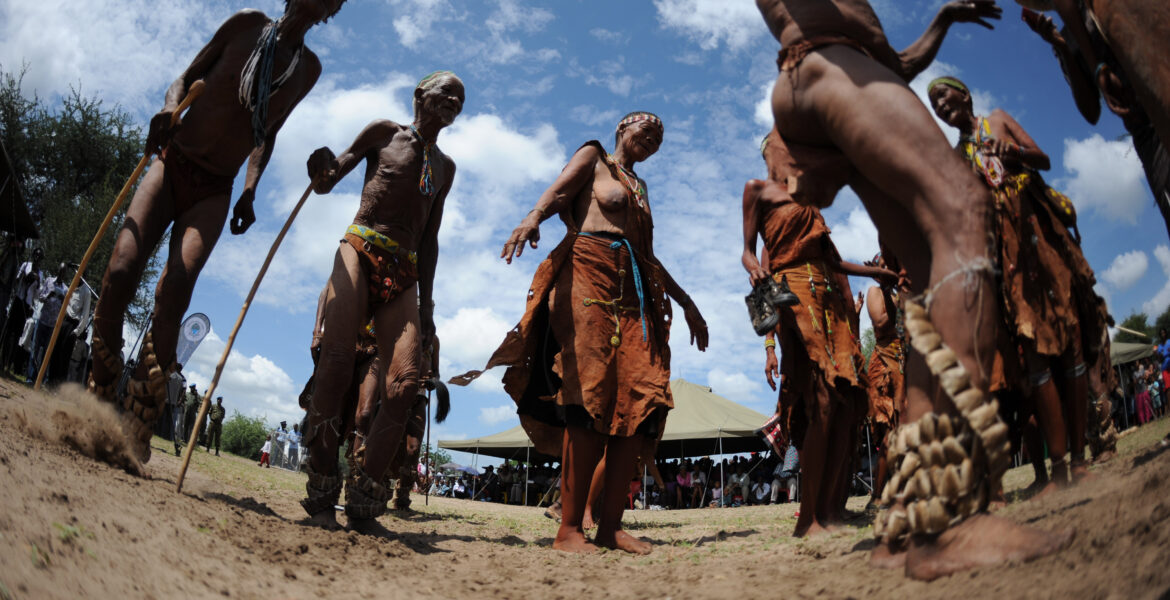
The CKGR restitution initiative faces the risk of political reversal, with a leading San scholar warning that a potential change of government after 2029 could reverse it if the UDC fails to expedite its implementation and entrench it in law
TEFO PHEAGE
Professor Andy Chebanne, a scholar who has extensively researched San communities and a member of the San Research Centre, has warned that the ambitious Central Kalahari Game Reserve (CKGR) land restitution project could be reversed by a future political administration if the Umbrella for Democratic Change (UDC) government fails to fast-track legislation to entrench it in law.
He urged the UDC government to accelerate the project, arguing that “its survival cannot depend on the political fortunes of the administration that initiated it”.
While describing the initiative as progressive and historically significant, Chebanne said “its ideological underpinnings made it vulnerable to a future government choosing a different approach to indigenous land rights”.
Asked to identify the biggest obstacles to the project, he pointed to politics, the enormous financial requirements and the time needed to implement restitution in its entirety.
“The project’s budget is several times the national budget. In terms of time, I think we will need around 50 years to implement it fully. As for the political risks, remember that this is essentially a matter of ideological inclinations. Any political administration can halt, reverse or choose a different course on the project,” he said in an interview with this publication.
LEGISLATE OR RISK REVERSAL
Chebanne believes the UDC should move beyond policy commitments and accelerate legislation that would give the restitution initiative a firm legal foundation.
He argued that “the administration has a limited political window to establish an enduring framework before the next general election” a future administration could abandon or fundamentally alter the project if it remains dependent on executive goodwill”.
The warning comes as Government considers the recommendations of the September 2026 Inter-Ministerial Committee report, which proposes a structured, four-phase CKGR Integrated Roadmap covering 2026 to 2029.
The roadmap envisages further consultations, legal reforms, community representation structures and the establishment of durable land tenure arrangements.
However, the committee itself acknowledges that several fundamental questions remain unresolved and require further research, legal analysis and community engagement.
HISTORICAL INJUSTICE
Chebanne traced the origins of indigenous people’s land insecurity to the colonial period, arguing that the establishment of protected territories for indigenous communities was informed by British concerns that independence could leave them vulnerable to losing their land and legal protections.
He contended that these fears eventually materialised, with subsequent government interventions failing to adequately protect the communities’ rights and livelihoods.
According to him, the subsequent Bushmen welfare programmes represented a downgraded response to the original land question and failed to deliver meaningful economic empowerment.
“Rather than building self-sufficiency, the programmes entrenched dependency on Government, contributing to persistent poverty among San communities. I believe the restitution initiative offers an opportunity to move away from this model by addressing the underlying structural causes of marginalisation rather than simply extending welfare support,” he stated.
BEYOND LAND RETURN
Chebanne also cautioned against treating restitution as an exercise confined to returning land, arguing that “genuine redress must translate into economic empowerment and meaningful participation by Basarwa in managing their communities”.
He advocated formal employment opportunities for Basarwa in institutions and programmes serving their own communities, saying they should become active participants in their development rather than recipients.
He further called for safeguards against opportunistic individuals and organisations seeking to exploit the restitution process, including instances where non-San individuals or groups allegedly front indigenous interests.
His concerns speak to the broader question of representation, which also emerged during the inter-ministerial committee’s consultations.
The committee found that communities both inside and outside the CKGR were concerned about individuals and organisations claiming to represent them without genuine mandates, sometimes benefiting financially or reputationally without delivering meaningful outcomes.