
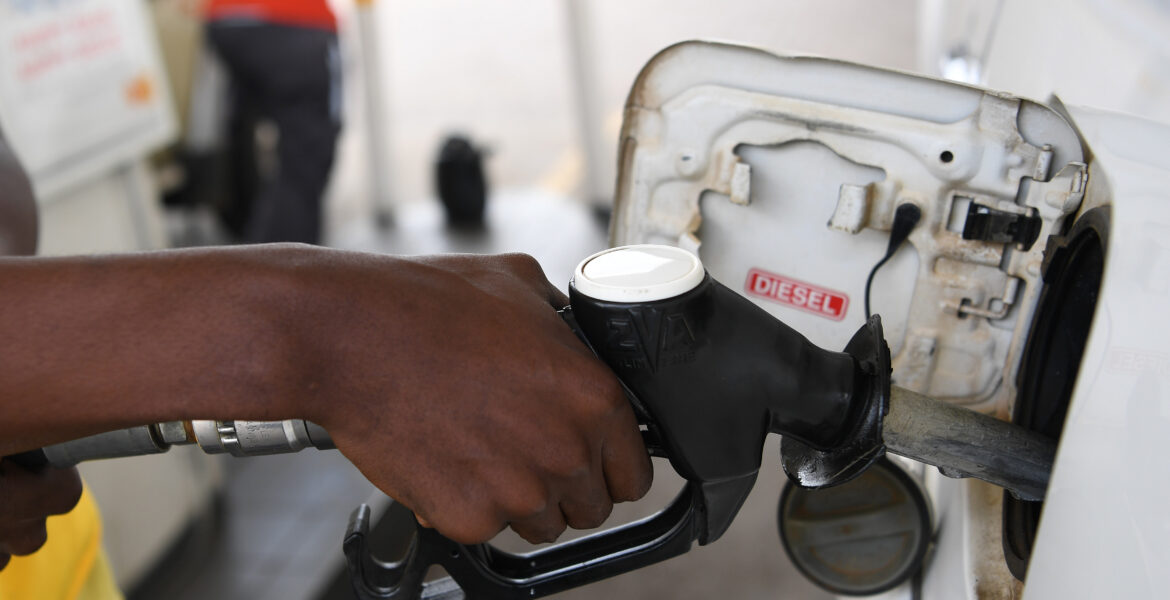
Motorists face higher prices as government shares rising import costs, while the petroleum fund continues absorbing part of the shock
BONGANI MALUNGA
Botswana motorists are paying more at the pumps as the government passes on roughly half the petrol and diesel cost shortfalls it had been absorbing, while retaining support to prevent steeper increases.
Effective Friday, October 23, 2026, unleaded petrol 95 increased by P1.54 per litre to P19.75, while diesel 50ppm climbed by P2.83 to P23.76. Illuminating paraffin remained unchanged at P18.33 per litre, according to the Botswana Energy Regulatory Authority’s (BERA) price announcement.
The Ministry of Minerals and Energy says the increases reflect mounting international fuel costs, with the National Petroleum Fund (NPF) continuing to cover part of the gap between regulated pump prices and the cost of supplying fuel.
IMPORT COSTS OUTRUN PUMP PRICES
In its October 23 statement, the ministry said September calculations showed under-recoveries of P3.07 per litre for petrol, P5.65 for diesel and P5.94 for paraffin. An under-recovery means the regulated selling price falls short of the costs recognised in the fuel-pricing system.
Government initially absorbed those shortfalls instead of raising prices in September. “Instead, the under recovery unit rates realised were absorbed by the National Petroleum Fund, hence cushioning customers against a would-have-been price increase,” the ministry said.
The latest adjustment transfers approximately half the petrol and diesel shortfalls to consumers. The NPF will absorb the remaining costs, while paraffin users remain protected from an increase.
The ministry attributed the pressure to geopolitical tensions that pushed up crude oil and refined petroleum product prices. It also cited disrupted maritime routes, higher freight costs and longer delivery times, warning that damage to oil infrastructure and refineries could further constrain supply.
WHY THE LEVIES MATTER
The increase follows the expiry of a separate relief measure, the suspension of the Fuel Levy, Road Fund Levy and Security of Supply Margin between April 8 and October 7. According to the ministry, that suspension provided relief equivalent to 244.5 thebe per litre of petrol and 239.5 thebe per litre of diesel.
However, restoring those charges did not automatically trigger a pump-price increase. In its October 8 clarification, BERA said “the reinstatement of these levies does not, in itself, result in an immediate increase in retail pump prices.” Future adjustments would still depend on international prices, exchange-rate movements and accumulated under- or over-recoveries.
The government is directing collections from the restored charges into the NPF for what the ministry describes as a six-month period from October 2026 to April 2027. “The objective is to further protect the consumers against a possible steep upward fuel price adjustment during the period of the diversion,” the ministry said.
The rationale is therefore twofold: consumers now cover part of the fuel-cost shortfall, while restored levy collections support the fund’s capacity to absorb the balance and cushion future shocks.
BUSINESSES FACE HIGHER BILLS
The immediate impact is tangible. Buying 50 litres now costs an additional P77 for petrol or P141.50 for diesel. A business purchasing 1,000 litres of diesel faces an extra P2,830 in fuel costs. Depending on how businesses respond, that pressure could squeeze profit margins or feed into transport charges and goods prices.
The government maintains that consumers remain cushioned even after the increase. However, the ministry’s statement does not disclose the NPF’s current balance or the total cost of maintaining the remaining support.