
As Namibia reviews medical aid administration, RMA is examining Bomaid’s two decades of self-administration for lessons in oversight, technology and customer care.
BY LEATILE ZACHARIAH
Legislative reforms in Namibia have brought a delegation from Renaissance Health Medical Aid Fund (RMA) to Botswana to examine how Bomaid has administered its own operations for more than 20 years.
Governance Review
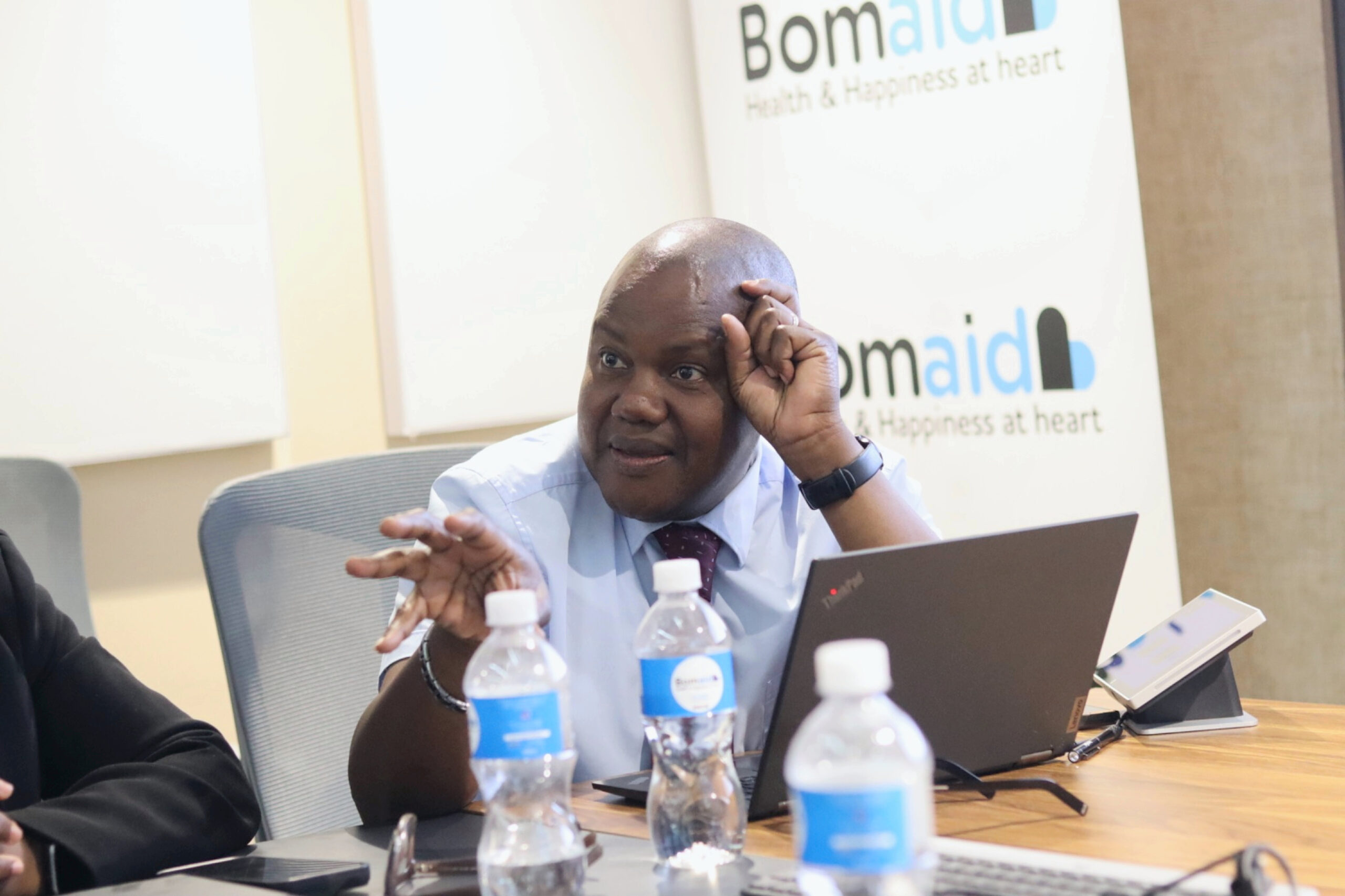
The delegation visited Bomaid’s headquarters in Gaborone on Monday, 26 October, for a benchmarking engagement focused on medical aid administration, regional cooperation and the exchange of operational experience. The reforms require Namibian funds to review their administrative arrangements, particularly the balance between outsourced services and in-house operations.
The visiting Namibian delegation comprised the following representatives:
- Gabriel Tjombe, board chairperson, Renaissance Health Medical Aid Fund (RMA).
- Benny Amuenje, vice-chairperson, RMA.
- Kevin Adams, board member, RMA.
- Claudia //Hoebes, board member, RMA.
- Harold Kaune, board member, RMA.
- Tiaan Serfontein, managing director, Prosperity Health Namibia (RMA’s administrator).
- Margot Gebhardt, executive for legal and compliance, Prosperity Health Namibia.
- Laurika George, principal officer, RMA.
Bomaid chief executive Moraki Mokgosana outlined the fund’s efforts to invest in technology, develop internal capabilities and improve operating processes. He said effective medical aid administration depends on people, processes, technology and controls working together to improve efficiency and customer outcomes.

Two Decades
Chief clinical services officer Dr Malebogo Kebabonye said Bomaid’s experience as a self-administered fund for more than two decades had given it practical insight into the capabilities and challenges that come with running these functions internally.

Kebabonye also pointed to regulatory developments across the Southern African Development Community (SADC), including discussions about National Health Insurance and tighter oversight to protect medical aid customers. She said exchanges between funds could help improve administration and access to healthcare.
Systems and Claims
Chief information technology officer Mandla Mapeo explained how Bomaid’s Thobo Fund Administration Platform supports claims adjudication, pre-authorisation, billing, benefits administration and managed care.

He also outlined the Thrive with Bomaid wellness platform, specialised system integrations and business-continuity infrastructure, including the fund’s primary data centre, disaster recovery site and network connectivity.
Claims manager Dr Lady Modise described the controls used in claims administration, including the Bomaid Book of Rules, the Medcap hospital management system and specialised risk-management partnerships. Kebabonye explained how clinical decision-making, provider practices and population health analytics inform claims patterns, risk assessment and healthcare planning.
Customer Pressures
Chief customer experience officer Segolame Macheng said medical aid funds must balance membership growth and financial sustainability with service quality. She highlighted accessible service channels, provider networks, technology and customer engagement as factors in maintaining affordable, reliable access to care.
Outsourcing Lessons
RMA principal officer Laurika George said Bomaid’s model offered lessons in understanding customers’ healthcare journeys through internal administration. RMA was particularly interested in how Bomaid manages outsourced services through service-level agreements while maintaining accountability and organisational values.
George said the knowledge gained from the visit would help inform RMA’s ongoing transition.