
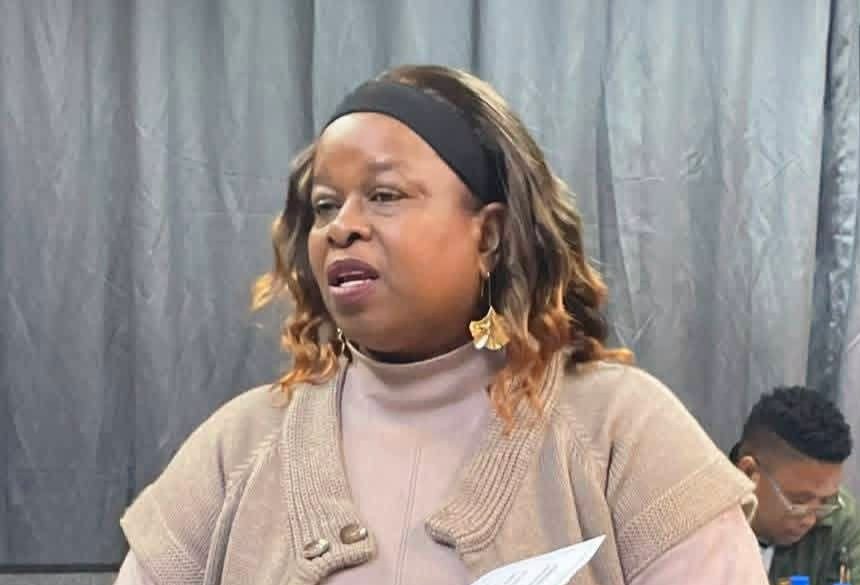
Botswana’s music industry has finally crowned its first woman union president. But Gloria Dzwikiti’s biggest challenge isn’t making history, it’s convincing artists that BOMU can still change their lives in an industry battling piracy, shrinking revenues and the AI revolution
GOSEGO MOTSUMI
For years, Botswana Musicians Union (BOMU) presidents have come and gone without breaking one stubborn pattern: they were all men. That changed in Palapye recently when Gloria Dzwikiti swept to an unopposed victory, becoming the first woman to lead the organisation.
History, however, doesn’t pay royalties.
The celebrations barely faded before reality walked into the room. Botswana’s musicians are still wrestling with piracy, unreliable royalty systems, streaming economics, copyright battles and an AI-powered future that threatens to reshape the value of creativity itself. Dzwikiti isn’t inheriting a victory lap, she’s inheriting a rescue mission.
FROM SYMBOL TO SUBSTANCE
Dzwikiti appears aware that symbolism alone won’t satisfy musicians who have grown tired of promises.
“The best way to restore confidence is through results, not promises,” she said in an interview.
Her blueprint starts with making BOMU visible, accessible and accountable before chasing strategic partnerships that could unlock business opportunities, skills development and stronger advocacy for artists.
The message is simple: credibility has to be earned.
THE DIGITAL FIGHT AHEAD
While piracy remains a familiar villain, Dzwikiti believes the bigger battle lies in helping musicians survive the digital economy.
She argued that artists must learn to monetise their work across streaming platforms while understanding intellectual property, digital distribution and artificial intelligence before technology leaves them behind.
Her call is equally directed at policymakers.
“We must also ensure that legislation and industry practices evolve alongside technology so that innovation benefits creators rather than exploiting them.”
MORE THAN A FIRST
Being BOMU’s first female president may become her headline, but Dzwikiti insists it shouldn’t be her legacy.
“My election should not be viewed as the destination but as the beginning of a broader movement,” she said.
If that movement succeeds, her greatest achievement won’t simply be breaking the union’s glass ceiling. It will be building a music industry where future leaders, women or men are judged less by who they are and more by whether they can help artists turn talent into sustainable careers.