
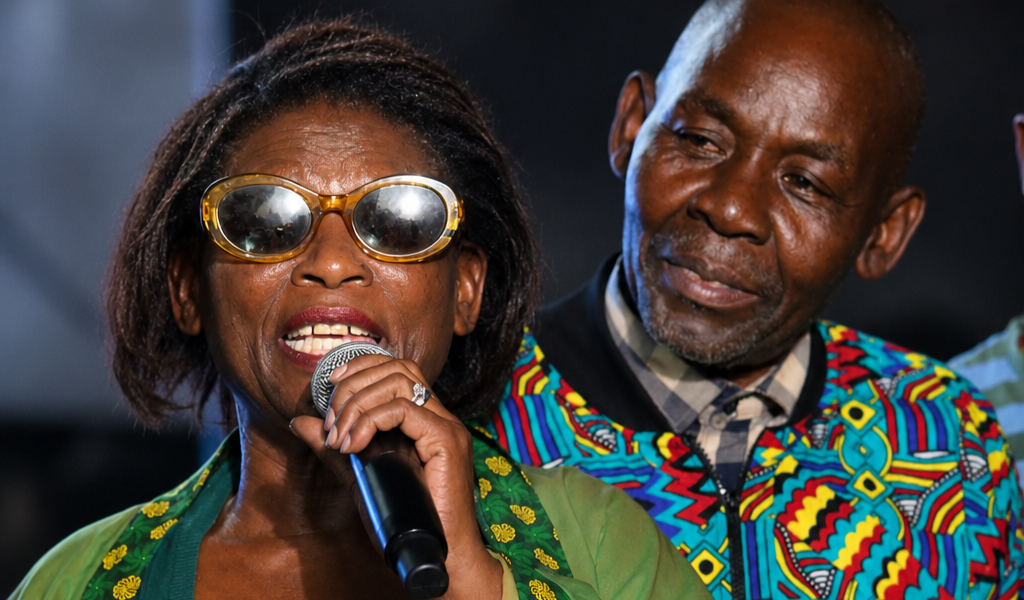
Botswana has sung Anafiki’s love story for more than four decades. Now Botswood Studios wants audiences to see the woman behind the voice and reckon with a life shaped by music, love, disability and fierce independence.
GOSEGO MOTSUMI
Botswana already knows Anafiki’s love story. It has been singing it since 1982. Now, the woman behind one of the country’s enduring love songs is getting more than a musical tribute — she is getting a movie.
FROM SONG TO SCREEN
Botswood Studios is bringing Anafiki to the big screen, a coming-of-age love story inspired by the life of legendary pianist and performer Anafiki Ditau.
The film follows a royal boy who falls for a visually impaired girl, with music becoming the bridge between two very different worlds. But beneath the romance is a bigger story about independence, resilience, identity and finding a place in a society that often decides what people with disabilities can or cannot do.
For Botswood Studios’ Afentse Fenny Lekolwane, the story is personal. Having known Anafiki for nearly two decades, Lekolwane says she saw beyond the requests for assistance.
“She wasn’t a beggar, she lacked,” she told Time Out, recalling Anafiki’s struggle to ask for help with basic needs while fiercely holding on to her independence.
BEYOND THE DISABILITY LABEL
That tension sits at the heart of the film. Lekolwane says Anafiki’s story offers a different lens on disability, one centred on possibility rather than limitation.
“It’s a story of resilience, perseverance and hope,” she says.
Lead actress Palesa Molefe, who plays Anafiki, says the role challenged her to confront assumptions about visual impairment while discovering the universal simplicity at the heart of the story.
“But it’s also just a story about a girl in love, something we can all relate to,” Molefe says.
Filmed in Mochudi, the project also features Tebogo Reteng, Sheila Tlou and visually impaired students, who Lekolwane says make up about 95 percent of the students featured.
THE SONG THAT STARTED IT
Anafiki composed “Mpolelle Re Babedi” as a schoolgirl in 1982. More than four decades later, the folk love song remains woven into Botswana’s musical memory.
Now her life gets its own soundtrack — and the film raises a bigger question: can the woman behind the beloved song become as memorable as the song itself?