
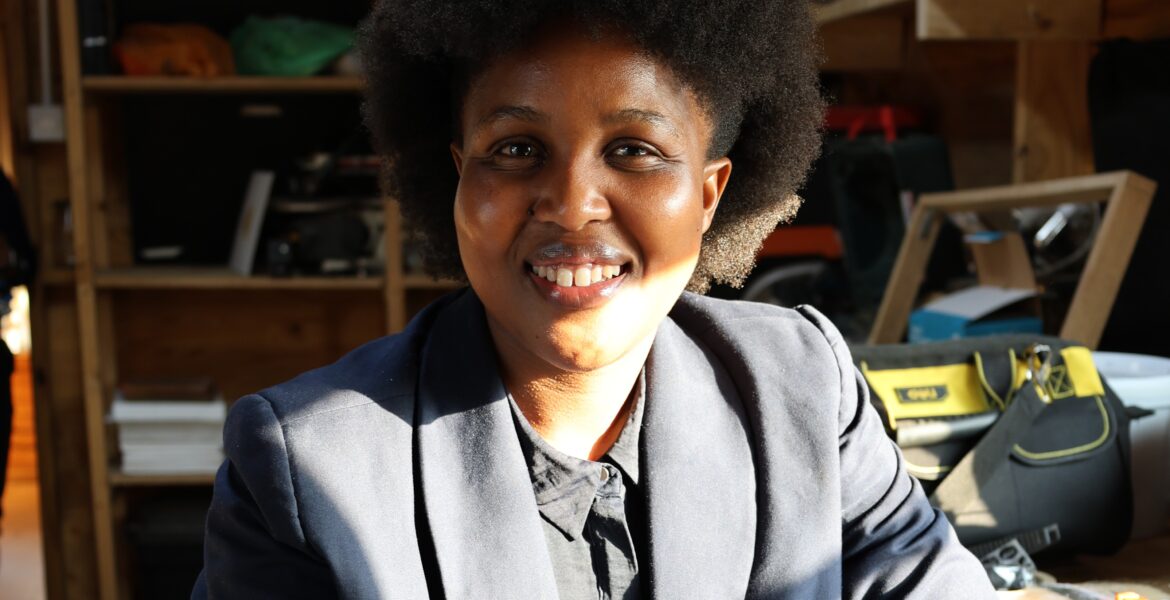
The FNB Art Prize may have arrived in 2026, but visual artist Kelebogile Marope has been quietly earning it for years. Inside the win is a story about memory, persistence, ordinary objects and a Botswana art scene finally pushing beyond its borders.
GOSEGO MOTSUMI
Awards love the moment. Artists live in the years before it.
For Kelebogile Tshegofatso Marope, the 2026 FNB Art Prize is less a sudden breakthrough than a loud exclamation point at the end of a long, deliberate sentence.
The 41-year-old Ramotswa-born artist has spent more than a decade building a practice around memory, domesticity, repetition and the emotional weight of ordinary things. Now that work has earned one of contemporary African art’s significant recognitions and a spotlight at FNB Art Joburg in September.
THE STUFF OF EVERYDAY LIFE
Marope’s trick is making the familiar feel strange again.
A household object can become an archive of labour, intimacy and loss. A repeated gesture can become ritual. A burnt surface can become memory.
Her artistic journey began in sculpture and found domestic objects before expanding into drawing, printmaking, painting and materially experimental work. Her question remains deceptively simple: what do the objects and spaces around us remember about us?
Then came the roads.
GRIEF, MARKED OUT
In Road Surface Markings: An Ode to My Father, Marope turns memories of family journeys into visual memorials. Her father drove her and her sisters to school, shops and appointments; after his death during the COVID-19 pandemic, those familiar roads acquired a new emotional charge.
Lines, edges and directions became symbols of movement, guidance, constancy and absence.
It is precisely this ability to turn personal memory into something widely relatable that Lerato Motshwarakgole, founder of Ora Loapi, believes distinguishes Marope.
“She has worked consistently and quietly,” Motshwarakgole says. “Specificity is not a limitation.”
WHY THIS WIN MATTERS
The prize also lands after years of groundwork. Marope holds undergraduate and postgraduate fine-art degrees from Rhodes University and was part of the team behind the monumental ivory elephant sculpture installed at Sir Seretse Khama International Airport in 2015.
Meanwhile, curatorial and cultural organisation Ora Loapi is preparing to showcase her at FNB Art Joburg as it enters its sixth year at the fair.
For Motshwarakgole, that consistency is the point. “Markets are built through consistency, trust and repeated engagement.”
Marope’s win therefore represents two victories: an artist being recognised for a practice built patiently over time, and Botswana’s contemporary art being pushed into rooms where collectors, curators and institutions are paying attention.
The next challenge is making sure she is not the exception.
“Kelebogile has won this prize, but Botswana must now win from this moment too, Motshwarakgole says. “Our responsibility is to ensure that she is not an exception. We have to build the systems that
make many more stories like hers possible.”