
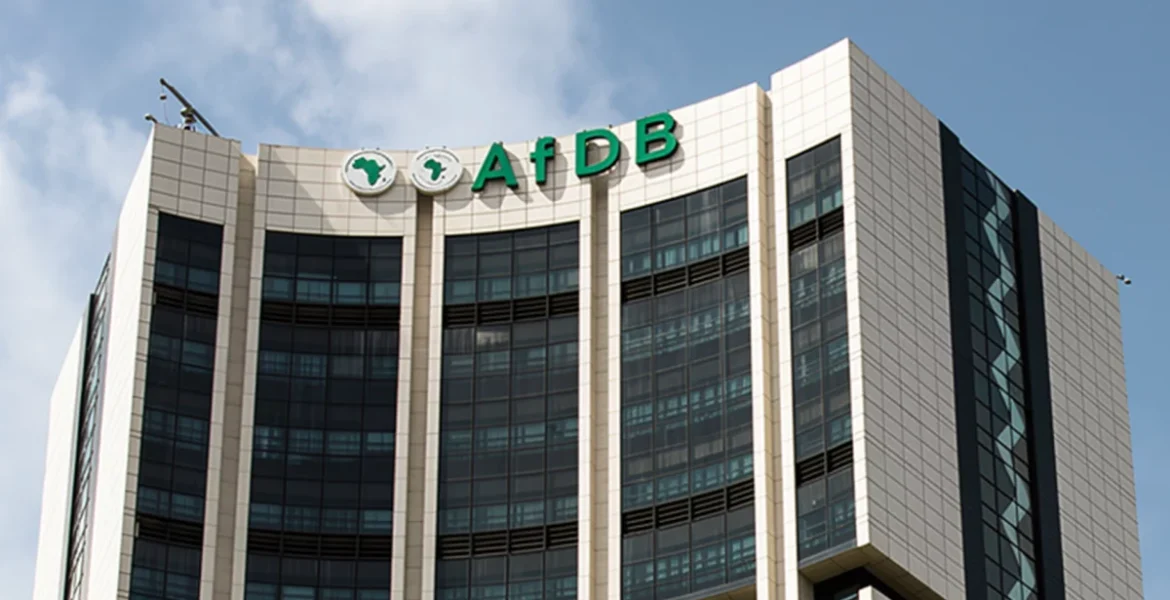
The African Development Bank warns that weakening corruption controls and procurement oversight threaten accountability amid Botswana’s economic difficulties.
GAZETTE REPORTER
The African Development Bank (AfDB) has raised concerns over the gradual erosion of accountability, transparency and integrity in Botswana, warning that declining governance indicators point to weaknesses in anti-corruption enforcement, public procurement and institutional oversight.
In its Botswana Economic Competitiveness and Transformation Support Programme (ECTSP) Project Appraisal Report, the bank identifies a decade-long decline in key governance indicators and highlights the need for stronger enforcement, procurement integrity and public accountability.
Governance Decline
According to the report, Botswana scored 65.8 out of 100 in the 2024 Ibrahim Index of African Governance, ranking fifth among 54 African countries. However, its overall score declined by 3.6 points between 2014 and 2024, with the deterioration largely driven by declining performance in anti-corruption, public procurement, accountability and transparency.
The report also points to Botswana’s weakening performance in Transparency International’s Corruption Perceptions Index (CPI), where the country scored 58 out of 100 in 2025, ranking 41st among 182 countries.
This was below its earlier scores of 65 in 2012 and 61 in 2019, suggesting a deterioration in perceptions of public-sector corruption over the years.
The AfDB further notes that the World Bank’s Worldwide Governance Indicators show weakening performance in regulatory quality and control of corruption.
Enforcement Gaps
Although Botswana’s score under the AfDB’s Country Policy and Institutional Assessment governance indicators remained steady at 4.8 out of six between 2023 and 2025, the Bank cautions that maintaining institutional credibility alone will not be sufficient to address the country’s governance challenges.
“The governance issue is no longer primarily about institutional credibility itself but about improving enforcement, transparency, procurement integrity, and public accountability,” the report states.
The assessment places particular emphasis on the need to strengthen the systems through which public resources are managed, government decisions are scrutinised and corruption risks are addressed.
The findings come at a time when Botswana is pursuing economic transformation reforms aimed at reducing its dependence on diamonds and expanding private-sector-led growth.
Fiscal Pressure
The Bank warns that the country’s economic difficulties make effective governance and public-sector accountability even more critical.
Diamonds account for approximately 30 per cent of Botswana’s gross domestic product and nearly 80 per cent of export earnings, leaving the economy vulnerable to prolonged weakness in the global diamond market.
The report says real GDP contracted by 2.8 per cent in 2024 and a further 0.7 per cent in 2025, reflecting weak diamond output and subdued activity in other sectors.
It also highlights deteriorating fiscal conditions, with the budget deficit estimated at 9.5 per cent of GDP in 2025 and projected at 9.1 per cent in 2026.
The AfDB warns that inadequate financing could result in the accumulation of government arrears and mounting debt-service pressures, potentially undermining public service delivery.
It cites the August 2025 public health emergency, which was partly linked to supplier arrears on medical supplies, as an illustration of the consequences of fiscal pressures.
Early Improvements
Despite the concerns, the Bank identifies improvements in the 2025 Corruption Perceptions Index and CPIA indicators as early signs that the new government’s reform commitments may be beginning to yield results.