
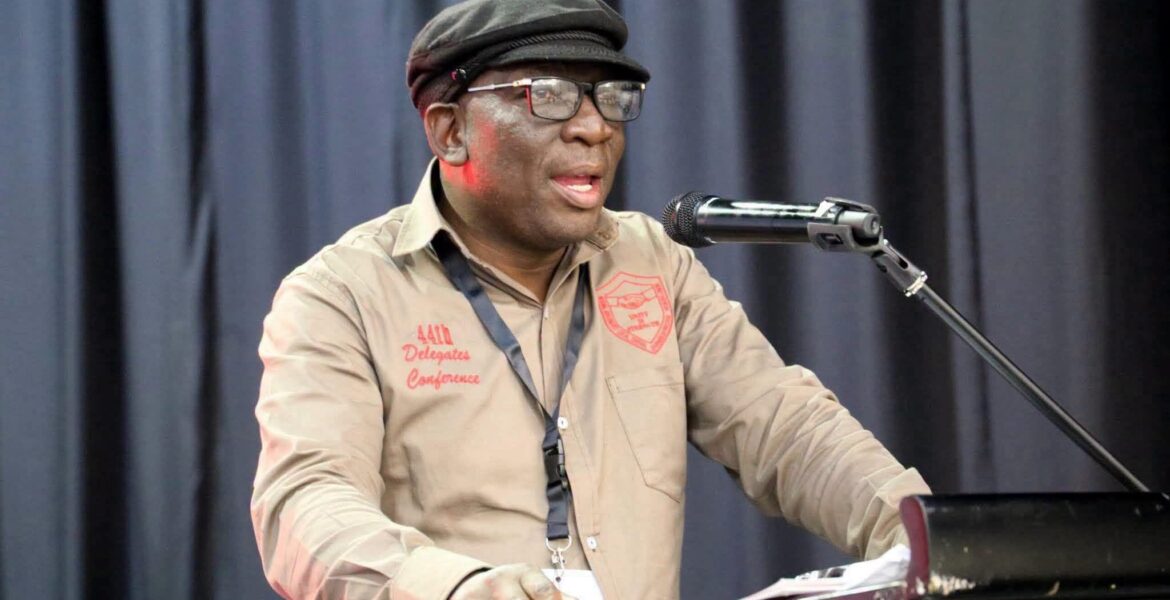
BOFEPUSU warns that replacing sector bargaining with a single public-service structure could weaken unions and undermine existing recognition agreements.
GAZETTE REPORTER
The Botswana Federation of Public, Private and Parastatal Sector Unions (BOFEPUSU) has rejected government’s reported plans to introduce centralised bargaining in the public service, warning that the move could undermine trade union rights and render existing recognition agreements meaningless.
TWO-TIER DEMAND
In a letter dated 10 August 2026 to the Minister of Labour and Home Affairs, BOFEPUSU Secretary General Robert Ronny Rabasimane and Gotlamang Oitsile formally objected to what they described as an attempt to replace decentralised bargaining with a single bargaining structure.
The federation said it supports the re-establishment of the Public Service Bargaining Collective Council (PSBC) under the new Public Service Act, but believes the council should operate alongside decentralised bargaining through recognition agreements between the Directorate of Public Service Management (DPSM) and individual unions.
SECTOR DIFFERENCES
BOFEPUSU argued that occupational groups across the public service have different working conditions and bargaining priorities, making a one-size-fits-all approach inappropriate.
“Teachers, nurses and administrative staff cannot and should not be lumped into one basket,” the federation said.
AGREEMENTS AT RISK
The federation warned that moving all conditions-of-service negotiations to one national table would strip unions of their ability to negotiate issues affecting specific sectors and departments.
“If all matters of conditions of service are determined at a central table, Recognition Agreements become meaningless,” BOFEPUSU said, describing such a development as “de-recognition by another name.”
It also raised concern over reports that DPSM intends to alter existing recognition agreements, which it says provide the legal basis for union representation, access to facilities and collective bargaining on substantive issues. BOFEPUSU warned that unilateral changes, coupled with centralised bargaining, could weaken unions, demotivate workers and ultimately affect service delivery.
ACT REVIEW
The federation also questioned the decision to remove the Public Service Act from the Labour Law Review Committee (LLRC), which was established to review the Employment and Labour Relations Act, Public Service Act and Industrial Court Act.
BOFEPUSU said removing the Public Service Act from the review process could deny unions an opportunity to participate in shaping legislation governing public-sector workers.
NATIONAL ROLE
The federation stressed that it is not opposed to a functional PSBC and supports national-level negotiations on matters of common interest, including general salary adjustments and conditions affecting the entire public service.
However, it wants a two-tier system in which the PSBC handles broad public-service matters while unions retain the ability to negotiate sector-specific issues through recognition agreements.