
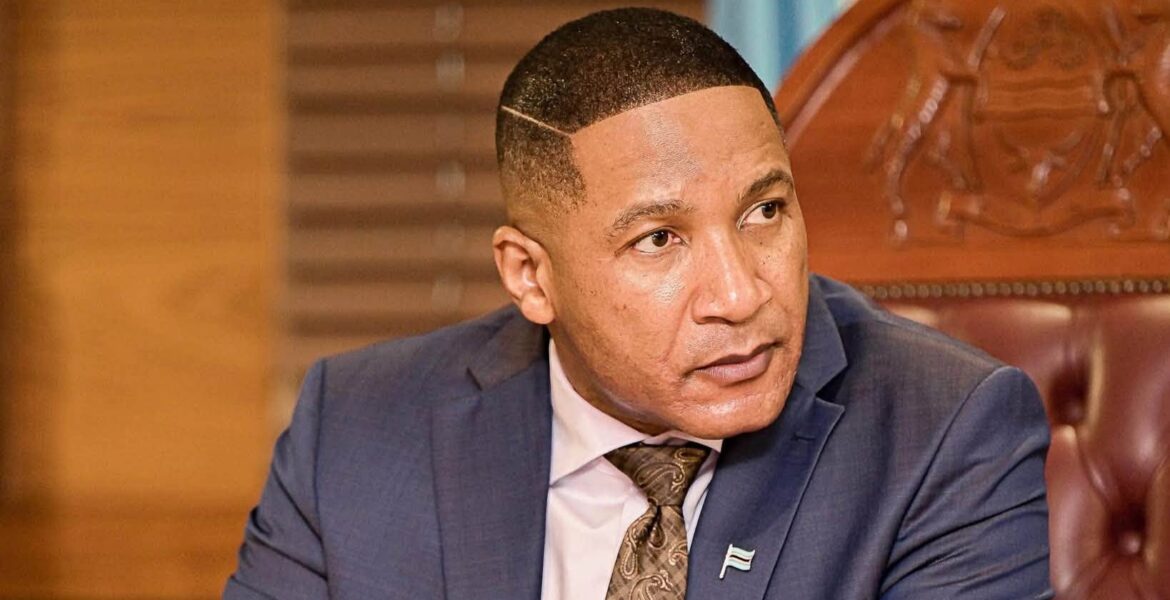
President Duma Boko says the pledge to create 100,000 jobs a year has been delayed by fiscal pressures and the practical realities of governing, but insists mega projects will drive future employment.
BONGANI MALUNGA
President Duma Boko has admitted that delivering on his 2024 election pledge to create 100,000 jobs a year has proved far more difficult from inside government than it appeared from the opposition benches.
Boko conceded that his administration has not yet delivered the 100,000 jobs promised to Batswana, saying the realities of running the country only became apparent after assuming power. Asked by South African broadcaster eNCA whether he had delivered the 100,000 jobs within 12 months as promised during his campaign for high office, Boko gave a blunt response: “Not yet.”
He said his government inherited an economy structured in a particular way, with realities that could not have been fully anticipated while operating from outside government.
THEORY MEETS POWER
Boko acknowledged that his administration had conducted extensive research before taking power, but said the findings could not fully prepare it for the realities encountered once it assumed responsibility for running the country.
He argued that research, studies and policy propositions all have inherent limitations, drawing on the philosophical distinction between theoretical and practical truth to explain the difficulties his government encountered.
According to Boko, what appeared achievable at the theoretical level looked considerably different once his administration was confronted with the practical realities of governing. He said the government was now wrestling with the practical application of ideas and had discovered that Botswana’s economy was deeply unequal and had experienced years of economic growth without sufficient job creation.
FISCAL SHOCK
Boko’s explanation centred heavily on the financial position he said his administration inherited, claiming that government coffers had declined dramatically before the UDC administration took office.
He said Botswana had gone from having about P37 billion in the coffers three years earlier to just P300 million when his government assumed power, while facing a monthly salary bill and a recurrent government budget of about P1.4 billion.
That, he said, forced the new administration to prioritise keeping the state financially afloat rather than immediately pursuing ambitious job-creation programmes.
“You’ve got to wrestle with keeping the ship afloat. You can’t start doing fancy stuff about this thing. You’ve got to keep it afloat.”
He described the situation as the country’s “biggest existential challenge”, saying the immediate priority was ensuring that citizens remained supported and public servants continued receiving their salaries.
SHORT-TERM PAUSE
“So forget about creating jobs in the short term,” he said, arguing that the government first had to ensure that people were paid and that the machinery of the state continued functioning.
Boko said his administration had succeeded in keeping salaries flowing despite what he described as the difficult circumstances it inherited.
MEGA PROJECTS
The President nevertheless maintained that his government is now shifting towards large-scale projects that he believes can transform the economy and generate employment.
He pointed to the proposed Trans-Kalahari Rail Line being pursued with Namibia as one of the mega projects underpinning the government’s economic strategy.
Boko said the project, which he expects to begin in the first quarter of 2027, would involve the construction of about 1,200 kilometres or more of new railway track. He said numerous other projects would create more employment as the government works towards realising the election pledge.